
Stop Sudden Dog Snapping by Changing the Moment, the Routine, and the Rules
To stop sudden snapping, create space immediately, identify what pushed your dog over threshold, and prevent that situation while you train a calmer response. Do not grab your dog, take an item by force, or punish the warning. A snap is often a dog’s clear way of saying, “I am scared, uncomfortable, overwhelmed, or protecting something.”
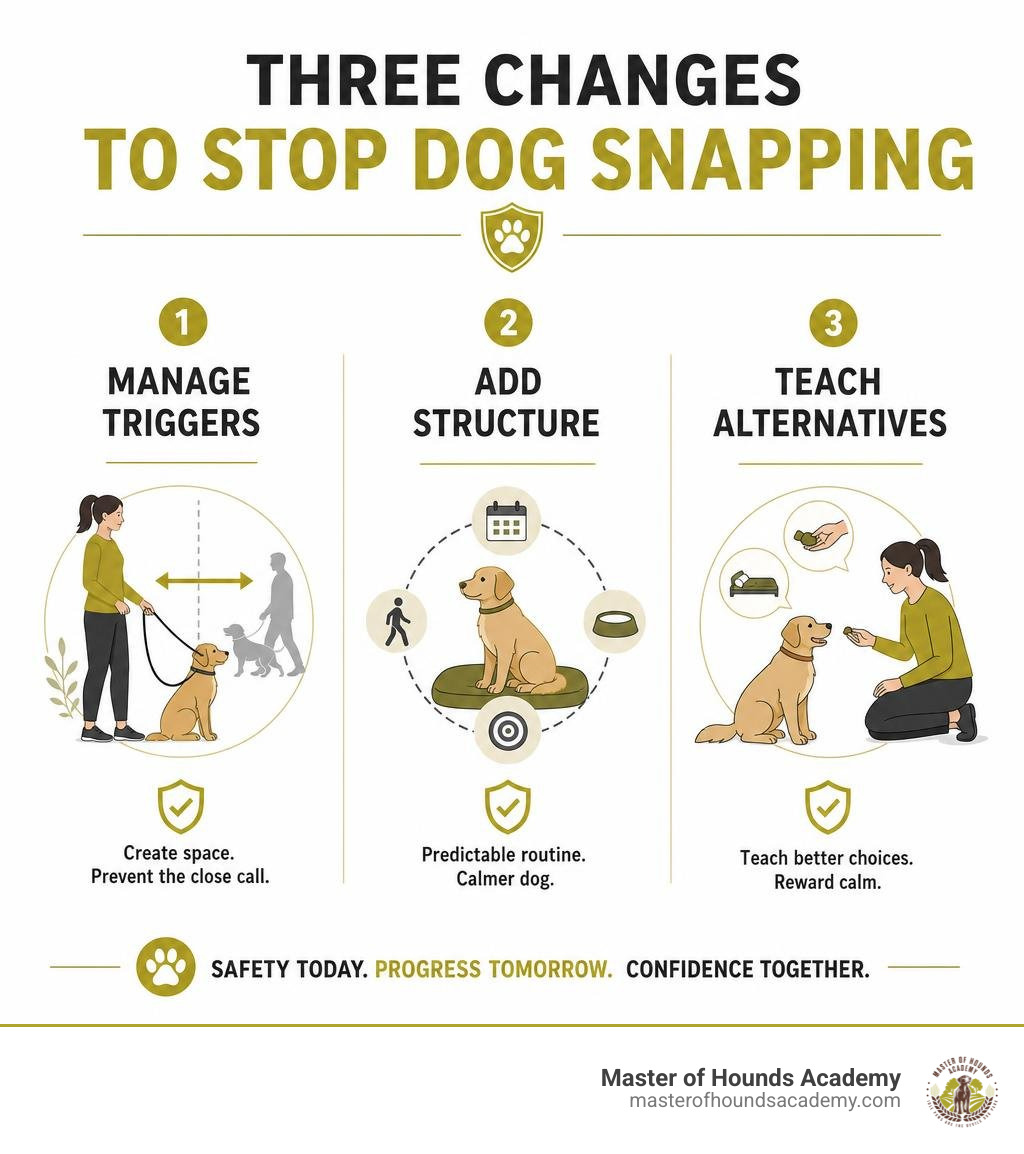
Start with these three changes:
- Manage the trigger. Use distance, gates, a leash, or a quiet room to prevent another close call.
- Build a predictable routine. Practice calm cues, structured rest, exercise, and short training sessions each day.
- Teach safer alternatives. Train a place cue, gentle treat taking, and fair trade games for toys or stolen items.
Dogs rarely snap without earlier signs. Watch for head turns, lip licking, pinned ears, a stiff body, hard staring, growling, or showing teeth. Pain, fear, surprise, resource guarding, and too much stress across a busy day can all lower a dog’s tolerance.
I am Francis Metcalf, founder and co owner of Master of Hounds Academy, with more than three decades of experience helping Bay Area families work through behavior challenges. Our approach to dog training for snapping uses personalized, behavior based coaching to build clarity, safety, and confidence for dogs and their people.
Quick dog training for snapping terms:
Why Dogs Snap: Decoding Canine Stress and Defensive Communication
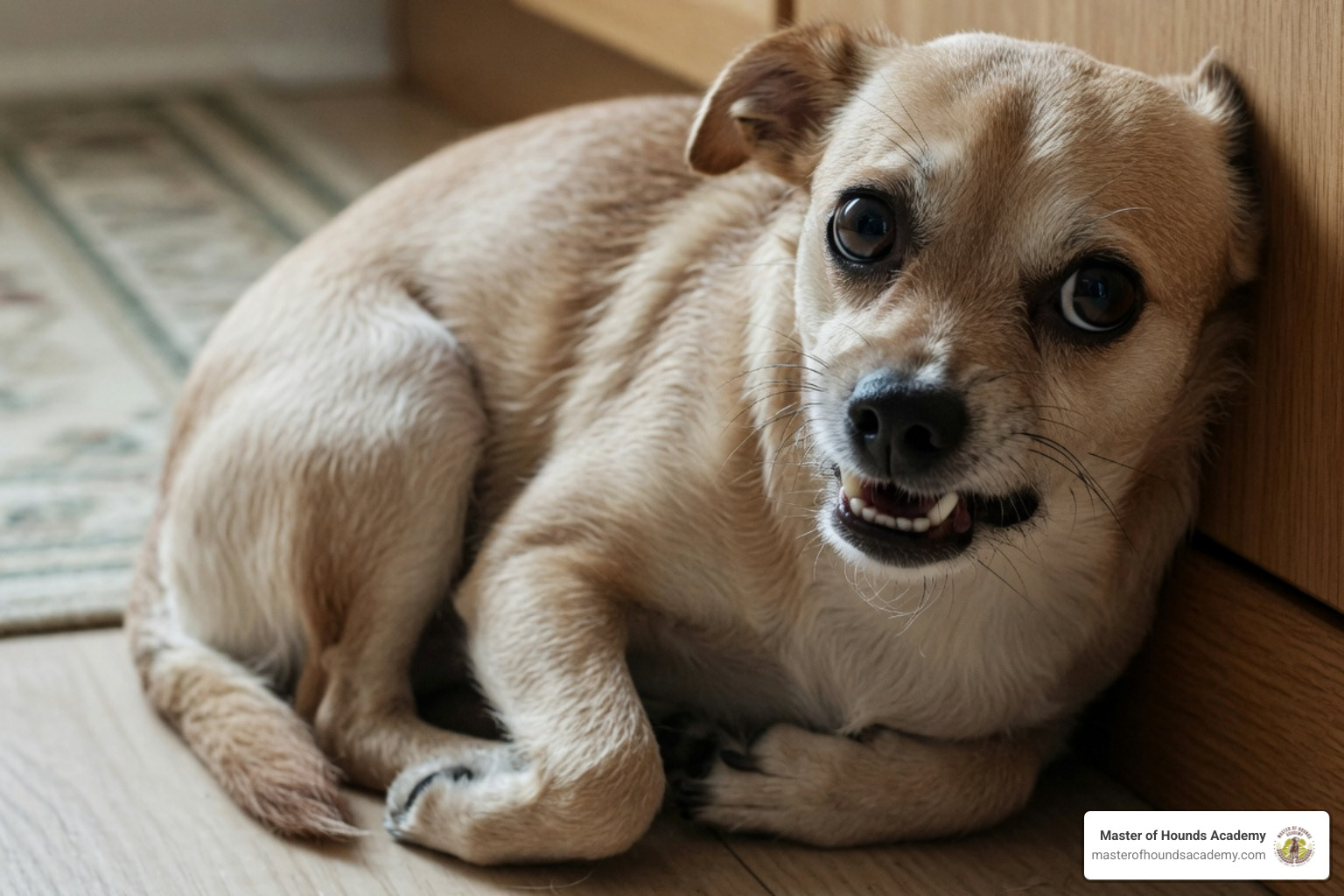
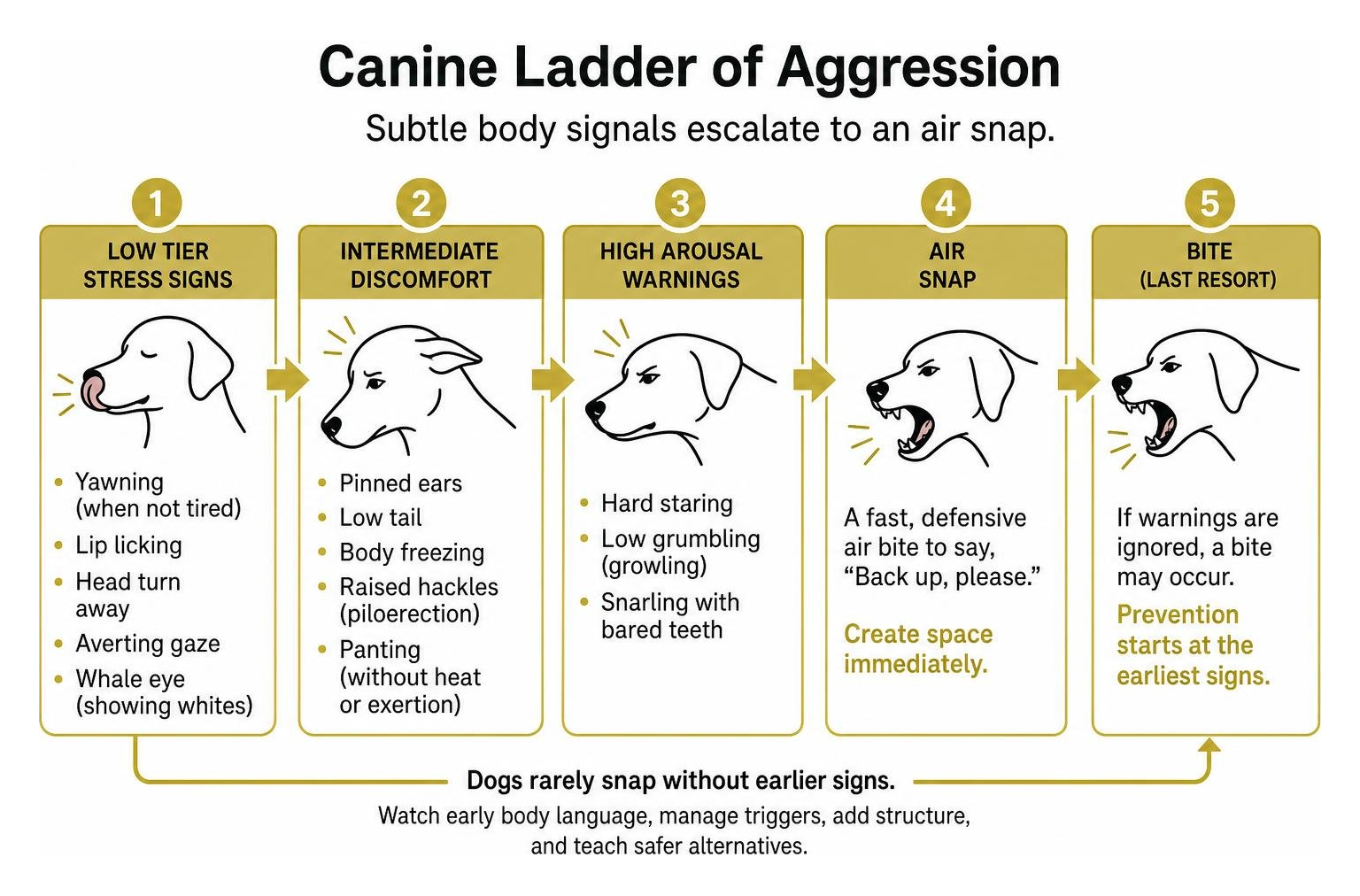
When a dog snaps, it can feel like a bolt of lightning out of a blue sky. In reality, dogs almost always speak volumes before their jaws make that distinct popping sound in the air. A snap is a fast, defensive communication signal. It is an intentional air bite designed to say, “Back up, please. I am overwhelmed.” Because animals communicate their stress thresholds through body language and vocal signals, understanding canine aggression signs is the first step toward restoring peace.
Dogs progress through a subtle ladder of stress before resorting to a snap:
- Low tier stress signs: Yawning when not tired, quick lip licking, turning the head away, averting gaze, or showing the whites of the eyes (whale eye).
- Intermediate discomfort: Pinned ears, a low tail, sudden body freezing, raised hackles (piloerection), or panting without heat or exertion.
- High arousal warnings: Hard staring, low grumbling, snarling with bared teeth, and air snapping.
Another vital concept is trigger stacking over a 48 hour window. Stress is cumulative. If your dog experienced a noisy thunderstorm yesterday morning, missed an afternoon meal, and had a startling encounter with a delivery truck, their internal stress reservoir is already full. A seemingly minor event, like someone reaching toward their collar the next day, can instantly tip them over their bite threshold.
Physical pain also plays a major role. Hidden ear infections, hip dysplasia, arthritis, or dental discomfort can cause a dog to snap reflexively when touched near an aching joint.
Adolescent boundary testing around seven to twelve months of age can also bring out new tension, especially around coveted bones or sleeping spots. Intact male dogs statistically show higher rates of competitive friction than spayed females or neutered males, though learned habits require structured coaching regardless of reproductive status.
| Behavior Type | Physical Contact Made? | Emotional Root | Primary Purpose |
|---|---|---|---|
| Air Snapping | No contact (intentional miss) | Fear, pain, defense, high stress | Create immediate distance and establish a boundary |
| Contact Biting | Yes, teeth touch skin or clothes | High threat perception, severe panic | Defensive protection or terminating an active threat |
| Play Mouthing | Soft, loose contact | High energy, social play | Exploration, youthful connection, excitement |
Recognizing the difference between these behaviors helps you respond with thoughtful clarity rather than panic.
What to Do Immediately When Your Dog Snaps
The split second after a snap occurs is critical. How you react sets the tone for whether the situation de escalates or spirals into genuine danger.
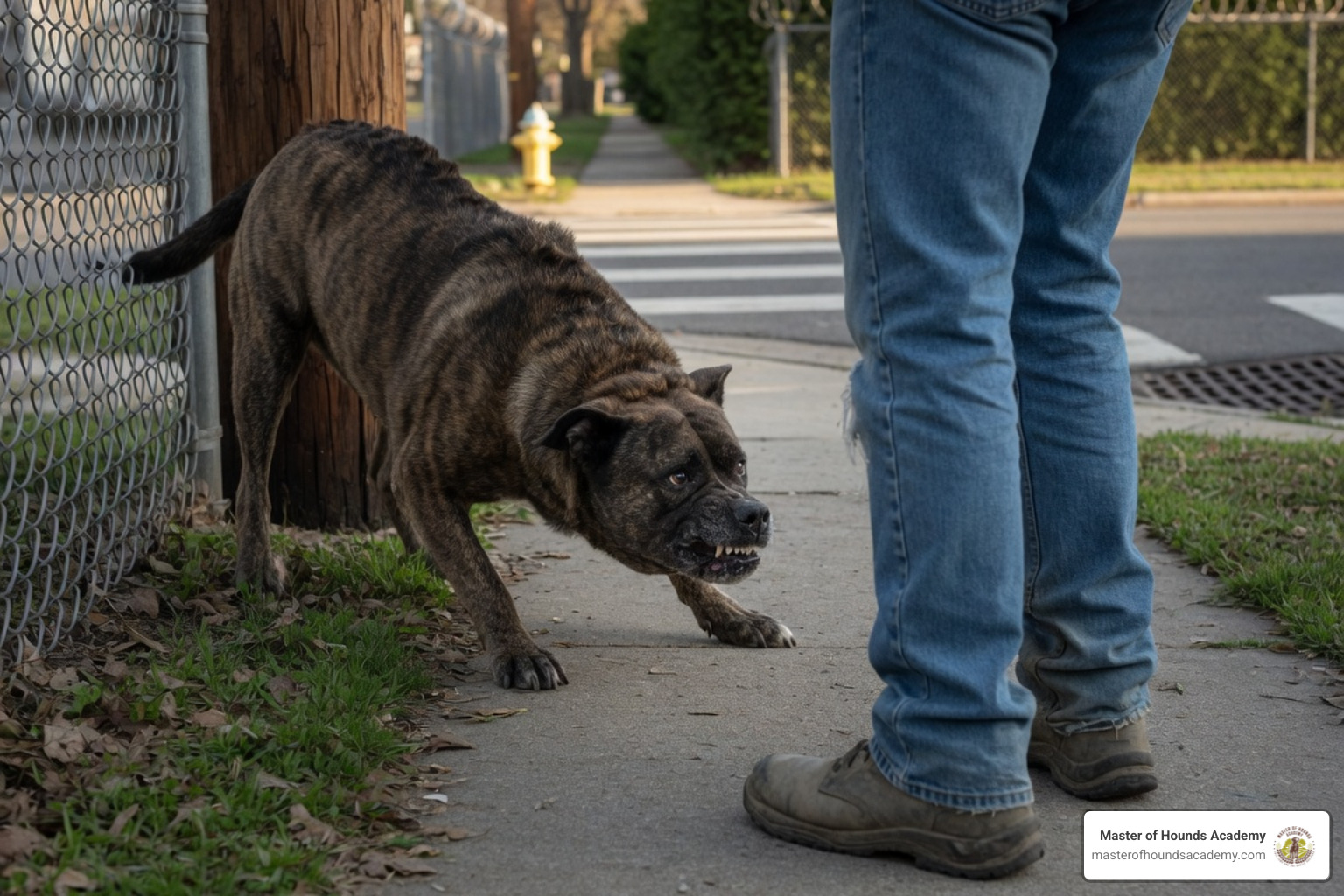
Here is your immediate action plan:
- Freeze and breathe. Stand completely still. Avoid yelling, lunging forward, or making frantic body movements.
- Angle your body away. Break direct eye contact by looking slightly to the side and turning your shoulders at an angle. Direct staring feels like a direct challenge to a stressed dog.
- Create safe space smoothly. Slowly step backward to give your dog room to breathe. Do not grab their collar, hold their muzzle shut, or attempt physical punishment. Grabbing a dog by the scruff or muzzle makes hands seem dangerous and can provoke a severe defensive bite.
- Calmly secure the environment. Guide your dog to a quiet room or behind a sturdy gate using a calm voice and a trail of treats tossed on the floor. Provide fresh water and allow them time to decompress.
- Log the incident. Grab a notebook and write down the details while they are fresh. Note the time of day, who was present, what novel events occurred in the past 48 hours, and what immediate action preceded the snap.
Handling these moments without confrontation protects your family bond while you consult the ultimate guide to safe dog aggression solutions to design a safe path forward.
Balanced Dog Training for Snapping: 3 Essential Household Changes
Correcting snapping requires addressing the emotional root cause rather than simply masking the warning signs. If you scold a dog for growling or air snapping, you risk extinguishing their warning system, which can result in bites without warning later on.
Instead, balanced training utilizes all four scientific quadrants of operant learning to teach clear boundaries, reward calm impulse control, and show dogs exactly what we expect from them. By adjusting daily triggers, treat routines, and household structure, you create an environment where your dog feels secure and understood. You can discover more foundational concepts in our step-by-step guide to balanced dog behavior training.
Change 1: Implementing Daily Dog Training for Snapping Triggers
The first major shift is identifying your dog’s specific triggers and working systematically beneath their arousal threshold. If your dog snaps when people approach their resting mat, their threshold distance might be six feet. Training must begin at eight feet, where your dog notices the person but remains relaxed and curious.

Keep your daily practice sessions short and upbeat, aiming for about five minutes per session:
- Sub threshold exposure: Pair the sight of the trigger at a comfortable distance with valuable rewards. Over time, your dog learns that the approach of a person predicts wonderful things rather than a lost resting spot.
- The place command: Teach your dog to go to a designated cot or mat on cue. This gives them an unambiguous job during busy household moments, such as when guests arrive or when dinner is being prepared.
- Trading games for possessiveness: Many dogs snap due to possessive aggression in dogs, guarding items they view as valuable. Never pry an item from their jaws. Instead, practice the trade game. Show a piece of delicious roast chicken from five to six feet away, lure your dog fifteen to twenty feet into an adjoining room, secure the space, and then calmly pick up the dropped item.
For a comprehensive blueprint on setting up these fundamentals, review how to start dog training in 3 simple steps for lasting results.
Change 2: Step-by-Step Dog Training for Snapping at Treats and Resources
Excitement and poor bite inhibition often collide when treats are presented, resulting in sore fingers and anxious snaps. Teaching a soft mouth requires clear mechanics and consistent hand positioning.
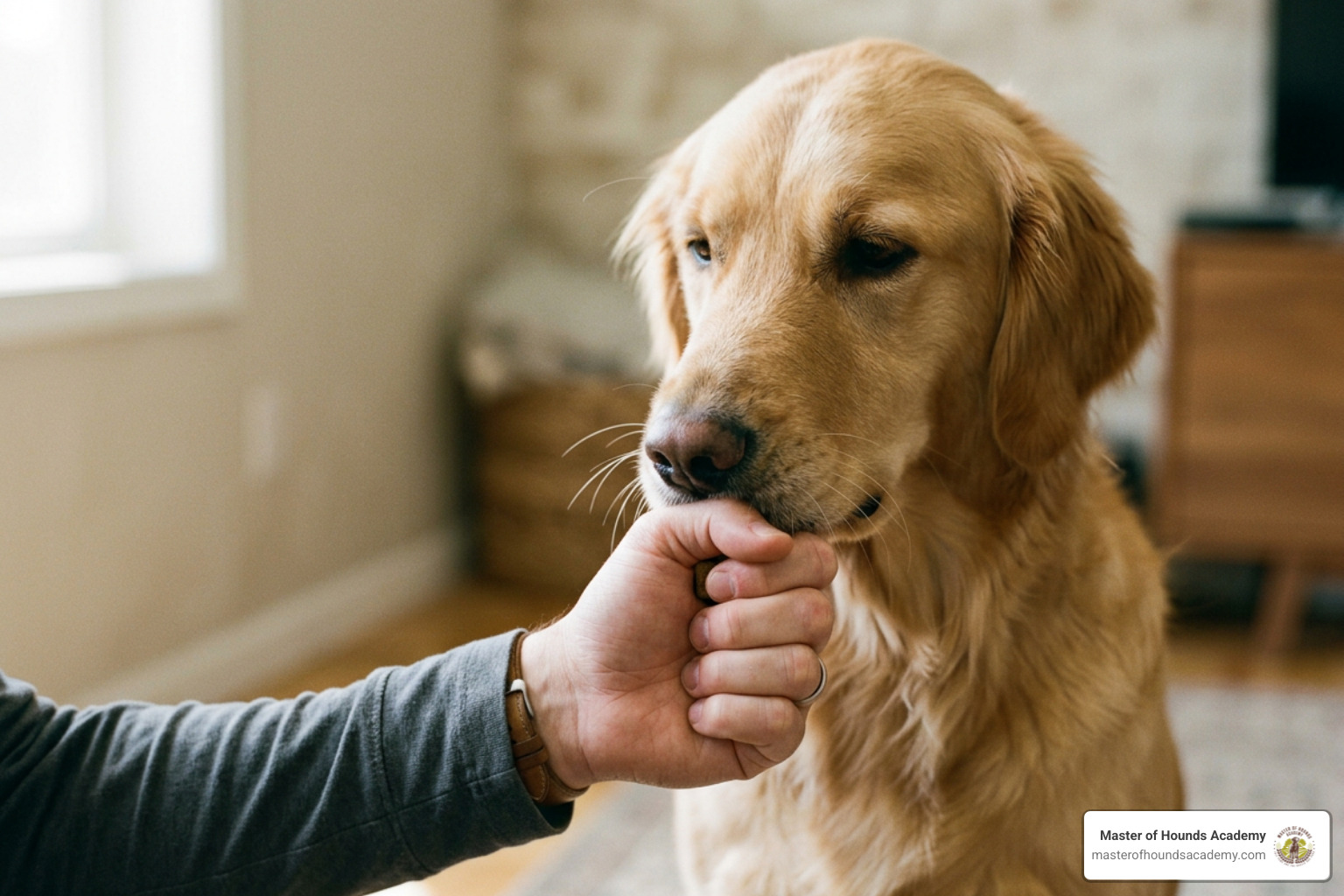
Follow this step by step sequence:
- Demand a calm sit first: Never offer food to an over aroused, jumping dog. Wait for a still body and relaxed ears.
- The closed fist presentation: Place a treat inside your closed fist and present your hand directly underneath your dog’s chin, rather than dropping it from above. Offering food from below reduces reaching and snatching reflexes.
- Encourage polite curiosity: Let your dog sniff or lick your knuckles. If they try to mouth your fingers roughly, keep your hand closed and still. Do not pull your hand away quickly, as sudden retreats trigger a predatory chase response.
- Mark and open: The instant your dog softens their mouth, steps back, or licks gently, say a calm marker word like “yes” and open your flat palm to release the food.
- Use intermediate tools if needed: If your dog has very sharp teeth or extreme excitement, deliver lickable treats like cream cheese or peanut butter from a long wooden spoon. This builds gentle licking habits while keeping human fingers completely safe.
- Safe eating zones: Feed daily meals in a quiet crate or behind a dedicated gate. Giving your dog an undisturbed space to eat eliminates the feeling that they must defend their bowl.
Change 3: Establishing Clear Household Rules and Structured Decompression
A home without clear routines can leave an anxious dog feeling like they must manage every noise and visitor themselves. Structured decompression provides predictable boundaries that allow your dog to truly relax.
- Balance physical exercise and mental enrichment: A tired mind is a peaceful mind. Pair brisk daily walks with scent games, puzzle toys, and obedience drills to channel natural drives constructively.
- Designate quiet resting zones: Ensure children and guests respect your dog’s sanctuary bed. When your dog is on their bed, nobody approaches, pets, or disturbs them.
- Doorway and greeting boundaries: Use leashes or place commands to manage front doors. Allowing a dog to rush guests creates frantic arousal that easily escalates into defensive snapping.
- Household consistency: Ensure every family member uses identical verbal cues and enforces the same house rules. Clarity reduces canine anxiety.
When to Seek Professional Behavioral Help
While everyday management brings tremendous relief, certain situations demand experienced, hands on intervention. Behavior modification for established snapping typically takes between eight to sixteen weeks of steady practice, with noticeable improvements often emerging within the first six to eight weeks.
You should contact a professional trainer immediately if you observe:
- Snapping that escalates into contact bites that puncture skin.
- Resource guarding directed toward small children or vulnerable family members.
- Unpredictable reactivity where triggers cannot be readily identified.
- Snapping accompanied by intense, unyielding body stiffness and prolonged lunging.
Before beginning any intensive behavioral modification plan, schedule a thorough veterinary exam to rule out musculoskeletal pain, thyroid imbalances, or neurological discomfort. For families navigating travel or busy work schedules alongside behavioral rehab, learning about safe boarding for aggressive dogs ensures your pet remains in skilled, secure hands.
Frequently Asked Questions About Snapping Dogs
How long does behavior modification take for a snapping dog?
Most dogs display clear behavioral progress within six to eight weeks of consistent daily management and threshold training. Achieving full, dependable reliability across diverse real world environments generally requires eight to sixteen weeks. The speed of progress depends heavily on household consistency, how long the habit has existed, and how diligently family members manage daily triggers.
Why does my dog snap when taking treats or toys?
Snapping for treats typically stems from high arousal, lack of impulse control, or poor bite inhibition learned during early puppyhood. Puppies that leave their litters before eight weeks of age often miss out on crucial feedback from littermates about mouth pressure. Approaching treat delivery with calm mechanics, closed fists under the chin, and clear release words quickly reshapes this habit. For deeper insights, explore How to Safely Stop Your Dog from Snapping for Treats | Lancaster Puppies and How to Control Snapping Movements in Dogs: A Complete Training Guide – Puppy N Treats.
Does an unexpected snap mean my dog is naturally aggressive?
No. An unexpected snap is almost always a distress call rather than a sign of malice or an unchangeable personality flaw. It indicates that your dog felt cornered, startled, protective, or pushed beyond their coping capacity. By identifying the underlying emotional state and introducing thoughtful boundaries, you can guide your dog back to calm confidence.
Restoring Harmony and Trust in Your Home
Living with a dog that snaps can feel overwhelming, but you do not have to navigate this journey alone. With patient leadership, clear household routines, and thoughtful training, you can rebuild trust and help your canine companion thrive.
At Master of Hounds Academy, we have spent more than thirty years helping Bay Area families across Oakland, Berkeley, San Francisco, Marin, and Walnut Creek transform stressful behaviors into lifelong harmony. Our proprietary Metcalf Method blends behavioral science with practical, real world application tailored to your dog’s unique personality.
Whether you are seeking focused guidance or comprehensive support, our tailored private lessons give you the tools, clarity, and peace of mind you deserve. You can also book a free consultation today to take the first step toward a calm, well mannered companion.