
Dog Behavior Training for a Calmer, More Confident Dog
Dog behavior training helps dogs understand what is expected, build useful habits, and handle everyday life with greater confidence. It is not just about teaching sit or stay. It is a structured way to address manners, anxiety, barking, chewing, jumping, reactivity, and aggression while improving communication between a dog and its family.
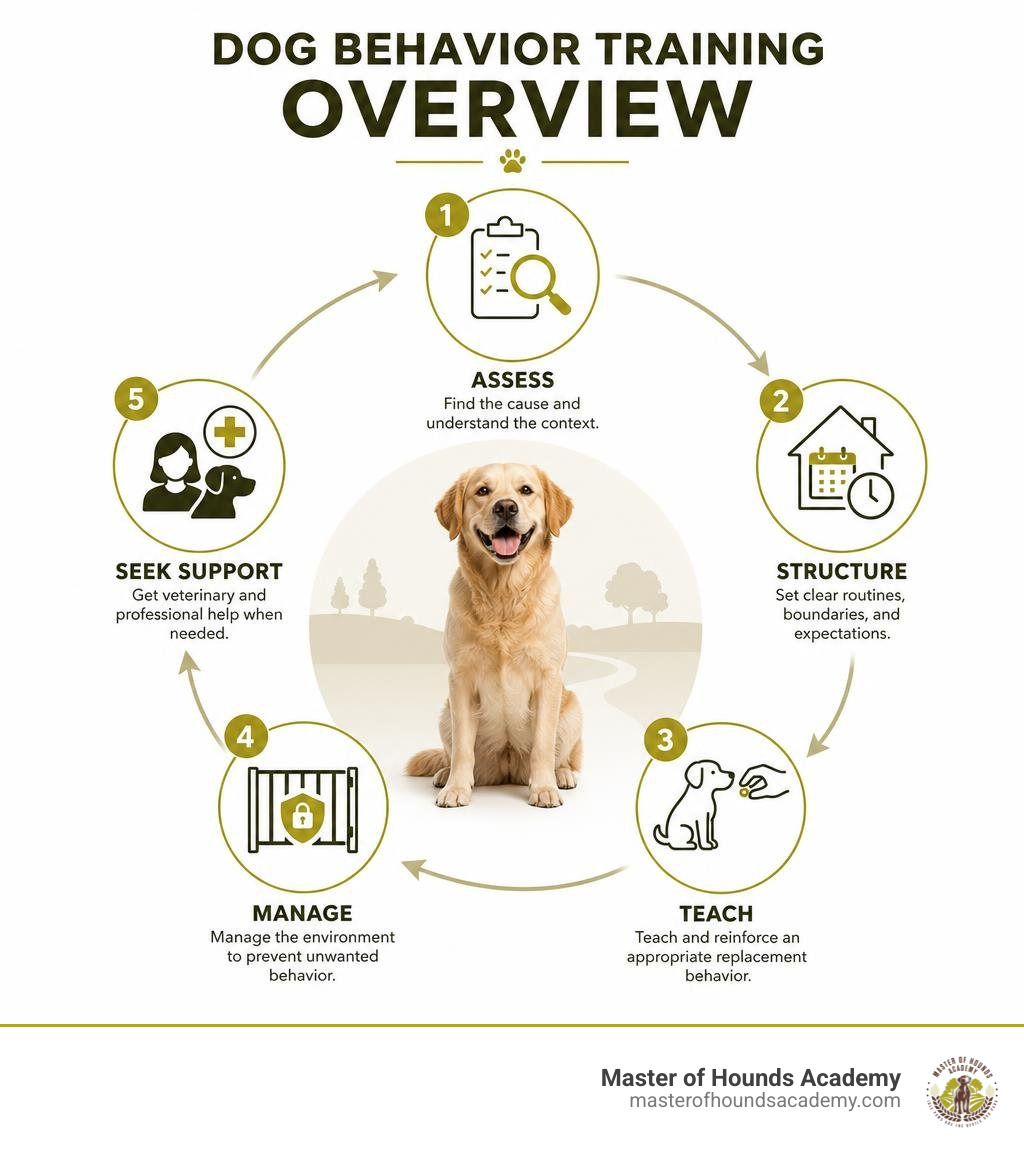
For a quick answer, effective behavior training usually includes:
- Finding the cause and context of the behavior, including possible health or pain concerns.
- Setting clear routines, boundaries, and household expectations.
- Teaching an appropriate replacement behavior the dog can practice often.
- Managing situations that allow unwanted behavior to repeat.
- Getting veterinary and professional support when fear, aggression, or distress affects safety or daily life.
Every dog brings its own personality, history, and quirks to the party. A young puppy who steals socks and an adult dog who panics when left alone may both need support, but they do not need the same plan.
I am Francis Metcalf, founder and co owner of Master of Hounds Academy, and I have spent more than two decades working in dog behavior training through private lessons, group classes, boarding programs, and personalized behavior based plans. In the sections ahead, we will look at the learning principles that help create clearer communication and steadier dogs.
Scientific Principles of Balanced Dog Behavior Training
Understanding how dogs learn allows us to guide their behavior with clarity and fairness. In our work across the San Francisco Bay Area, from Marin down to Berkeley and Oakland, we rely on the full spectrum of behavioral science. Animal learning operates through operant conditioning, a framework that explains how consequences shape future choices.
Balanced dog behavior training incorporates all four scientific quadrants of operant learning to give dogs complete information about their choices:
- Positive Reinforcement: Adding something rewarding to increase a desirable behavior, such as offering a treat or praise when a dog sits.
- Negative Reinforcement: Removing a mild pressure when the dog performs the correct action, such as releasing gentle leash pressure the moment a dog yields to it.
- Positive Punishment: Adding a clear correction to decrease an unwanted behavior, such as a crisp leash prompt that interrupts dangerous counter surfing or door bolting.
- Negative Punishment: Removing something the dog wants to reduce a behavior, such as turning away and withholding attention when a puppy jumps up.
Using all four quadrants creates a clear feedback loop. When a dog receives complete information about what works and what does not, confusion evaporates. We establish precise reward markers, like clickers or crisp verbal markers, to pinpoint exact moments of success. At the same time, clear boundaries help dogs understand limits before they cross behavioral thresholds into overwhelming arousal.
Key modification techniques working alongside operant conditioning include habituation, where a dog naturally learns to ignore harmless everyday stimuli, and response substitution, where we teach a calm alternative behavior like lying down on a mat instead of rushing the front door. To dive deeper into these core scientific principles, read the full clinical overview on Behavior Modification in Dogs – MSD Veterinary Manual.
Core Differences Between Normal Behaviors and True Disorders
When working with families in Alameda, Orinda, and Walnut Creek, one of our first jobs is helping owners distinguish between normal but undesirable dog habits and genuine psychological disorders. Dogs are naturally inclined to dig, bark, chew, and investigate their surroundings. When these natural instincts conflict with household decor or quiet neighborhood norms, we are dealing with normal undesirable behavior that requires structure and guidance.
A true behavior disorder is entirely different. It involves severe emotional dysregulation, panic, or compulsive repetition that persists regardless of basic exercise or management.
| Behavioral Category | Characteristics | Typical Examples | Primary Goal of Modification |
|---|---|---|---|
| Normal Undesirable Behavior | Contextually inappropriate, driven by normal canine instincts, easily redirected with clear boundaries. | Jumping on guests, stealing food from tables, play biting, nuisance barking at squirrels. | Establish clear household boundaries and teach replacement behaviors. |
| True Behavior Disorder | Pathological fear, intense distress, non adaptive response, persistence despite clear environment. | Separation distress, thunderstorm phobias, compulsive tail chasing, panic attacks. | Comprehensive behavioral modification, environmental control, and veterinary support. |
Understanding your dog’s unique baseline temperament is vital for identifying whether an issue is habit or distress. You can learn more about assessing your dog’s core baseline in our guide to A Guide to Dog Personalities.
Early Prevention Strategies in Dog Behavior Training
Prevention is always more effective than retrofitting habits later in life. The most influential window in a dog’s life is the critical socialization window, which occurs between 3 and 12 weeks of age. During this delicate phase, a puppy’s brain is uniquely receptive to forming neutral or positive associations with novel environments, handling, people, and other animals.
Proper puppy habituation during this window involves controlled environmental exposure rather than overwhelming sensory overload. We encourage owners across El Cerrito and Lafayette to introduce their puppies to diverse surfaces, gentle physical handling, vehicle rides, and strange sounds at low intensities. Pairing these novel experiences with structured play and clear feedback ensures puppies grow into adaptable adults who handle unexpected urban or suburban sights without falling into fear or defensive reactivity.
Proven Modification Techniques for Anxiety and Phobias

Anxiety and phobias in dogs can manifest as trembling, destructive chewing, pacing, vocalizing, or frantic escape attempts. Whether triggered by seasonal Bay Area thunderstorms, fireworks, or sound sensitivity from urban construction, resolving phobias requires a methodical approach that changes both emotional state and physical choice.
Systematic desensitization is the cornerstone of treating fear. We expose the dog to a low intensity version of the scary stimulus, well below their emotional threshold. For instance, if a dog panics at thunder, we play a high quality audio recording of rain and thunder at a whisper quiet volume. While the dog remains relaxed, we pair this sound with high value food rewards or engaging play, a process known as counterconditioning. Over time, as the dog forms a positive association with the low volume sound, we incrementally increase the volume across controlled sessions.
Shaping plays a vital role here as well. By marking and rewarding small incremental approximations of calm behavior, such as a heavy sigh, a lowered head, or resting on a bed, we actively teach the dog how to regulate their own nervous system. Creating a dedicated safe haven, such as a cozy interior room with white noise and comforting bedding, gives the dog an established retreat during unexpected environmental triggers.
Environmental Management and Daily Routine
Behavior modification cannot succeed if a dog is constantly exposed to triggers that cause panic or practice unwanted responses. Environmental management acts as a protective shield while new habits are being built.
- Predictable Scheduling: Establishing fixed times for meals, structured walks, training sessions, and quiet resting periods reduces underlying chronic stress.
- Physical Barriers: Utilizing frosted window film, baby gates, or specialized crate setups prevents dogs from fence fighting or barking continuously at passing pedestrians.
- Mental Enrichment: Providing puzzle feeders, long lasting chews, and scent games fulfills cognitive needs and lowers generalized restlessness.
- Exercise Balance: Ensuring dogs receive appropriate physical activity tailored to their breed traits, avoiding over arousal that leads to exhaustion without mental satisfaction.
- Calm Transitions: Structuring departures and arrivals so they are matter of fact, eliminating emotional high energy greetings that exacerbate separation anxiety.
Medical Interventions and Veterinary Behaviorists
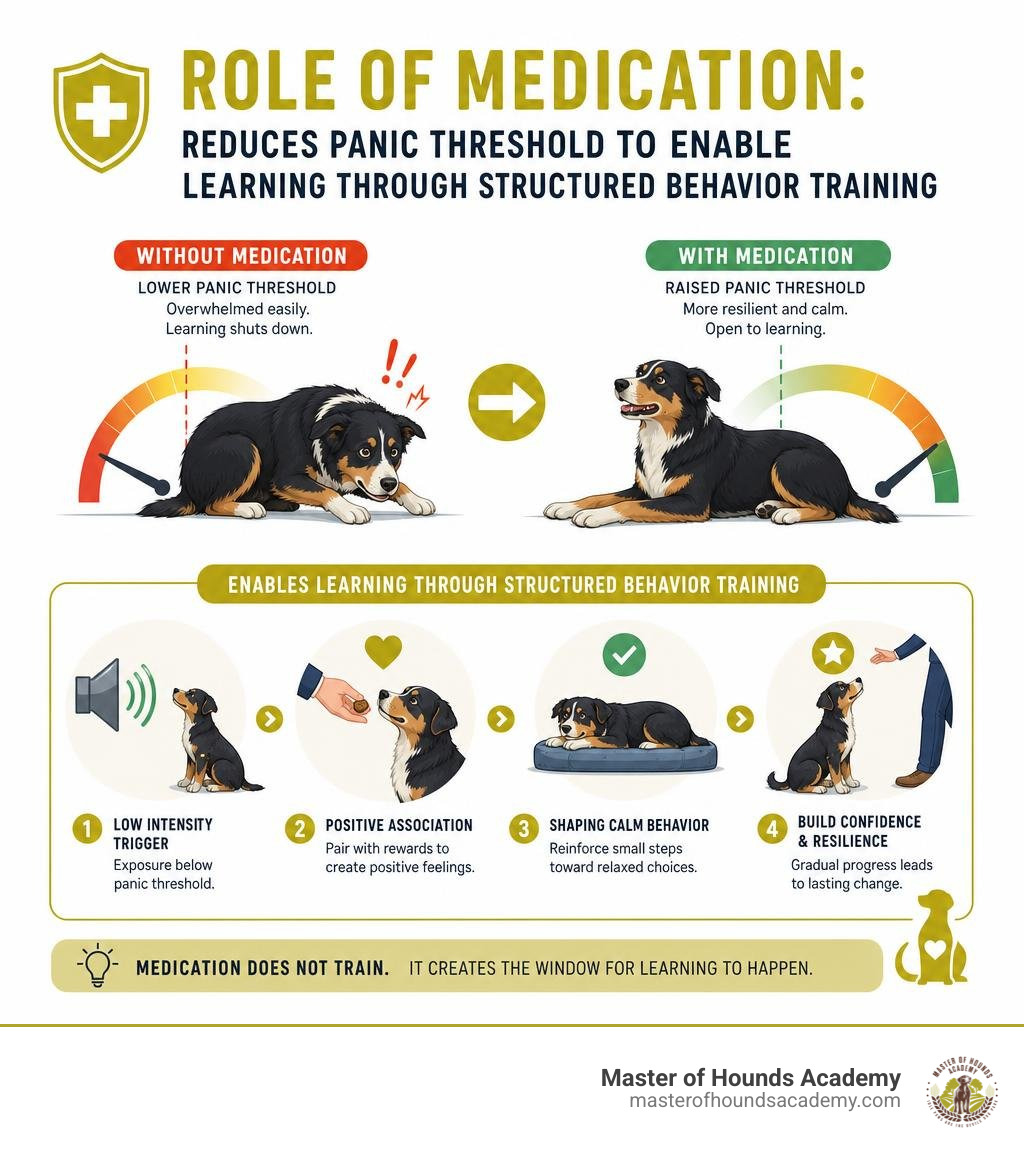
In severe cases where fear, anxiety, or panic prevents a dog from focusing or learning, behavioral pharmacotherapy becomes a valuable tool. Medications like Selective Serotonin Reuptake Inhibitors (SSRIs) or situational anxiolytics help raise the dog’s threshold, calming the brain enough for behavior training to take hold.
Before beginning any behavior modification program, a comprehensive medical examination by a qualified veterinarian is essential. Research indicates that between 28% and 82% of dogs evaluated by veterinary behaviorists suffer from underlying physical pain that directly causes or exacerbates their behavioral issues. Orthopedic discomfort, dental pain, gastrointestinal distress, or skin allergies can dramatically lower a dog’s patience and trigger sudden behavioral shifts. For a clinical breakdown of medical contributors and behavioral disorders, review the Behavior Problems of Dogs – Merck Veterinary Manual.
Managing and Treating Canine Aggression Safely
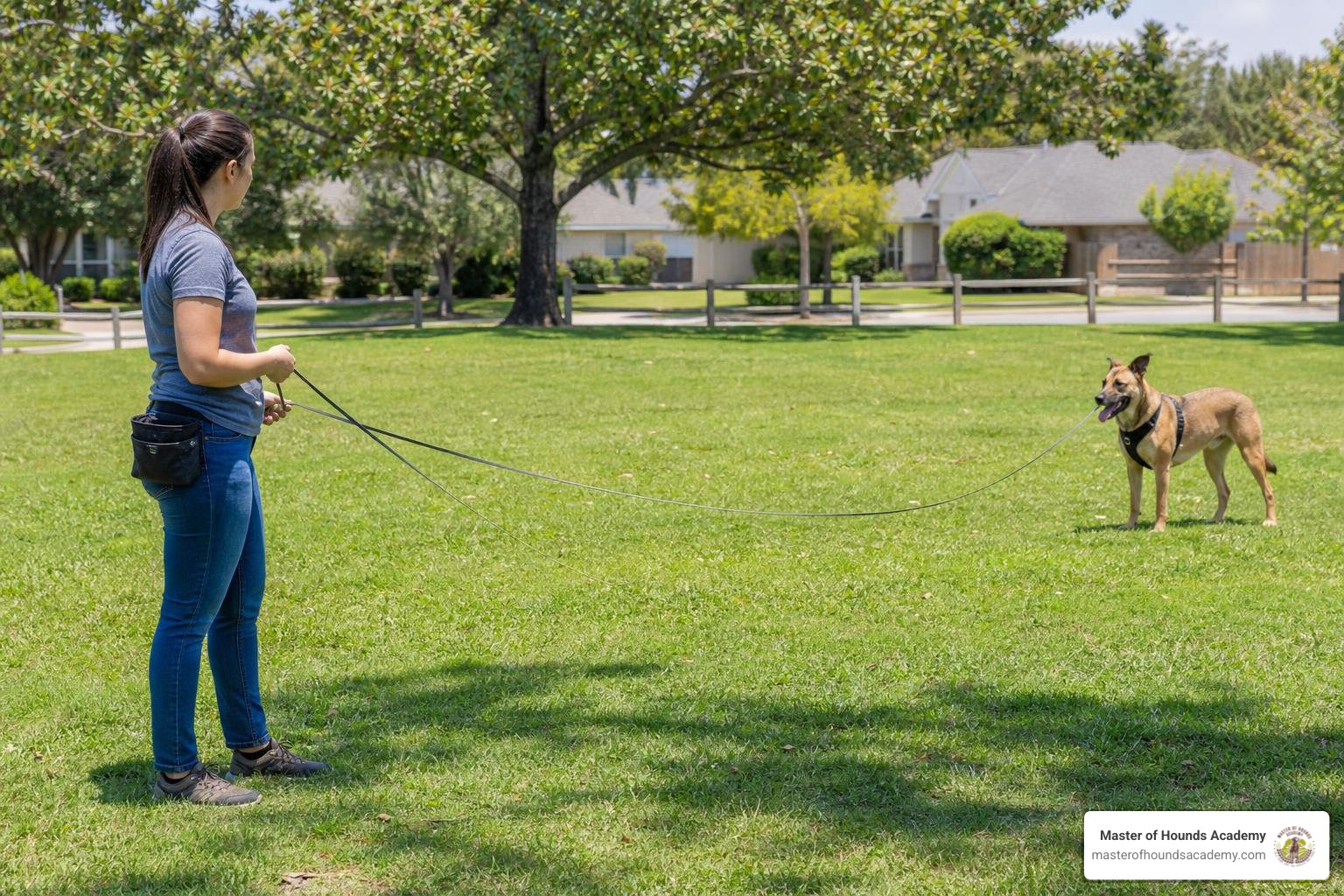
Canine aggression is one of the most challenging issues facing dog owners today. Clinical veterinary data shows that aggression accounts for approximately 70% of all behavioral referral practice caseloads across North America. Furthermore, at least 5 million people are referred for hospital treatment of dog bites each year in the United States alone. Addressing aggression requires absolute precision, professional guidance, and an uncompromising commitment to safety.
Aggression can stem from fear, territorial instincts, possessiveness, or redirected arousal. A fear aggressive dog acts aggressively to create distance between themselves and a perceived threat. Territorial reactivity arises when a dog feels compelled to defend their immediate living space or vehicle. Resource guarding occurs when a dog attempts to preserve access to valuable items like food, high value bones, furniture, or favorite family members.
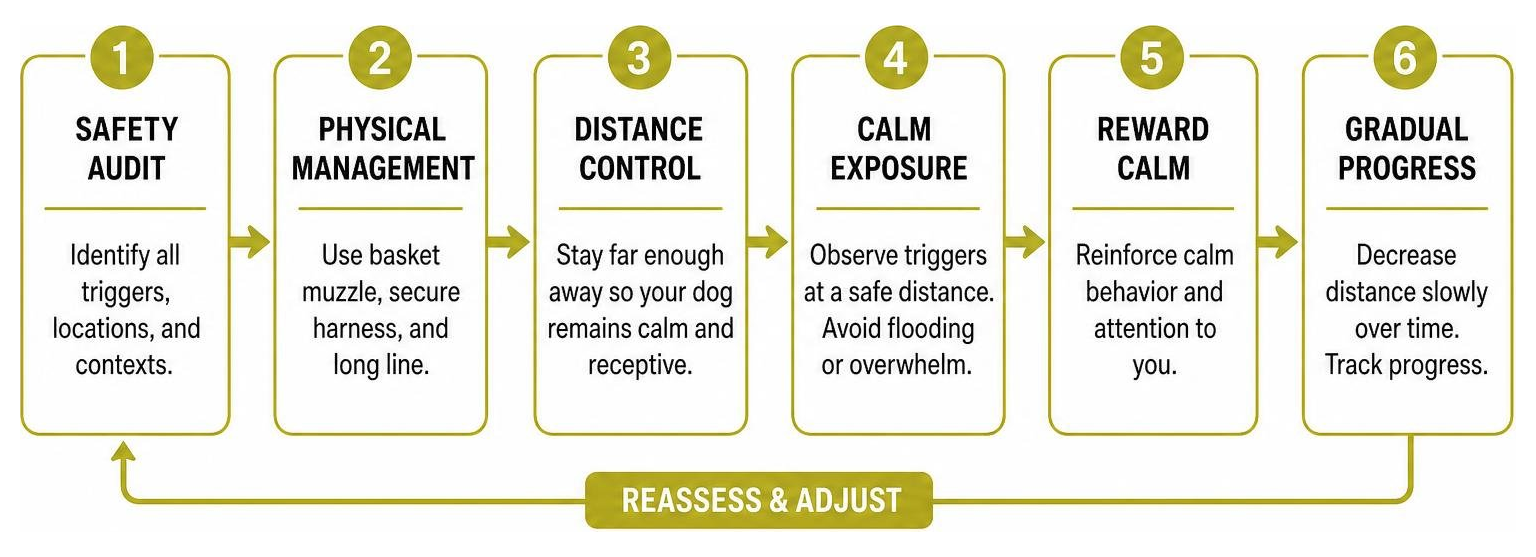
When handling aggressive triggers, maintaining control and safety is paramount:
- Conduct a Thorough Safety Audit: Identify every specific trigger, location, and context that precipitates an aggressive response.
- Implement Physical Management Tools: Utilize well fitted basket muzzles, secure double ring harnesses, and heavy duty long lines during all public outings.
- Establish Distance Controls: Keep your dog far enough away from triggers so they remain completely cool, calm, and receptive to direction.
- Enforce Clear Household Rules: Control access to high value resources, furniture, and doorways to prevent territorial conflicts or possessive displays inside the home.
- Partner with Experienced Professionals: Work directly with balanced behavior specialists who evaluate both ends of the leash and provide customized hands on protocols.
Selecting a Qualified Professional for Dog Behavior Training
Finding the right professional is the single most important decision an owner can make when addressing complex behavioral issues. The animal care and service industry, including professional dog trainers, is projected to grow by 15% over the coming decade. However, because the industry remains unregulated, owners must carefully evaluate a trainer’s credentials, experience, and practical approach.
When interviewing prospective professionals in San Francisco, Marin, or the East Bay, look for trainers who conduct thorough individual assessments rather than offering one size fits all promises. A qualified balanced trainer clearly explains how they utilize feedback across all operant conditioning quadrants, demonstrates transparent hands on mechanics, and sets realistic expectations. Avoid any professional who offers absolute guarantees on behavioral outcomes, as living animals are influenced by complex genetics, health factors, and environmental variables.
Addressing Specific Forms of Aggression
Treating complex aggression requires an understanding of working drives and breed genetics. Possessive aggression (resource guarding) requires clear protocols where dogs learn that human presence near valuable items predicts rewarding outcomes or structured exchanges rather than arbitrary loss. Redirected reactivity, where a highly frustrated dog bites the nearest object or person on the leash, requires building impulse control and setting firm behavioral boundaries under high arousal.
Working lines and high drive breeds, such as Belgian Malinois, German Shepherds, or Dutch Shepherds, require clear outlets for their innate drive alongside precise rules. In working breeds, what looks like spontaneous aggression is often unchanneled drive combined with a lack of structured leadership. To understand the unique challenges of high drive working breeds, read our essay Note to the American Public: Belgian Malinois – Look, Don’t Touch.
Frequently Asked Questions About Behavioral Care
How do I know if my dog’s issue is a normal bad habit or a disorder?
A normal bad habit usually occurs in response to immediate environmental opportunities, like stealing food left on a counter or jumping up to greet guests. These behaviors are easily modified once clear boundaries, alternative behaviors, and consistent rules are introduced.
A true behavior disorder, such as severe separation anxiety or sound phobias, involves profound emotional suffering, irrational fear responses, extreme physiological signs like hypersalivation or dilated pupils, and a total inability to settle even when physical needs are met. If a behavior impairs your dog’s quality of life or safety, it moves out of bad habit territory and into disorder territory.
When should medication be considered for dog behavior problems?
Medication should be evaluated when a dog’s anxiety, fear, or arousal is so elevated that they remain continuously above threshold and cannot learn or process behavioral feedback. Panicky states prevent cognitive processing, making training difficult or impossible.
In collaboration with your veterinarian or a board certified veterinary behaviorist, daily maintenance medications (such as SSRIs) or situational anxiolytics can lower baseline anxiety. Medication is not a standalone quick fix, but when paired with structured behavior modification, it creates the emotional stability required for a dog to learn new habits.
What role does underlying physical pain play in behavior changes?
Physical pain plays a massive role in dog behavior problems. Sudden onset irritability, uncharacteristic snapping, increased leash reactivity, reluctance to jump into vehicles, or aggression when touched often stem from hidden physical pain.
Orthopedic issues like hip dysplasia or arthritis, dental infections, ear inflammation, and abdominal distress cause chronic stress and lower a dog’s tolerance threshold. Evaluating pain with a thorough veterinary checkup, including bloodwork and diagnostic imaging, should always be the first step when addressing unexpected behavioral shifts.
Building Long Term Behavioral Harmony
Achieving real, lasting success in dog behavior training requires a holistic commitment that balances structure, exercise, clear communication, and mutual respect. When owners understand the underlying drives and emotional states of their dogs, frustrating behavioral challenges turn into opportunities for growth and deeper partnership.
At Master of Hounds Academy, we bring over 20 years of hands on experience to families across Oakland, Berkeley, San Francisco, Marin, and the surrounding Bay Area communities. Our signature Metcalf Method provides personality driven, behavior based solutions that help dogs of all breeds and backgrounds thrive. Whether through specialized board and train programs, structured group instruction, or private personalized lessons, we provide families with the tools needed for long term harmony.
If you are ready to transform your dog’s behavior and enjoy a confident, well mannered companion, explore our full range of professional training programs on our Master of Hounds Academy Services page.