
Step 1: Preparing Your First Dog Training Lesson
Before you begin your first dog training lesson, it helps to understand how dogs interpret the world around them. Dog learning relies on operant learning mechanics, which means dogs repeat behaviors that bring clear results and avoid actions that do not yield a benefit. As balanced trainers, we utilize all 4 scientific quadrants of operant learning. This balanced approach combines high clarity reward markers with fair, clear boundary setting to give your dog a complete roadmap for success.
When your dog understands both what to do and what not to do, confusion melts away. Clear communication builds confidence, whether you are teaching an energetic young pup in Berkeley or refining leash manners in Marin.
Structuring a Micro Dog Training Lesson for Quick Wins
When building foundational manners, less is truly more. A common mistake pet owners make is dragging out practice until the dog loses focus. Training sessions should be 3 to 5 minutes long, repeated several times a day to match a dog’s natural attention span.
Micro lessons keep your dog fresh, excited, and eager for the next round. Conducting these quick sessions right before mealtimes is a fantastic strategy because your dog is naturally more motivated to work. Short, frequent practice builds impulse control without inducing frustration or mental burnout.
Key Commands to Teach in a Dog Training Lesson
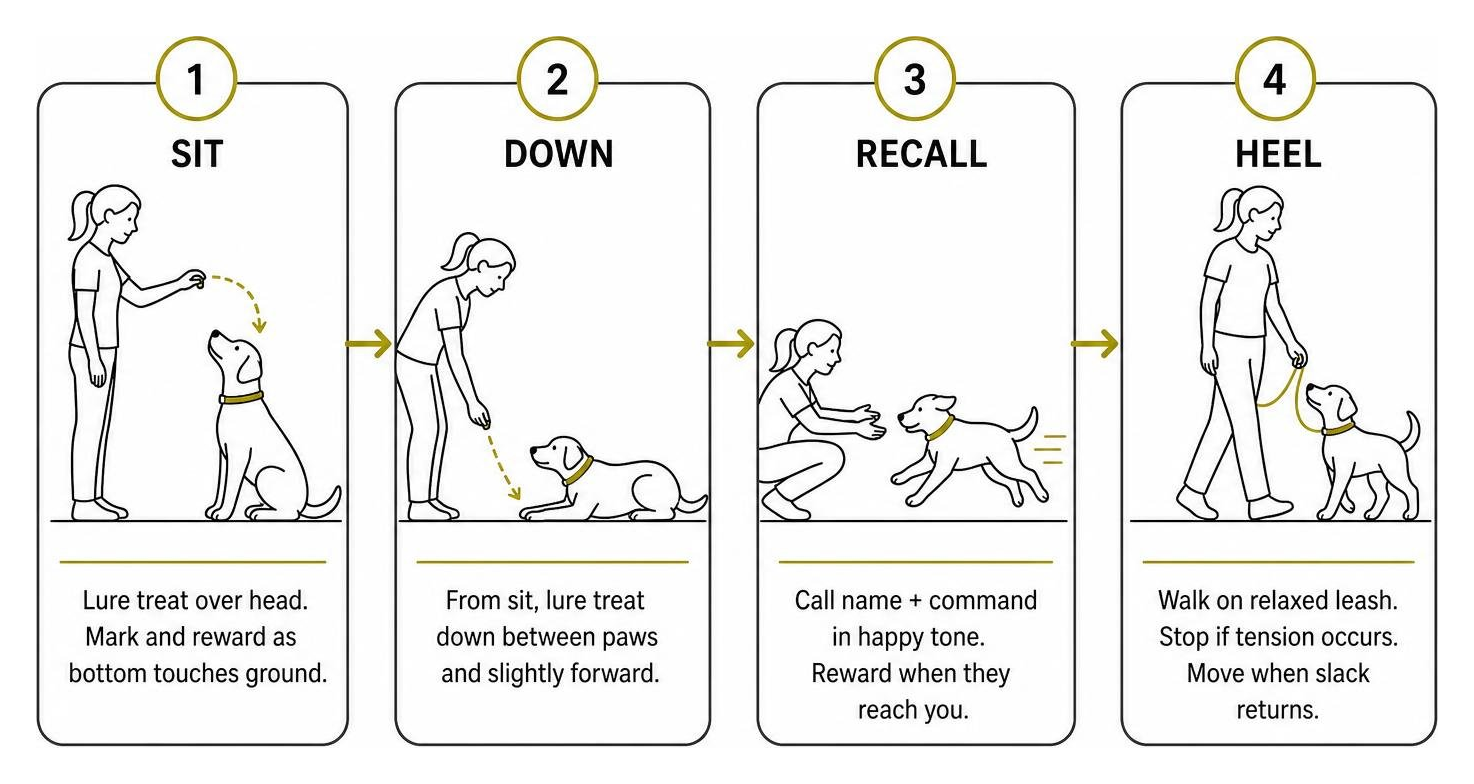
Every well mannered companion needs a core vocabulary. These foundational skills form the bedrock of daily safety and polite house manners:
- Sit Mechanics: Hold a reward at your dog’s nose level and slowly move it back over their head. As their head goes up, their rear touches the floor. Mark the exact second their bottom hits the ground and reward. Sit serves as an immediate alternative to unwanted habits like jumping on guests.
- Down Posture: Starting from a sit, lure your dog by moving a treat straight down to the floor between their front paws, then slightly forward. Lying down is a vulnerable posture for many dogs, so remain patient and encouraging.
- Recall: Call your dog’s name followed by a clear command word in a happy tone. Recall must always be a positive experience. Never use your recall cue to summon your dog for something they dislike, like nail trims or bath time.
- Heel Position: Teach your dog to walk directly beside your leg on a relaxed line. When tension occurs on the leash, stop moving immediately. Resume walking only when the tension releases.
Two commands that often cause confusion are leave it and drop it. Understanding the distinct roles of these two cues is essential for household safety.
| Command | Objective | Timing | Primary Application |
|---|---|---|---|
| Leave It | Preemptive disengagement before touching an item | Before the dog touches or picks up the object | Preventing access to dropped medication, chicken bones, or street trash |
| Drop It | Recovery release of an item already in the dog’s mouth | After the dog has already physically grabbed the object | Releasing a stolen sock, a retrieved toy, or a stick |
To build a reliable leave it, practice the closed fist exercise. Place a treat inside your closed hand. Let your dog sniff or nuzzle your fist. The moment they back away or look away, mark that moment and offer a higher value reward from your other hand. The golden rule of leave it is simple: forbidden items are never eaten. For a detailed breakdown on this vital safety skill, explore this guide on How to Teach Your Puppy Leave It.
Step 2: Proof and Generalize Behaviors Across Real World Environments
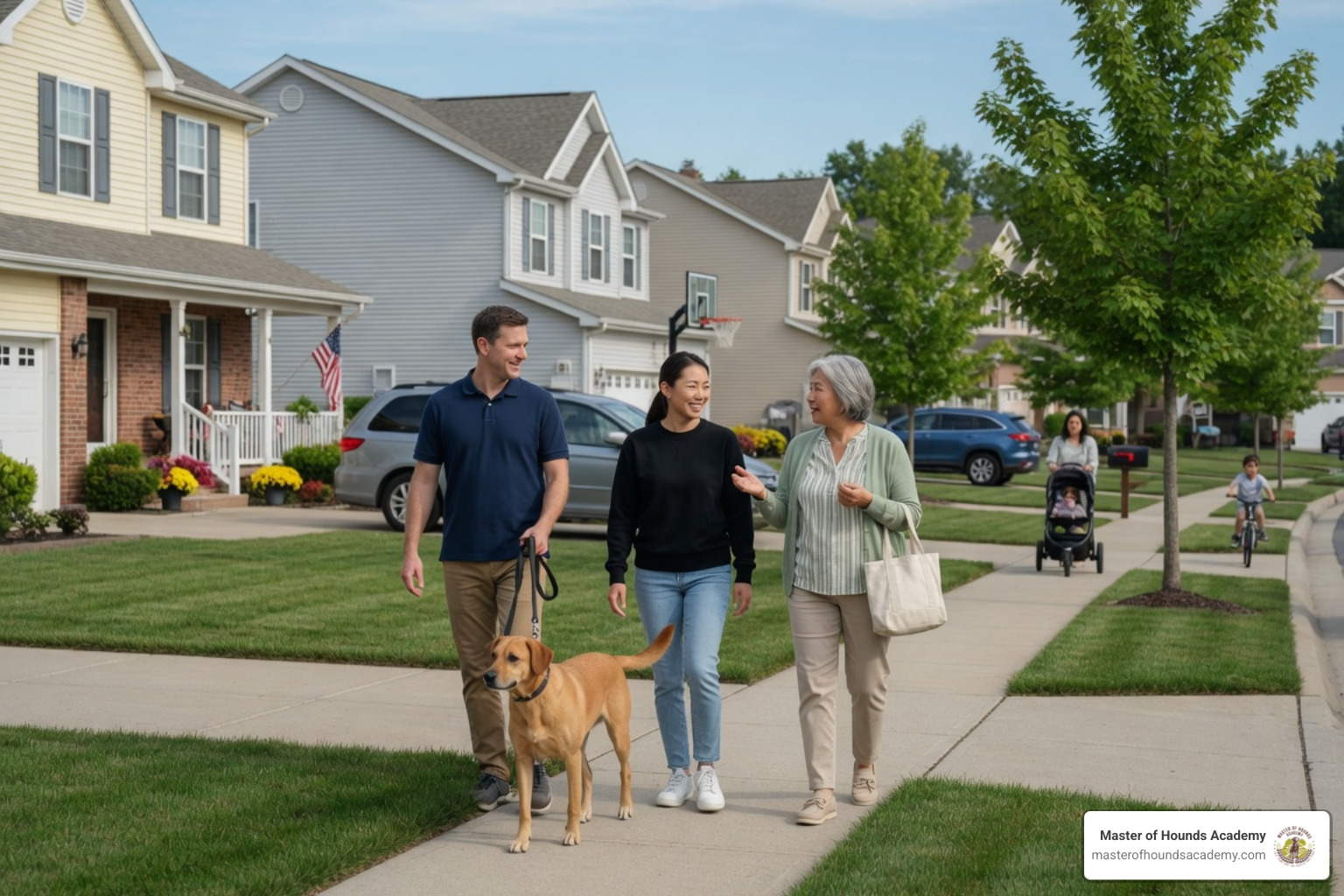
Once your dog reliably executes a behavior in your quiet living room, it is time to enter the generalization phase. Dogs do not naturally generalize concepts well. A sit performed in your kitchen does not automatically translate to a sit at a bustling park in Walnut Creek or Danville. In fact, when first transitioning a command from indoors to outdoors, command reliability can temporarily dip significantly due to exciting scents, sounds, and sights.
Generalization requires proofing commands by systematically increasing environmental distractions. Start by moving practice from the living room to the backyard, then to a quiet sidewalk, and eventually to busy outdoor shopping centers or neighborhood parks.
To maintain high enthusiasm during this phase, transition from continuous rewards to variable reinforcement schedules. Think of this as shifting from a predictable vending machine to an exciting slot machine. When a dog receives rewards unpredictably for sharp execution, their focus and engagement skyrocket.
Tailoring your proofing strategy to your companion’s unique temperament is equally vital. Take time to read A Guide to Dog Personalities to better align your training style with your dog’s natural traits. If you are tracking weekly developmental milestones, you can also cross reference this comprehensive resource on Puppy Training 101: A Week by Week Guide.
Step 3: Overcome Common Hurdles and Non Food Motivation
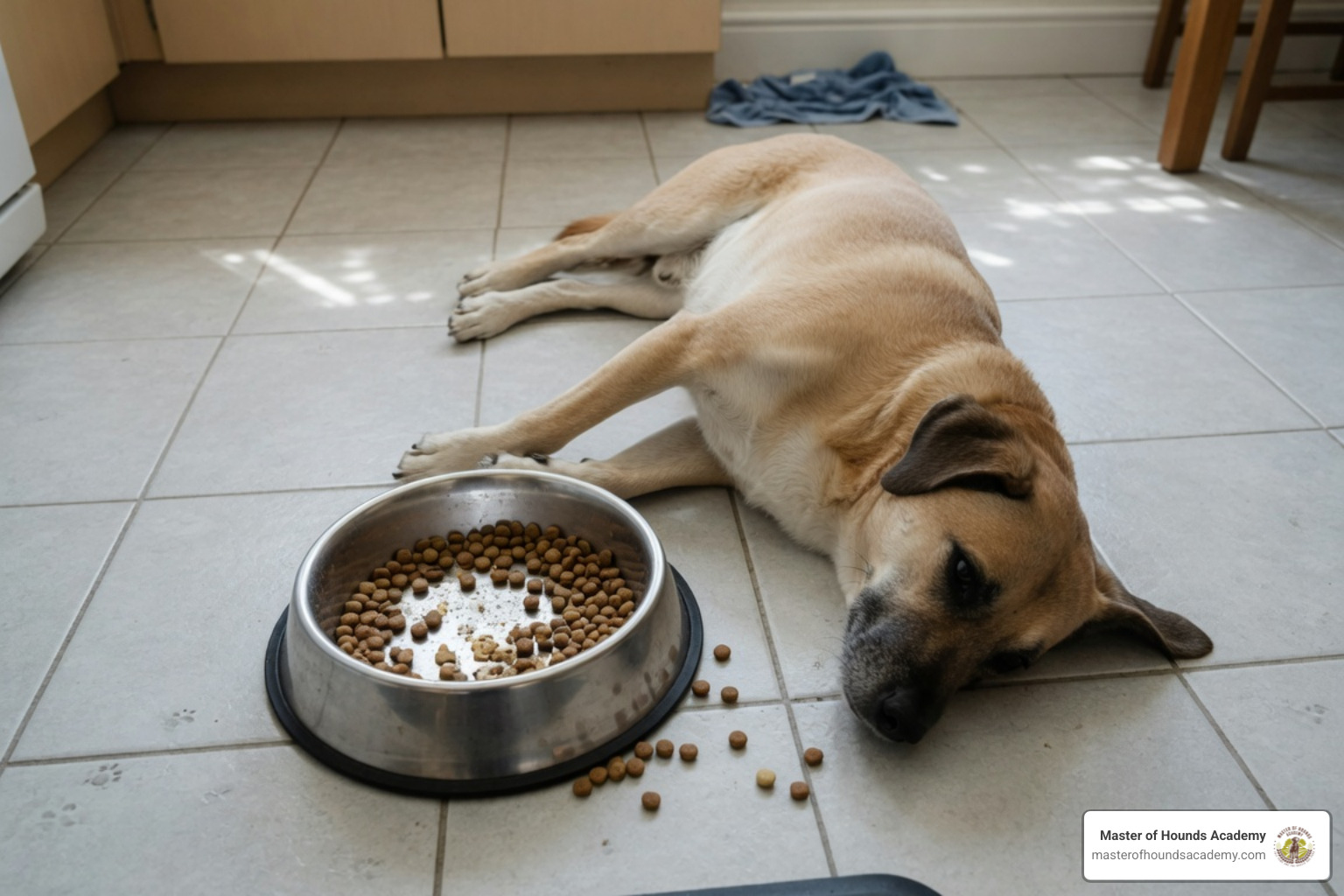
What should you do if your dog turns their nose up at standard treats? Not every dog is driven purely by kibble. Some companions require creative non food motivators or unique high value items to spark their enthusiasm.
- High Toy Drive: For dogs obsessed with play, a favorite squeaky toy, a tug rope, or a tennis ball provides incredible motivation. The opportunity to grab a toy or play a quick game of tug can be far more rewarding than a piece of dry food.
- Aromatic Alternatives: If standard treats fail, upgrade to tiny slivers of real chicken, cheese, or even a tiny lick of peanut butter offered from your fingertip.
- Mealtime Training Leverage: Use your dog’s regular daily food intake as training rewards throughout the day rather than feeding them from a bowl for free.
- Target Stick Luring: Target training uses an object or hand touch to guide your dog’s movement smoothly without physical luring. You can learn the step by step mechanics in Purina’s guide on Dog Target Training.
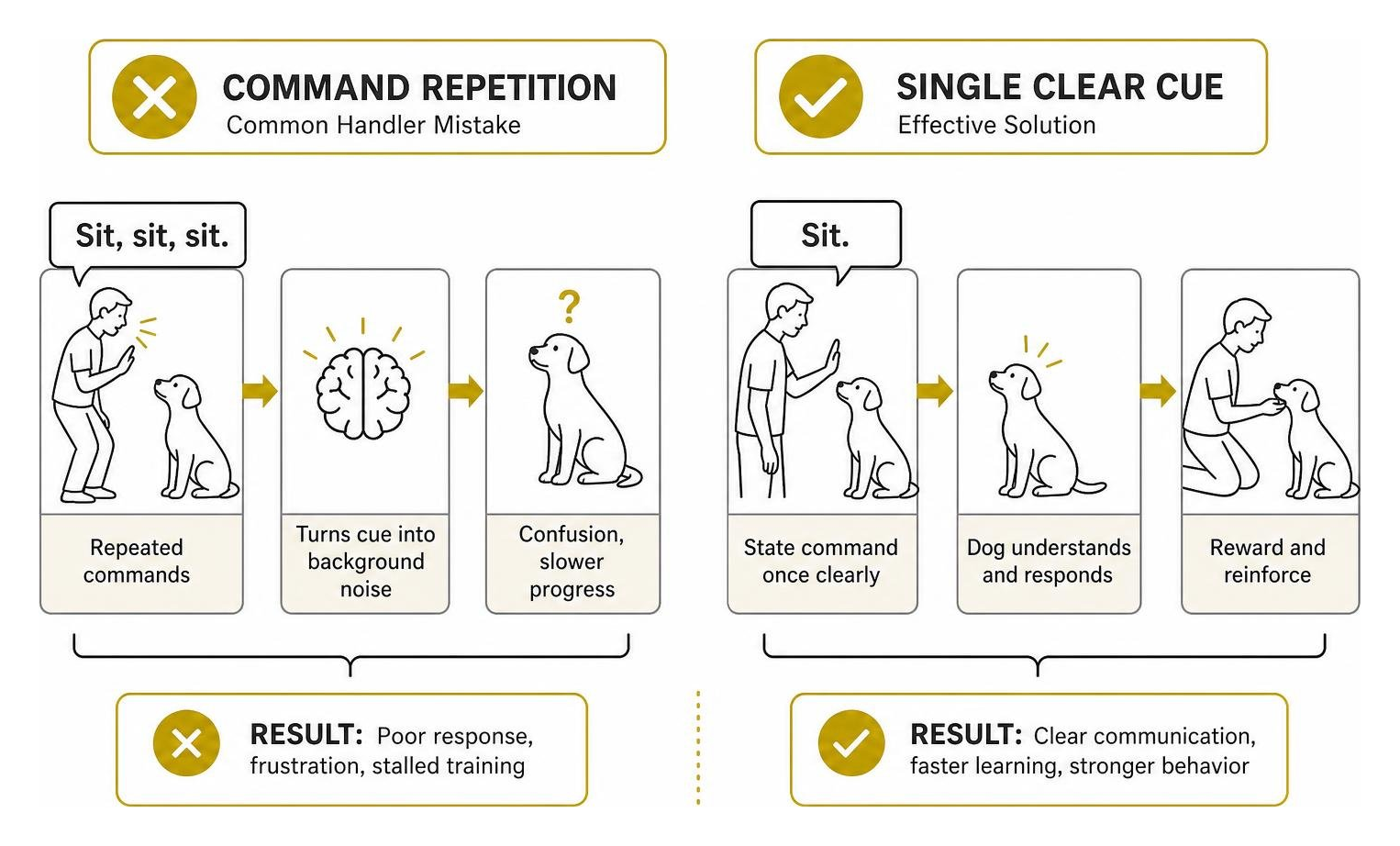
A frequent handler mistake that slows progress is repeating commands over and over. Saying “sit, sit, sit” turns the cue into background noise. State your command word once clearly. If your dog does not respond, evaluate whether the distraction level is too high or if your dog truly understands the underlying mechanic.
When to Seek Professional Guidance for Complex Behaviors
While basic obedience can easily be started at home, certain complex behaviors require the skilled hand of an experienced professional. Seeking expert support early prevents manageable issues from spiraling into dangerous habits.
Consider booking professional private lessons or customized programs if your companion displays:
- Moderate Reactivity: Excessive barking, lunging, or frantic behavior when seeing other dogs or people on leashes.
- Resource Guarding: Stiffening, growling, or snapping when humans or other pets approach their food bowl, toys, or sleeping spots.
- Severe Anxiety: Extreme distress, destructive chewing, or persistent vocalization when left alone.
- Persistent Aggression: Any unprovoked growling, snapping, or biting directed toward family members, strangers, or other animals.
Professional oversight provides structured safety protocols, clear handler mechanics, and tailored strategies tailored to your exact living situation. For additional community resources and local guidance, view Oakland Animal Services Recommended Dog Training Options. You can also read through DogTrainingHQ’s Complete Beginner’s Guide for more foundational insights.
Frequently Asked Questions About Dog Lessons
What is the best age to start training a puppy?
The ideal window to start gentle training and structured socialization is between 8 and 16 weeks of age. Puppies begin learning the moment they enter your home. Early handling, bite inhibition, crate comfort, and basic focus games can all start at 8 weeks old. However, older dogs can learn at any age with consistency and clear guidance.
How long should a single training session last?
For puppies and beginner adult dogs, an ideal micro dog training lesson should last between 3 and 5 minutes. Conducting two to three short micro lessons throughout the day yields far better retention and enthusiasm than a single, exhausting thirty minute session.
What should I do if my dog is not motivated by treats?
If your dog ignores treats, assess the environment and the reward value. High distractions lower food motivation, so practice in a quiet room first. You can also switch to non food rewards such as favorite squeaky toys, a game of fetch, verbal praise, or high value real food rewards like small pieces of cooked chicken or peanut butter.
Unlocking Your Companion’s Full Potential
Building a well mannered companion comes down to clear communication, short practice sessions, and a balanced behavioral plan. By utilizing all 4 quadrants of operant learning, you provide your dog with complete clarity on how to navigate the human world safely and happily.
Whether you are raising an adventurous puppy in Orinda or seeking better leash control along the trails of Mill Valley, consistency and structure are your best allies. Every brief dog training lesson you conduct builds trust and mutual respect.
If you are ready for expert support tailored directly to your lifestyle, Master of Hounds Academy is here to help. Explore our personalized private dog training lessons today to create a clear path forward for you and your dog.