
Start Training Lessons for Puppies From Day One
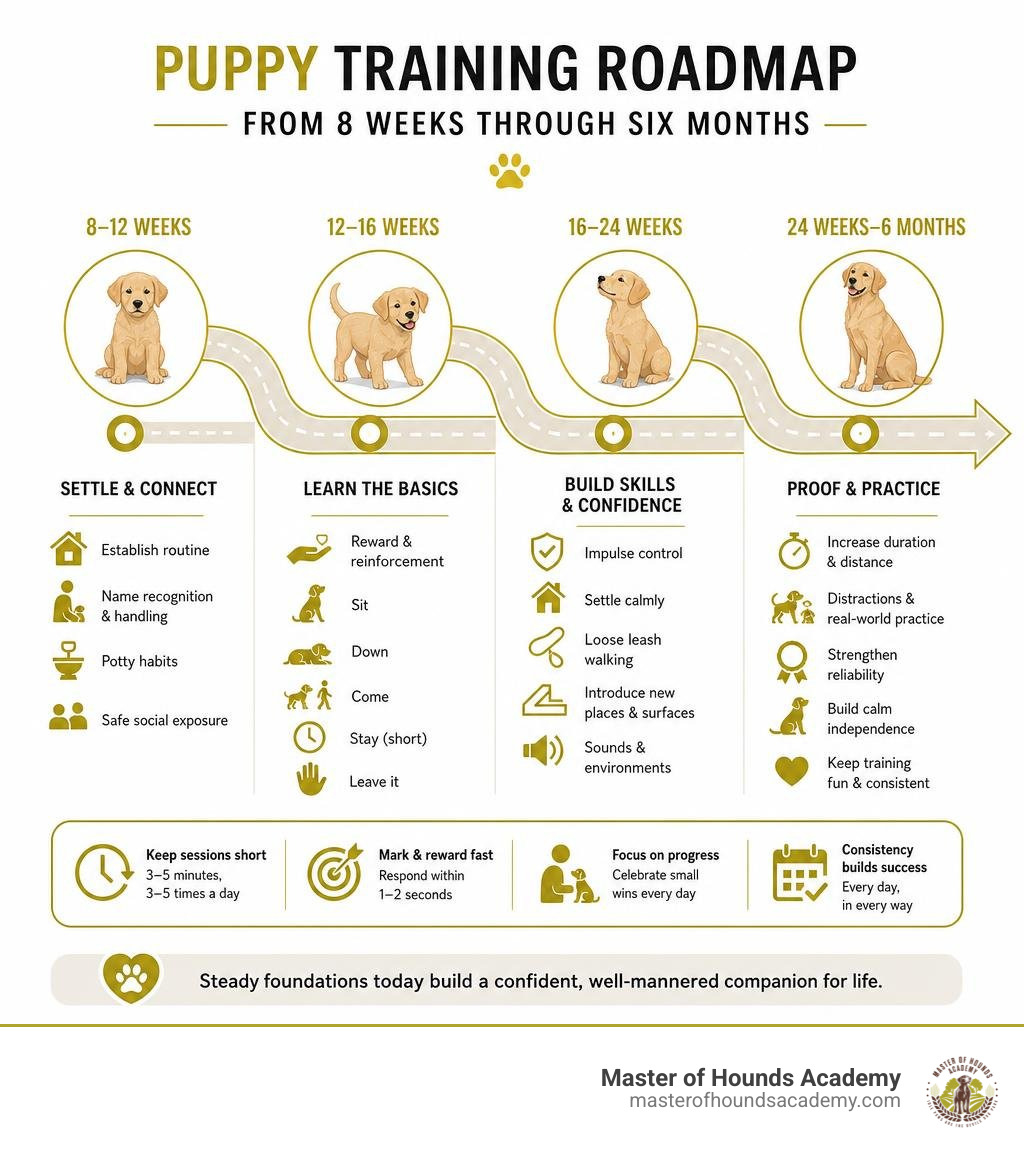
Start training the day your puppy comes home. Focus first on a predictable routine, name recognition, calm handling, potty habits, and safe social exposure. Then add short lessons for sit, down, come, stay, and leave it.
For young puppies, keep practice simple: 3 to 5 minutes at a time, 3 to 5 times a day. Mark the right choice and respond within one to two seconds, so your puppy can connect the behavior with the outcome. The most important work happens before 16 weeks, when puppies are especially open to learning about people, places, sounds, surfaces, and everyday family life.
Good puppy training is not a race to collect commands. It is the steady work of building focus, confidence, impulse control, and clear household habits, one tiny win at a time.
I am Francis Metcalf, founder and co owner of Master of Hounds Academy, and I have spent more than two decades helping dogs and their people build practical skills through personalized training. In this guide to training lessons for puppies, I will share the foundation work that helps young dogs grow into calm, capable companions.
Basic training lessons for puppies glossary:
Developmental Foundations: When to Begin and What to Teach First
Bringing a new pup home to your living room in San Francisco, Berkeley, or Walnut Creek is pure delight, but it also begins a race against developmental clocks. When you wonder what to teach first, manners precede mechanics. Before teaching formal obedience cues, focus on creating clear communication, relationship trust, and household structure.
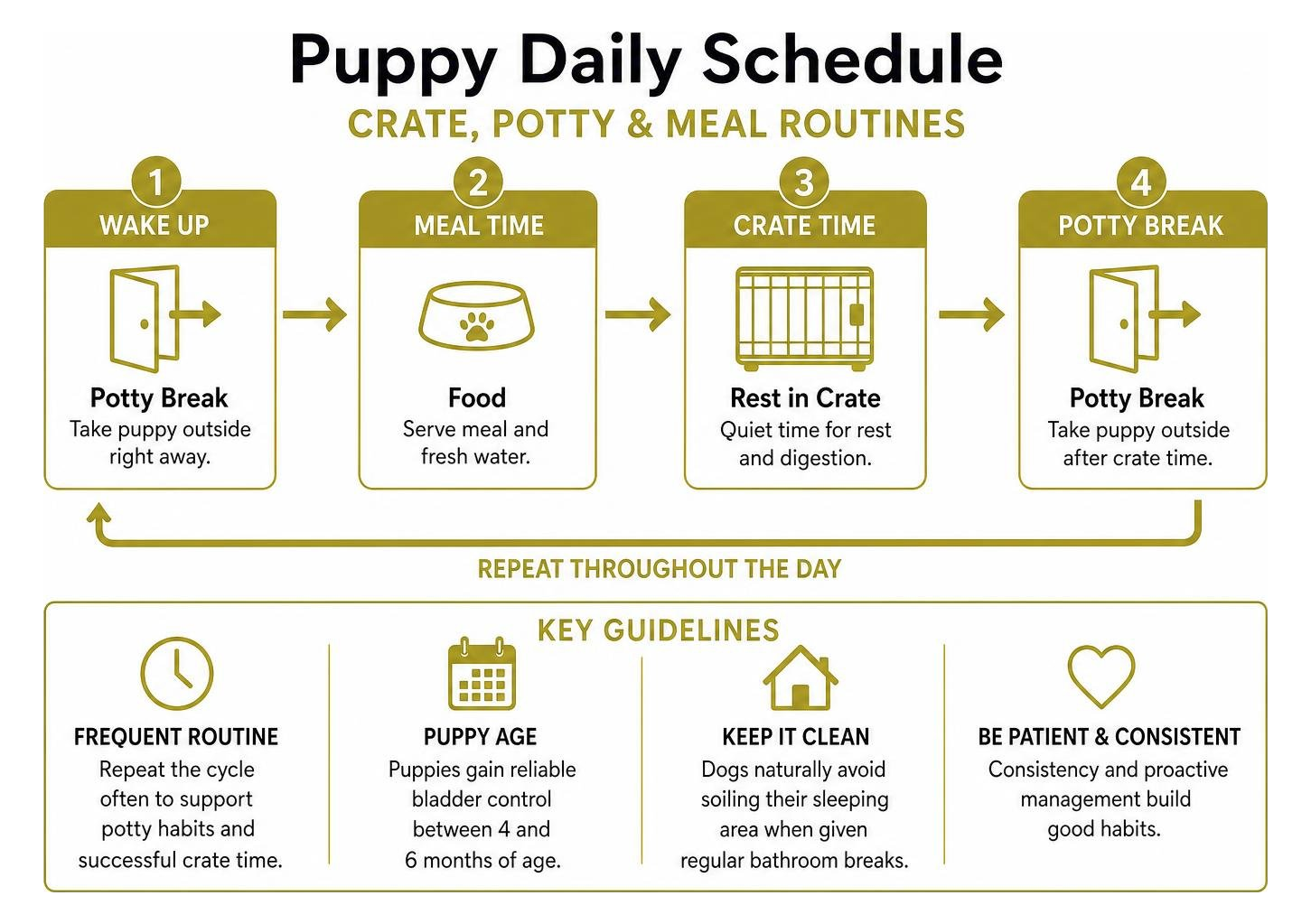
The first order of business involves crate acclimation and a dependable potty routine. A properly sized crate serves as a comfortable, safe den where your pup can relax without getting into mischief. By aligning crate time with frequent bathroom breaks, you tap into a dog natural instinct to keep their sleeping area clean. Puppies generally gain reliable bladder control between four and six months of age, so patience and proactive management are essential. For a thorough walkthrough on laying down these early habits, explore our step by step guide to basic puppy training for your family alongside helpful insights from the AKC guide on early puppy behaviors.
The Critical 8-to-16-Week Socialization Window
Puppies are most receptive to learning and novel experiences between six and sixteen weeks of age. This critical socialization window closes by sixteen weeks, making early, controlled exposure vital. Socialization does not mean throwing your puppy into chaotic, overwhelming dog parks. Rather, it means thoughtful, calm introductions to different sights, sounds, humans, and footings.
A helpful guideline is the 7 7 7 framework. Before four months of age, your pup should walk across seven different surfaces (such as grass, tile, wood, gravel, concrete, wet sand, and metal grates), see seven varied locations, and meet diverse groups of friendly people wearing hats, coats, or carrying umbrellas. Gentle handling of paws, ears, tails, and muzzles during this window prevents future distress during veterinary checkups or grooming sessions.
Establishing Routine and the 3-3-3 Rule
Dogs find immense peace in predictability. When a puppy enters a new home, they process a monumental environmental shift. We rely on the 3 3 3 rule to set realistic expectations for your journey:
- First 3 days: Your puppy needs time to decompress, adjust to new smells, and overcome initial overwhelm.
- First 3 weeks: Your pup begins grasping daily routines, feeding schedules, potty spots, and household rhythms.
- First 3 months: Your dog feels entirely settled, trusts their family, and reveals their true personality.
Every puppy brings a distinct temperament to the table, ranging from naturally bold to quietly cautious. Recognizing these traits early allows you to customize your lessons, as outlined in our look at understanding unique dog personalities.
Structuring Daily Training Lessons for Puppies at Home
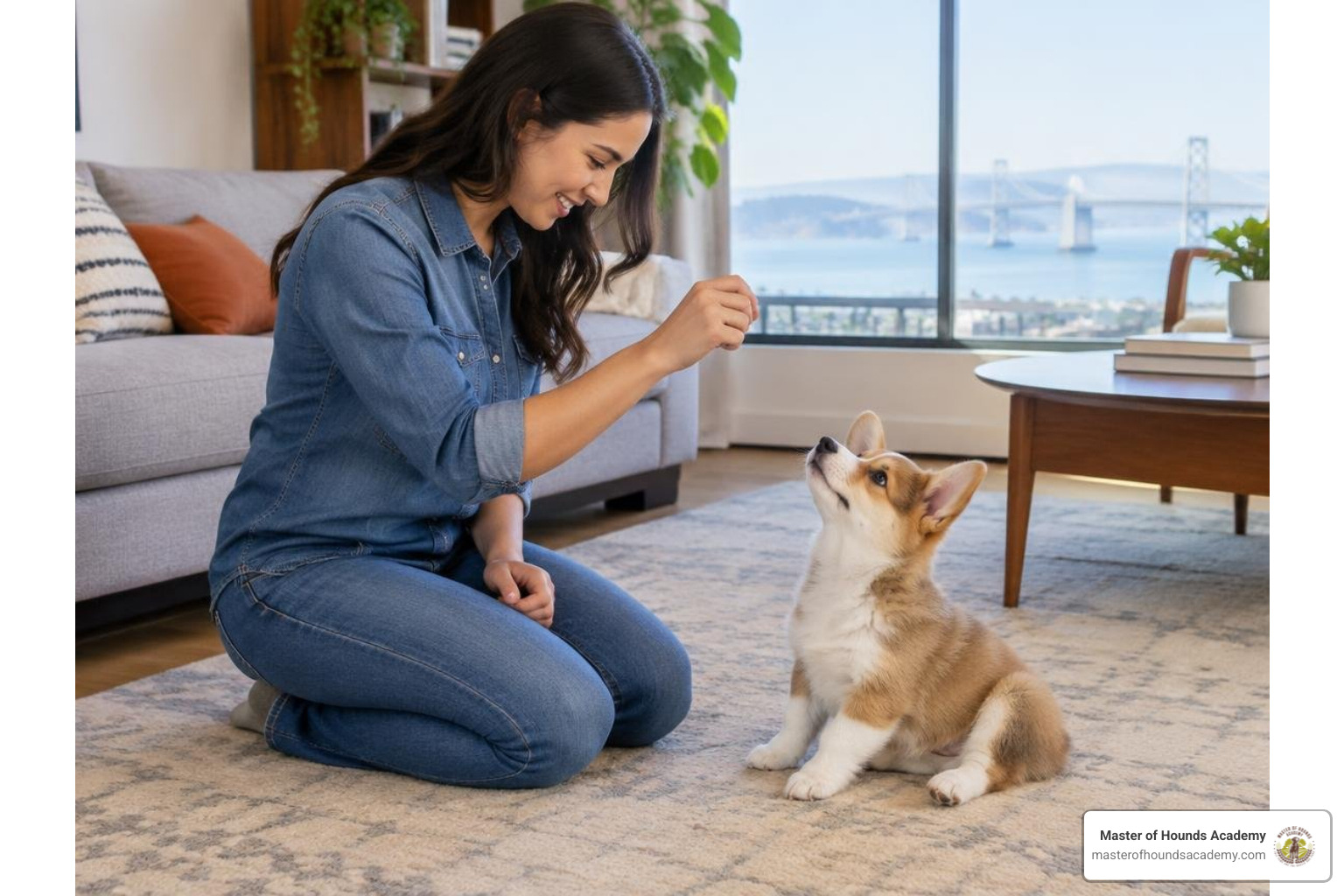
Puppy brains tire quickly. Instead of long, exhausting drills, puppy education thrives on micro sessions integrated into daily life. We utilize balanced operant conditioning across all four quadrants of learning, providing clear feedback so your pup understands both what earns rewards and what boundaries exist. When instructions are fair and clear, learning becomes an enjoyable, stress free game.
Session Duration, Frequency, and Reward Timing
Keep formal training drills between three and five minutes, repeated three to five times each day. These short bursts prevent mental fatigue while building intense focus.
Timing is everything in canine learning. A reward or marker signal must occur within one to two seconds of the desired action. If you delay, your puppy may associate the prize with a totally different movement, like scratching an ear or looking away. For a deeper look at building these foundational habits, check out our guide on how to start dog training in 3 simple steps.
Luring, Capturing, and Shaping Techniques
Teaching basic body positions relies on three primary mechanics, as detailed in veterinary behavioral resources like VCA Animal Hospitals training principles:
- Luring: Guiding your puppy into position using a small piece of food right in front of their nose like a gentle magnet. Once the position is offered consistently over five to ten reps, fade the food lure so your puppy responds to an empty hand gesture.
- Capturing: Waiting for your puppy to spontaneously offer a natural behavior (such as lying down on a rug), marking it instantly with a verbal cue like “Yes”, and delivering a reward.
- Shaping: Rewarding small, progressive approximations toward a complex final goal, such as stepping onto a platform or ringing a bell.
| Technique | Description | Best Application for Puppies |
|---|---|---|
| Luring | Leading the dog into position with a food prompt | Teaching initial sit, down, and heel positions quickly |
| Capturing | Marking and rewarding natural, unprompted actions | Calm resting, eye contact, and quiet greetings |
| Shaping | Building behaviors step by step through small successes | Crate entry, place training, and target touching |
The Core Obedience Progression: From First Cues to Impulse Control
Obedience training gives dogs a language to navigate our human world. A structured progression creates emotional balance and impulse control, turning frantic energy into polite manners.
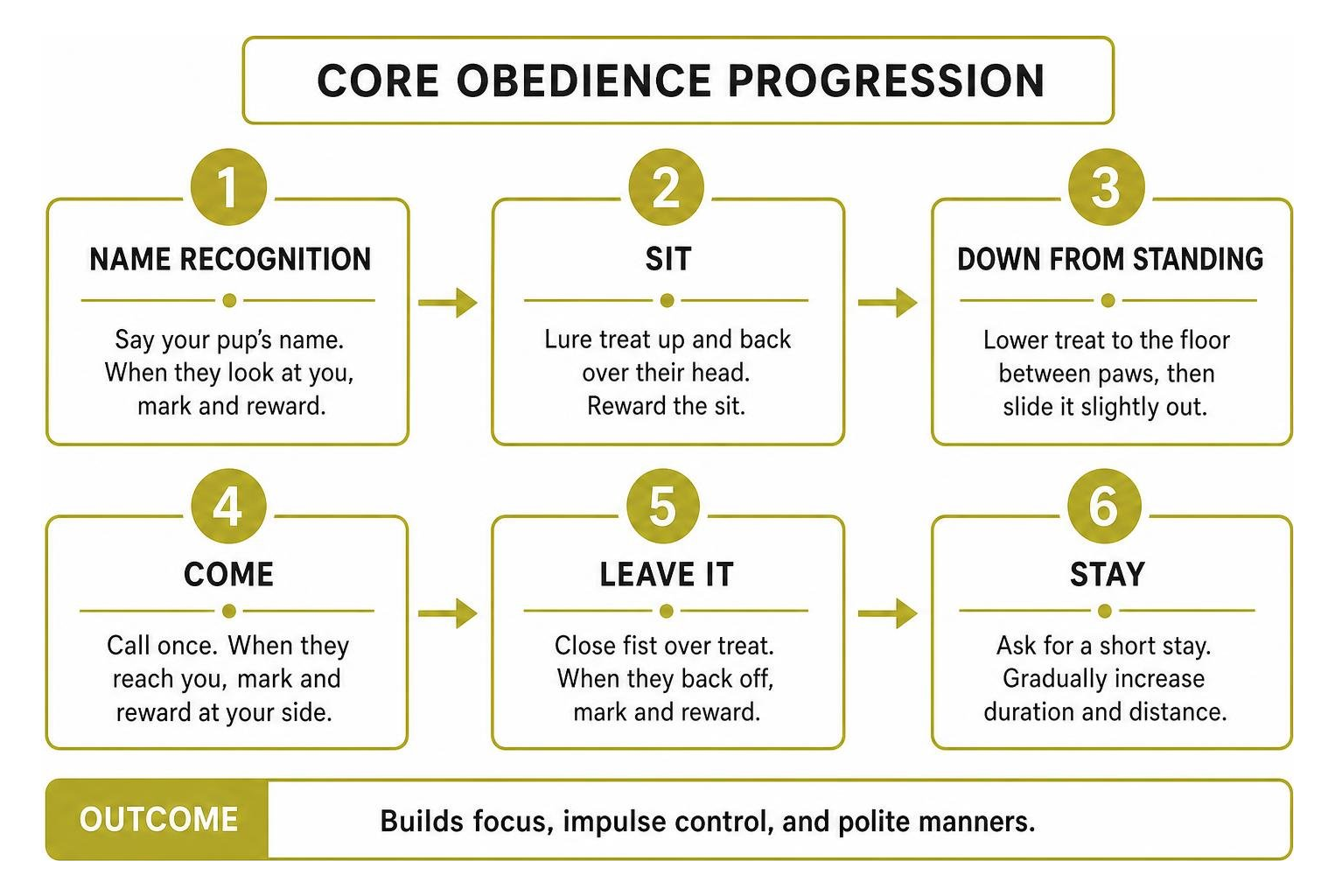
Core Training Lessons for Puppies: Five Essential Cues
- Name Recognition: Say your pup name in an upbeat voice. The moment their head turns to make eye contact, mark the action and reward them. This forms the basis of all future communication.
- Sit: Hold a treat just above your pup nose and move it slowly backward over their brow. As their head tilts up, their rear naturally drops to the floor. A polite sit serves as a canine please for meals and door openings.
- Down from Standing: While many people teach down from a sit, teaching down directly from a standing position prevents sloppy crawling habits and encourages crisp focus. Lower the treat vertically from the dog nose straight down to the floor between their front paws, then slide it slightly outward.
- Implied Stay: Rather than turning stay into a separate word, teach an implied duration where the puppy understands that sit or down means remain in place until an intentional release cue is spoken.
- Leave It and Recall (Come): Teach leave it as an absolute boundary where the item on the floor is not accessible, rewarding the pup with high value treats directly from your hand instead. Pair this with a cheerful recall, making coming to you the most rewarding activity in the world.
Managing Bite Inhibition and Polite Play
Puppies explore their environment mouth first. Sharp puppy teeth are designed to teach bite inhibition through feedback. When your pup mouths your skin too firmly, let out a calm, sharp sound, pause physical play for a few moments, and immediately redirect their jaws onto an appropriate textured chew toy. Consistency across all family members teaches your young dog how to develop a soft, gentle mouth.
Navigating Milestones, Adolescent Regression, and Real-World Proofing

As your pup grows from a clumsy baby into an energetic juvenile, their brain undergoes substantial hormonal and cognitive changes. Consistent boundaries keep your training intact through every stage.
Six-Month Developmental Benchmarks
By six months of age, a well guided puppy should have:
- Reliable housetraining with clear communication when they need to go out.
- Polite mealtime impulse control, waiting patiently rather than jumping or barking.
- A responsive recall inside the home and in low distraction yards.
- Calm comfort resting quietly inside their crate or on an assigned place bed.
Between five and twelve months of age, many puppies experience an adolescent regression. They might suddenly test boundaries or pretend they have never heard the word come. Do not panic; this phase is entirely normal. Maintain firm, kind routines, revisit foundation lessons, and reinforce expectations without wavering.
Proofing Behaviors Against Distractions
To ensure your dog listens anywhere, from quiet suburban streets in Danville and Lafayette to bustling paths in Marin and San Rafael, apply the three Ds of dog training:
- Distance: Ask for cues while standing further away from your pup.
- Duration: Gradually increase the time your dog maintains a sit or down before delivering the reward.
- Distraction: Slowly introduce real world interruptions, such as bouncing balls, passing bicycles, or other dogs walking nearby.
Always change only one parameter at a time. If you increase the distraction level, decrease the distance and duration until your dog regains total focus.
Choosing Professional Guidance for Your Growing Dog
While at home practice builds the bedrock of good manners, professional coaching accelerates your progress, prevents blind spots, and ensures balanced communication. Working with skilled mentors helps you navigate specific developmental leaps with ease.
Choosing Private vs Group Training Lessons for Puppies
Both one on one coaching and group settings offer distinct advantages depending on your dog temperament and your family lifestyle:
- Group Environments: Enrolling in structured group classes provides vital environmental exposure, allowing your puppy to practice impulse control and focus around unfamiliar dogs and people in a controlled setting.
- Individualized Instruction: Opting for customized private lessons gives you direct, one on one guidance focused entirely on your home dynamics, specific neighborhood challenges, and personalized training goals. You can explore all our comprehensive services or schedule a friendly free consultation to map out the ideal path for your family companion.
Frequently Asked Questions About Puppy Training
How long should daily training sessions last for an eight-week-old puppy?
Keep formal drills between three and five minutes per session, practiced three to five times daily. Young puppies possess short attention spans, and micro lessons keep them eager, alert, and engaged.
How do you safely socialize a puppy before full vaccinations?
You can safely socialize your pup by carrying them in your arms, taking car rides to new sights, letting them explore clean private outdoor surfaces, and inviting healthy, fully vaccinated adult dogs over for calm interactions. Avoid public dog parks and contaminated soil until your veterinarian clears your pup vaccination schedule.
What should a puppy master by six months of age?
By six months, a pup should be reliably housetrained, comfortable spending quiet time in a crate, responsive to basic cues like sit, down, and recall, and capable of displaying bite inhibition and impulse control during meals and doorway greetings.
Building a Lifetime of Joyful Companionship
Raising a puppy is an unforgettable journey that combines patience, laughter, and consistent guidance. By establishing structured daily routines, prioritizing early socialization, and delivering clear communication through balanced operant learning, you set the foundation for a confident, well mannered companion who can seamlessly join you on every Bay Area adventure.
At Master of Hounds Academy, we bring over twenty years of dedicated family owned experience to help you achieve lasting harmony with your dog. Whether you are seeking focused foundational manners or comprehensive behavior development, our holistic Metcalf Method provides the customized roadmaps your family needs. Connect with our experienced team to begin your journey through our tailored private lessons and browse our library of helpful articles to support your pup every step of the way.