
Understanding the Root Causes of Aggressive Dog Behavior
Body Language Signals Preceding Aggressive Dog Behavior
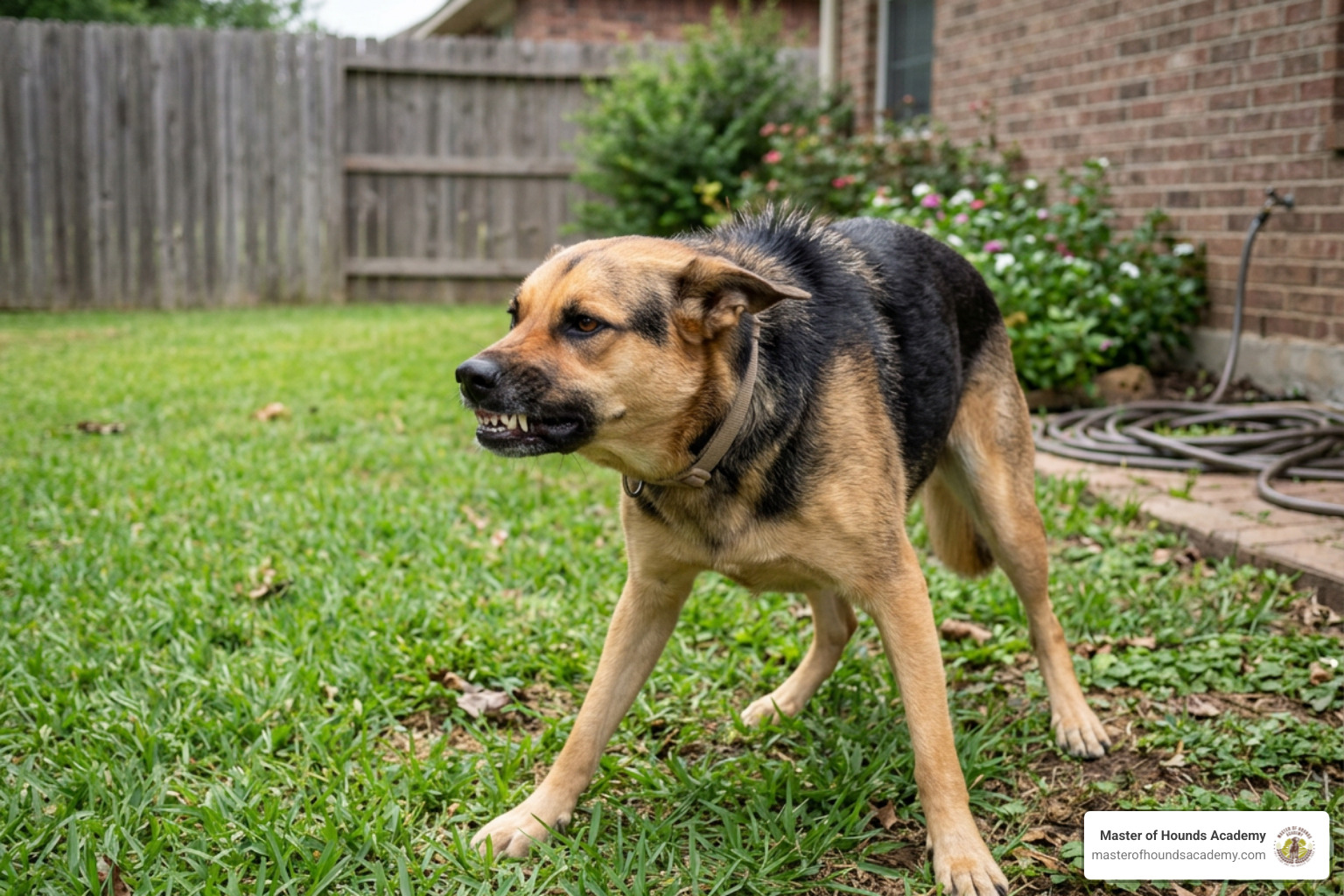
Dogs rarely bite without warning. They communicate through subtle physical cues long before an explosive outburst occurs. When a dog displays aggressive dog behavior, they are following an escalating communication continuum.
Early warning signals often begin with subtle changes in body language:
- Lip licking and yawning: Displayed out of context, these signals indicate rising internal stress or anxiety.
- Whale eye: The dog turns their head away while keeping their eyes fixed on a threat, revealing the white crescent of the eye.
- Freezing and rigid posture: The body becomes completely stiff and motionless. This brief pause signals that the dog is overwhelmed and preparing to react.
- Growling and snarling: Vocal warnings that communicate a clear request for space. A wrinkled muzzle and exposed teeth indicate heightened arousal.
- Snapping and biting: Physical contact occurs when earlier warnings were ignored, suppressed, or when the dog felt immediate escalation was required.
Understanding these signals is like observing a boiling teapot. The faint crackles of heating water represent the subtle facial expressions and body posture changes. The loud whistle is the final growl or bite. If we pay attention to the faint crackles, we can intervene long before the teapot boils over.
It is vital never to punish a dog for growling or displaying warning signs. Growling is your dog’s safety valve. When you discipline a dog for growling, you remove their ability to communicate discomfort. This can lead to a dog that skips lower level warning signals entirely, jumping straight from a hard stare to a sudden bite. You can learn more about recognizing aggression signs to protect both your family and your pet.
Primary Motivators: Fear, Pain, and Environmental Triggers
Aggression is a distance increasing behavior designed to make a perceived threat go away. To modify the behavior effectively, we must evaluate the primary motivators:
- Fear and Anxiety: Research shows that highly fearful dogs are more than five times likelier to exhibit aggressive behavior than non fearful dogs. Fear drives a fight or flight response. When a dog feels trapped on a leash or cornered in a room, fight becomes their only perceived option.
- Pain and Medical Conditions: Physical discomfort drastically lowers a dog’s emotional threshold. Arthritis, dental disease, ear infections, or thyroid dysfunctions can cause a previously gentle pet to react defensively when touched.
- Resource Guarding and Territorial Defense: Valued objects such as food bowls, high value bones, cozy sleeping spots, or property boundaries can trigger defensive responses if a dog feels their access is threatened.
- Trigger Stacking: Imagine a gas can filling up drop by drop. Missed breakfast might add a few drops, an uncomfortable grooming session adds more, and an unexpected thunderclap fills the can to the brim. A minor event, like a guest reaching out to pet the dog, acts as the match that ignites an explosive reaction.
Reviewing scientific insights on canine behavior highlights how underlying physiological and environmental stressors combine to lower a dog’s threshold for conflict.
Types of Canine Aggression and Risk Assessment
Key Classifications: From Resource Guarding to Predatory Behavior
Categorizing behavior based on motivation helps us structure effective training plans. Aggression typically falls into several key classifications:
- Possessive Aggression: Guarding food, toys, stolen objects, or specific resting locations from human or animal family members.
- Territorial Aggression: Defending the home yard, property perimeter, or vehicle against approaching strangers or delivery workers.
- Redirected Aggression: Occurs when a dog is highly aroused by a trigger they cannot reach, such as another dog behind a fence, and turns to bite whatever is nearest, including their owner or a housemate dog.
- Predatory Drive: Distinct from emotional aggression, predatory behavior involves a silent sequence of stalking, chasing, capturing, and biting small animals, livestock, or fast moving targets.
- Social Conflict: Misunderstandings between household dogs or unfamiliar animals over movement, access to attention, or structural boundaries.
Understanding your dog’s core temperament provides vital context for these behaviors. Exploring A Guide to Dog Personalities helps owners distinguish between dynamic personality traits and situational behavioral triggers.
Evaluating Risk Factors: Breed, Age, Sex, and Predictability
Assessing the overall risk of living with an aggressive dog requires evaluating several interconnected metrics:
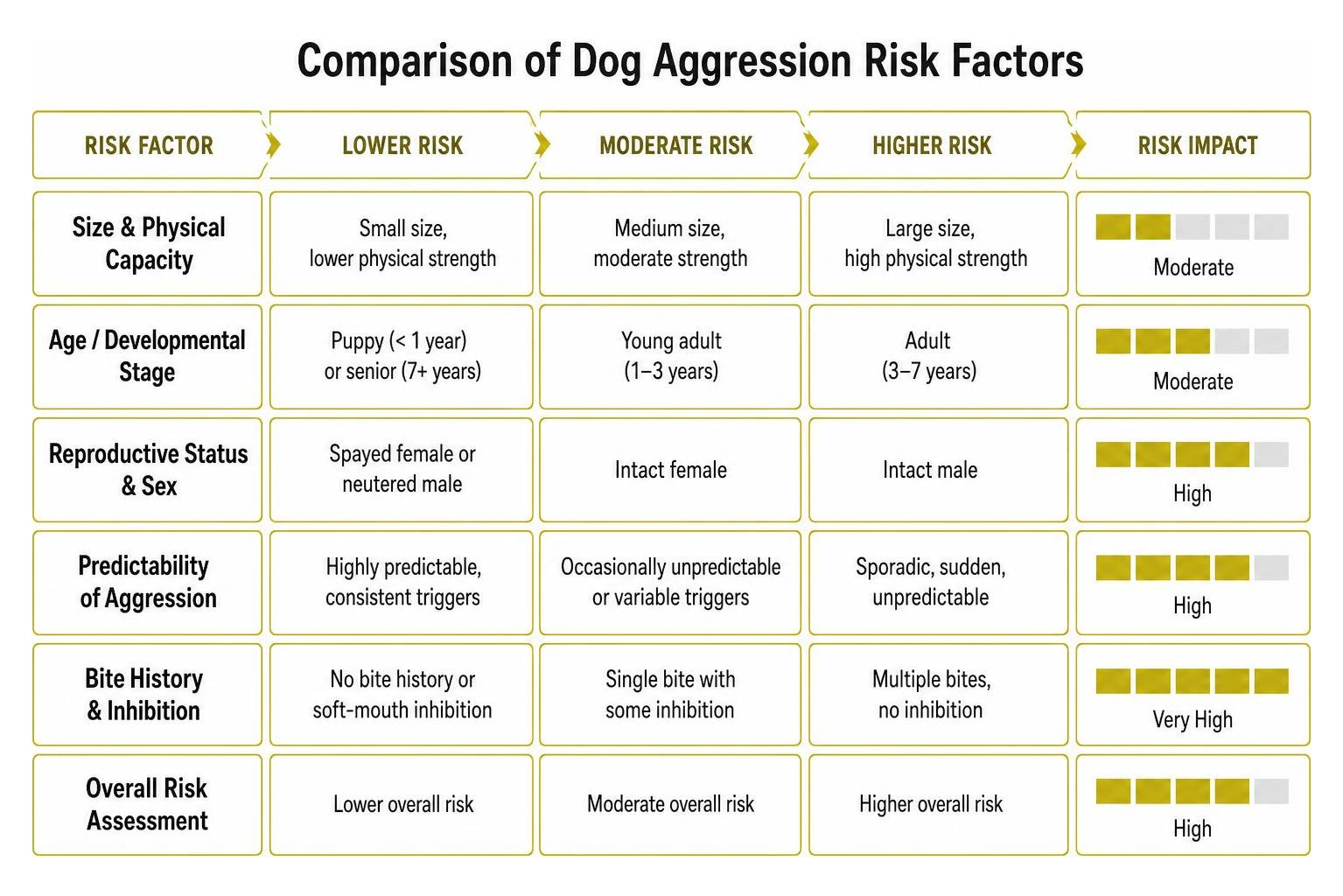
- Dog Size and Physical Capacity: While small dogs and large dogs can experience identical levels of fear or frustration, a larger dog carries significantly higher potential for physical injury.
- Age and Developmental Stages: Behavioral shifts often emerge during social maturity, which occurs between 1 and 3 years of age. Older dogs may show new aggressive responses due to cognitive shifts or chronic joint pain.
- Reproductive Status and Sex: Statistics indicate that entire intact male dogs are more likely to display competitive aggression compared to neutered males or females.
- Predictability Metric: Sporadic, sudden aggression carries a higher risk factor than highly predictable behavior with clear, consistent triggers.
- Bite History and Inhibition: Dogs that exhibit soft mouth inhibition during a snap present a lower safety risk than dogs that deliver multiple uninhibited bites.
Reviewing structured dog behavior guidance from RSPCA offers valuable perspective on how environmental stability and individual history shape safety outcomes.
Short Term Management and Essential Safety Protocols

When addressing aggressive dog behavior, safety and risk mitigation are immediate priorities. Every time a dog executes an aggressive display and the perceived threat retreats, the behavior is reinforced. Preventing these episodes keeps everyone safe and stops bad habits from becoming further ingrained.
Safety Tools and Interventions
Implementing reliable physical boundaries and tools ensures immediate household safety:
- Basket Muzzles: A properly fitted basket muzzle allows your dog to pant, drink water, and accept treats while completely preventing bite incidents during walks or high risk transitions.
- Head Halters and Quality Leashes: Utilizing a head halter provides gentle mechanical advantage over a strong dog’s head, giving you enhanced control during outdoor excursions.
- Confinement and Baby Gates: Installing sturdy baby gates, physical barriers, or dedicated exercise pens prevents unmanaged encounters between dogs and house guests or children.
- Direct Conflict Interrupters: Never insert hands between dogs involved in an active fight. Keep indirect interrupters like citronella spray (Spray Shield), loud non human noise makers, or large blankets nearby to break up unexpected scuffles safely.
Referencing Dogs Trust guidance on aggressive behavior gives pet parents additional practical tips for setting up safe physical spaces within the home.
Comprehensive Behavior Modification and Balanced Training Strategies

Long term resolution of aggressive dog behavior requires a thorough, structured strategy. The initial step is always a thorough veterinary evaluation to obtain complete medical clearance, ensuring that underlying pain or organ dysfunction is not driving the behavior. Once cleared, active behavior modification can begin.
Applying the Four Quadrants of Operant Conditioning
At Master of Hounds Academy, we use a balanced methodology that incorporates all four scientific quadrants of operant conditioning. Providing clear feedback helps dogs understand boundaries while developing self regulation.
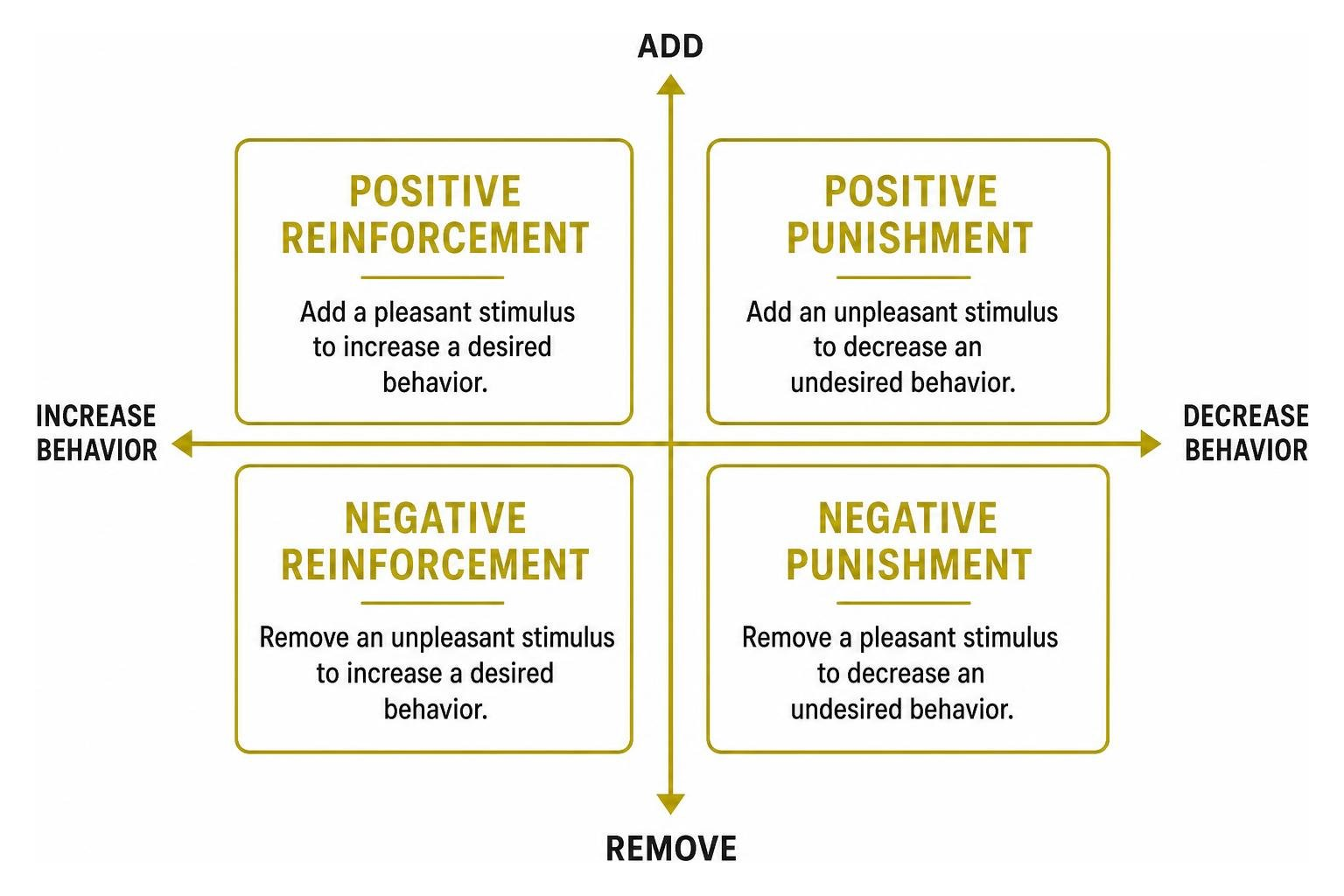
- Positive Reinforcement: Rewarding desired, calm behaviors with high value food, play, or affection to build reliable alternative responses.
- Negative Reinforcement: Removing a mild, uncomfortable pressure the moment the dog chooses a calm, non aggressive action, encouraging them to repeat the good choice.
- Positive Punishment: Providing clear, fair, and immediate mechanical feedback to interrupt dangerous or harmful behaviors like lunging or biting.
- Negative Punishment: Temporarily removing access to a valued resource, like human attention or playtime, when inappropriate choices occur.
By combining differential reinforcement with fair boundaries, dogs learn exactly what is expected of them, building confidence and emotional stability.
Prognosis and Realistic Expectations for Aggressive Dog Behavior
Managing aggression is a process that requires lifelong consistency. While many dogs make remarkable progress and live peaceful lives, pet parents should focus on continuous management and safety rather than expecting a sudden cure. Setting clear safety boundaries ensures long term stability for the entire household.
In severe cases where unpredictable bites occur without warning or when physical management is not feasible, discussing hard choices with a veterinary professional becomes necessary to ensure public safety and animal welfare.
Frequently Asked Questions about Canine Aggression
Can aggressive behavior in dogs ever be completely cured?
While frequency and intensity can be significantly reduced through structured balanced training and lifestyle management, it is safest to view aggression as a manageable condition. Lifelong consistency and trigger awareness ensure ongoing safety.
What should I do immediately if my dog bites or acts aggressively toward a family member?
Immediately create safe physical distance by using a door, baby gate, or leash to separate the dog without physical confrontation or yelling. Place the dog in a quiet confinement area to decompress, ensure any injured human receives appropriate medical attention, and schedule a professional behavioral consultation.
Does neutering an adult dog stop aggressive behavior?
Neutering can reduce behaviors directly driven by intact male hormones, such as roaming or competitive mounting. However, once aggression becomes a learned response to fear, frustration, or territorial boundaries, neutering alone rarely resolves the behavior.
Transforming Behavior with Expert Guidance
Addressing aggressive dog behavior requires a thoughtful approach that combines deep behavioral knowledge with practical everyday management. From identifying early body language cues to applying structured training systems, consistent guidance makes all the difference.
At Master of Hounds Academy, we specialize in personality driven training methods tailored to your dog’s unique needs. Serving families across Oakland, Berkeley, Alameda, San Francisco, Marin, and the surrounding Bay Area communities, our Metcalf Method provides clear structure and lasting results. Discover how our balanced approach can help your family by exploring more info about dog training services.