
What Happens When You Board a Dog for a Week or Longer?
When you board a dog for a week, your dog should settle into a steady routine of meals, rest, exercise, enrichment, and attentive supervision. A stay of several weeks can also be healthy when the facility is prepared for long term care, watches for stress or health changes, and adjusts the plan to your dog’s personality, age, and needs.
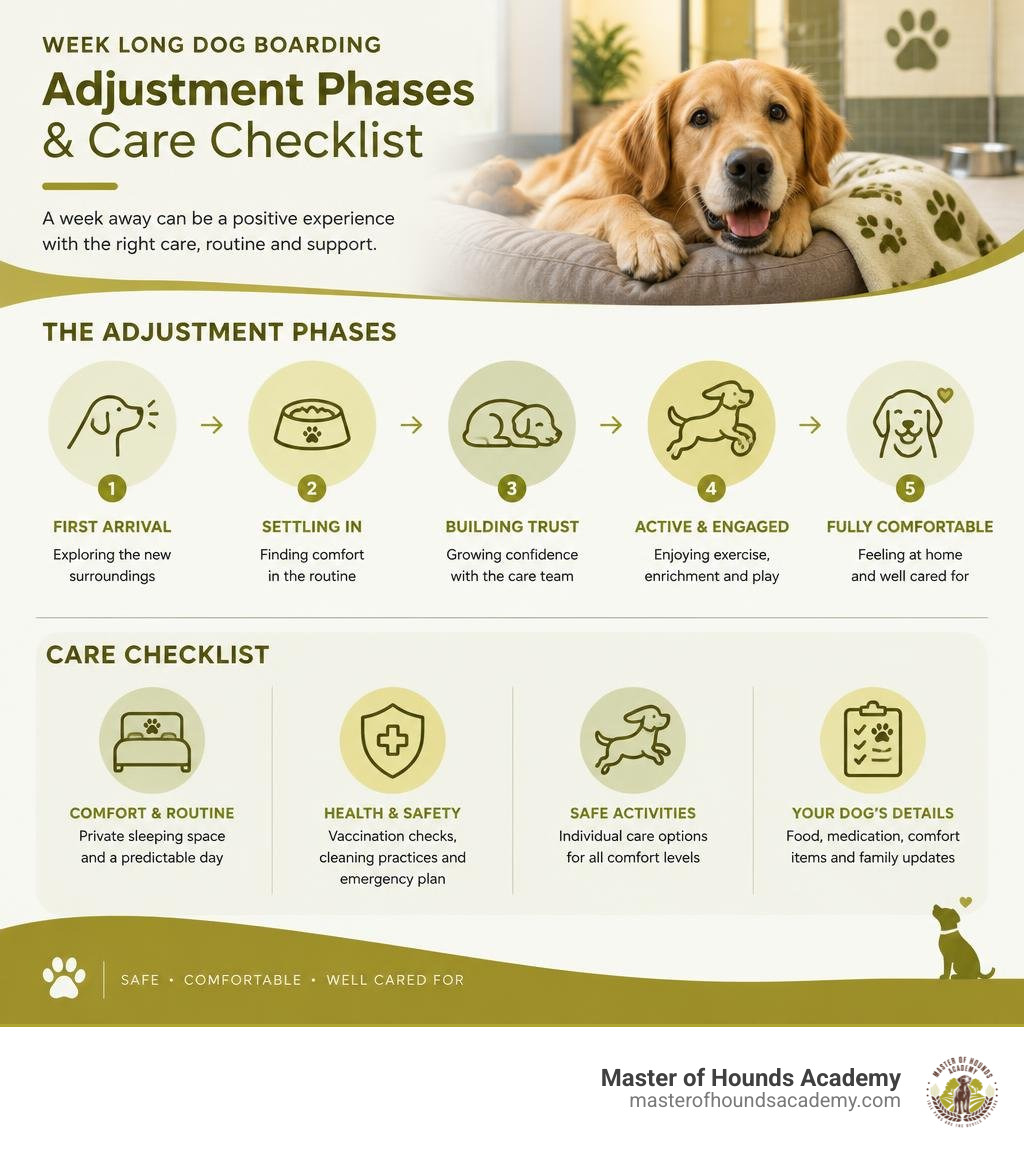
Before booking, make sure the facility can provide:
- A quiet private sleeping space and a predictable daily routine.
- Vaccination checks, cleaning practices, and a clear plan for illness or emergencies.
- Safe activity options, including individual care for dogs who do not enjoy group play.
- Clear instructions for food, medication, comfort items, and family updates.
Most dogs need a little time to adjust, especially during the first day or two. With patient handling and a familiar routine, many dogs become comfortable with longer stays and can benefit from the structure, activity, and steady human care. According to the American Kennel Club, preparing your dog with familiar items and a calm drop off can ease the transition into a boarding stay.
I am Francis Metcalf, founder and co owner of Master of Hounds Academy, with more than two decades of experience helping families prepare to board a dog for a week or longer. Our personality driven approach helps us consider each dog’s comfort, behavior, and care needs before and throughout a stay.
Discover more about boarding options:
What Happens When You Board Dog for a Week or Multiple Weeks?
Leaving your companion behind while you travel can stir up plenty of questions. Understanding the natural adjustment timeline helps put your mind at ease. During the first twenty four to forty eight hours, most dogs experience a mild transition period as they process new sights, novel scents, and different human voices. They observe the daily rhythm, check out their surroundings, and begin mapping out their temporary home.

By day three, dogs settle into the kennel routine. Predictability brings comfort. When dogs realize that meals arrive at precise times, play sessions follow like clockwork, and quiet hours are honored, their emotional wellness flourishes. Rather than feeling overwhelmed, they start looking forward to their favorite handlers and daily activities.
Daily Routine to Board Dog for a Week
A balanced day is built on structure. A typical day follows a smooth sequence:
- Early Morning Turnout: Dogs wake up, head outside for potty breaks, stretch their legs, and take in the fresh morning air.
- Breakfast and Digestion: Meals are served individually according to your exact home recipe. Dogs get dedicated quiet time afterward to digest safely.
- Midday Enrichment and Play: Supervised exercise, outdoor romps, or tailored sensory puzzles keep canine minds sharp and bodies engaged.
- Afternoon Rest: Private nap periods ensure dogs avoid overarousal and recharge comfortably in quiet quarters.
- Evening Dinner and Tuck In: A delicious dinner is followed by final potty walks, gentle petting, and cozy bedtime settling.
Why Multi Week and Extended Boarding Stays Can Be Healthy
Many pet parents ask whether leaving a pet for two, four, or six weeks is too long. The reality is that multi week stays can be deeply restorative and beneficial when a facility has the resources for extended care. Dogs are adaptable animals that thrive on consistency.
During an extended stay, dogs move past simple acclimation into genuine mental resilience. With skilled handling, dogs develop higher confidence, master calm independence, and enjoy rich environmental enrichment. When exploring options like comparing extended boarding and training programs, many owners find that a longer stay allows their dog to establish healthy habits that last a lifetime.
Health, Safety, and Facility Sanitization Standards
A top tier care center operates with the medical diligence of a wellness clinic. Strict sanitation protocols protect every guest from communicable illnesses, including airborne pathogens that cause kennel cough. Outdoor grounds and indoor suites receive continuous disinfection with veterinary grade cleaners.
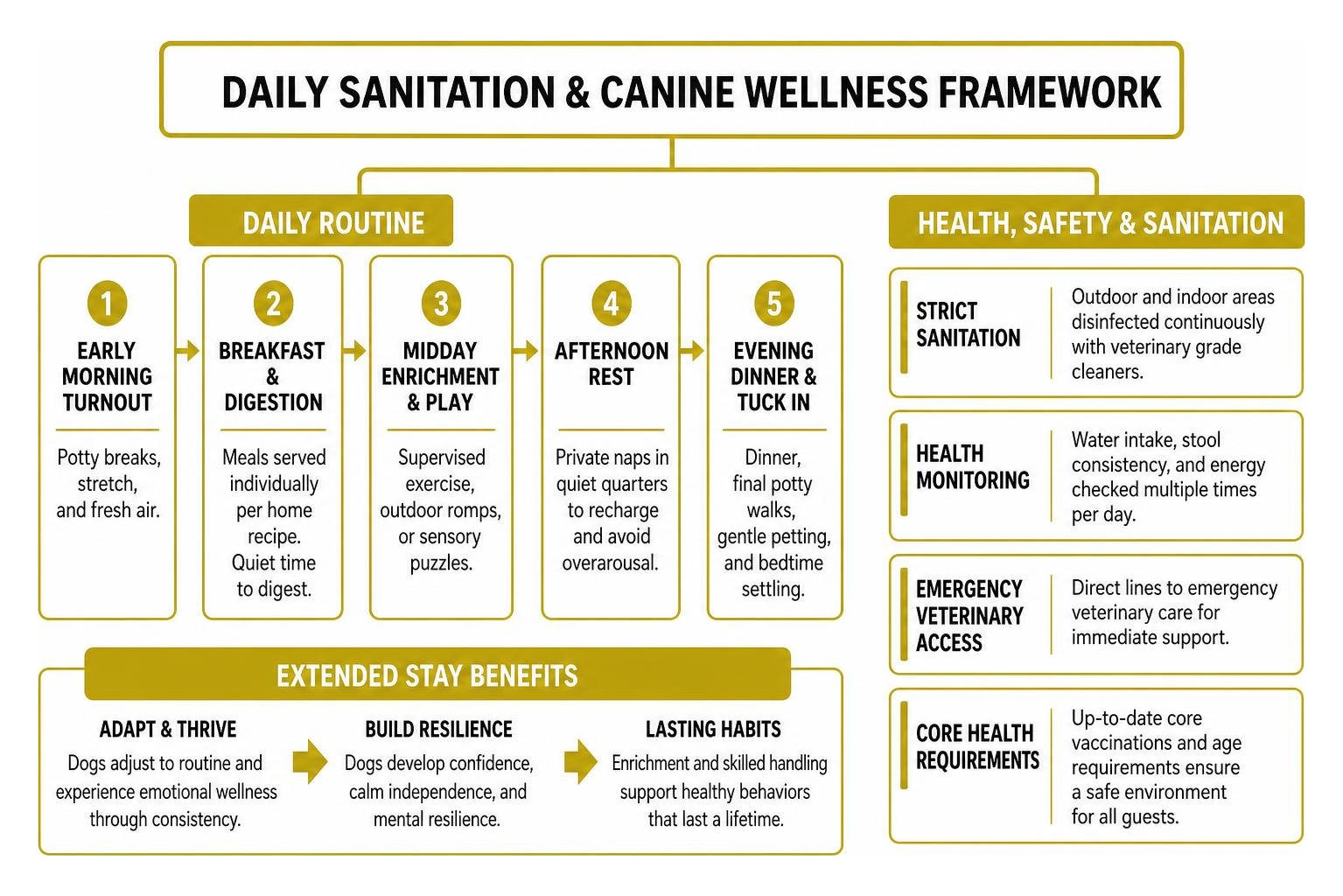
Safety also means having direct lines to emergency veterinary care. Professional caretakers monitor water intake, stool consistency, and physical energy multiple times per day.
Core Vaccinations and Age Requirements
To ensure a safe environment for all guests, reputable facilities enforce strict health policies. Standard entry requirements include:
- Rabies Vaccine: Mandatory for all guests; puppies must be at least 12 weeks old and vaccinated before arrival.
- Distemper Combination: Up to date core vaccines protecting against parvovirus and adenovirus.
- Bordetella: Regular protection against canine cough.
- Canine Influenza: Essential protection against circulating respiratory strains.
- Spay and Neuter Standards: Adult dogs must be altered for group care environments. Young puppies may attend prior to surgery but generally need spaying or neutering completed between 6 to 8 months of age.
Managing Senior Dogs, Puppies, and Medical Needs
Every age group requires unique accommodations. Puppies require frequent potty breaks and structured socialization that builds confidence without overwhelming them. Senior dogs benefit from orthopedic bedding, joint support routines, and gentle movement.
Facilities also manage detailed medical regimes. Handlers maintain clear administration logs for oral medications, eye drops, or supplements at no extra fuss. High quality care centers also offer refrigerated and freezer storage to accommodate fresh or raw diets. If you are learning the industry language, reviewing our guide where boarding terms demystified are explained can help you ask the right questions about medical boarding.
Playgroup Structure, Supervision, and Mental Stimulation
Group activities must be structured, safe, and productive. Proper socialization is not an uncontrolled free for all; it is an organized social outlet supervised by handlers trained in canine body language.

True mental stimulation pairs physical exercise with cognitive engagement. Handlers read subtle cues such as play bows, lip licks, and stiffening posture to ensure interactions remain harmonious and joyful.
Temperament Testing and Playgroup Placement
Before joining group activities, every dog undergoes a thorough temperament assessment. Dogs are organized based on:
- Size and physical build to prevent accidental bumps.
- Play style, separating gentle sniffers from high speed runners.
- Energy and stamina levels.
- Social confidence and boundary respect.
Staff maintain active supervision throughout each session, redirecting pushy behavior and organizing calm pauses so play stays friendly and fun.
Specialized Accommodations for Reactive Dogs
Not every dog wants canine companions, and that is completely natural. Reactive or selective dogs deserve a fulfilling vacation tailored to their unique boundaries. High quality centers offer solo exercise sessions, individualized handler play, puzzle toys, and quiet walking tracks. If your dog exhibits selective behavior around other animals, reviewing boarding options for reactive or aggressive dogs will show you how tailored handling keeps everyone safe and content.
Preparation, Costs, and Boarding Logistics
Getting organized beforehand eliminates last minute travel stress. When you prepare your items thoughtfully, your dog transitions smoothly into their temporary home.
Costs and Packing Checklist to Board Dog for a Week
When packing your dog’s overnight bag, bring:
- Preportioned regular food to prevent digestive upset.
- Clearly labeled medications with dosing times and instructions.
- Up to date veterinary vaccination records.
- A familiar blanket or t shirt carrying home scents.
Standard rates provide a private sleeping area, daily group play or individual exercise, and custom meal preparation.
Drop Off Times, Pick Up Windows, and Overage Fees
Boarding facilities operate on schedule windows to keep kennel spaces quiet and secure. Morning drop offs allow dogs ample time to exercise and acclimate before their first night. Pick up windows generally run through midday; pets checking out in the late afternoon often incur a modest half day fee for the extra care provided.
Peak travel windows during holidays book out months in advance, making early reservations vital. Many families also use travel dates to enroll their dogs in structured board and train programs to combine lodging with clear behavioral progress.
Frequently Asked Questions About Week Long Dog Boarding
How long does it take for a dog to adjust to boarding?
Most dogs adapt within twenty four to forty eight hours. Once they realize meals, walks, and rest times follow a dependable schedule, their confidence grows rapidly.
Can my dog stay at a boarding facility for several weeks safely?
Yes. When a facility provides customized care, rich mental stimulation, and comfortable sleeping spaces, multi week stays are safe, healthy, and enriching.
What happens if my dog gets sick or refuses to eat while boarding?
Handlers monitor daily consumption closely. If a dog feels shy about eating, staff can add warm water or tasty toppers with owner permission. For medical concerns, facilities isolate the dog in a quiet wellness suite and contact your primary veterinarian immediately.
Finding the Best Long Term Boarding and Development for Your Dog
Whether you need care for seven days or several weeks, choosing an experienced team gives you complete peace of mind. At Master of Hounds Academy, we bring over thirty years of hands on experience to dog owners across Oakland, Berkeley, San Francisco, and the wider Bay Area.
Our balanced approach draws upon all four scientific quadrants of operant learning through our signature Metcalf Method. Under the guidance of Francis Metcalf and Kylie Ghim, we look at the whole dog to build confidence, manners, and reliable responses. From our two week puppy programs to comprehensive four to six week adult programs, explore reputable Bay Area dog boarding programs to see the difference dedicated care makes.
Learn more about succeeding at immersive dog boot camps and discover our full range of services by visiting our Master of Hounds Academy comprehensive board and train programs today. Let us give your dog a joyful, enriching stay while you enjoy your travels.