
How to Choose a 2 Week Board and Train Program Near You
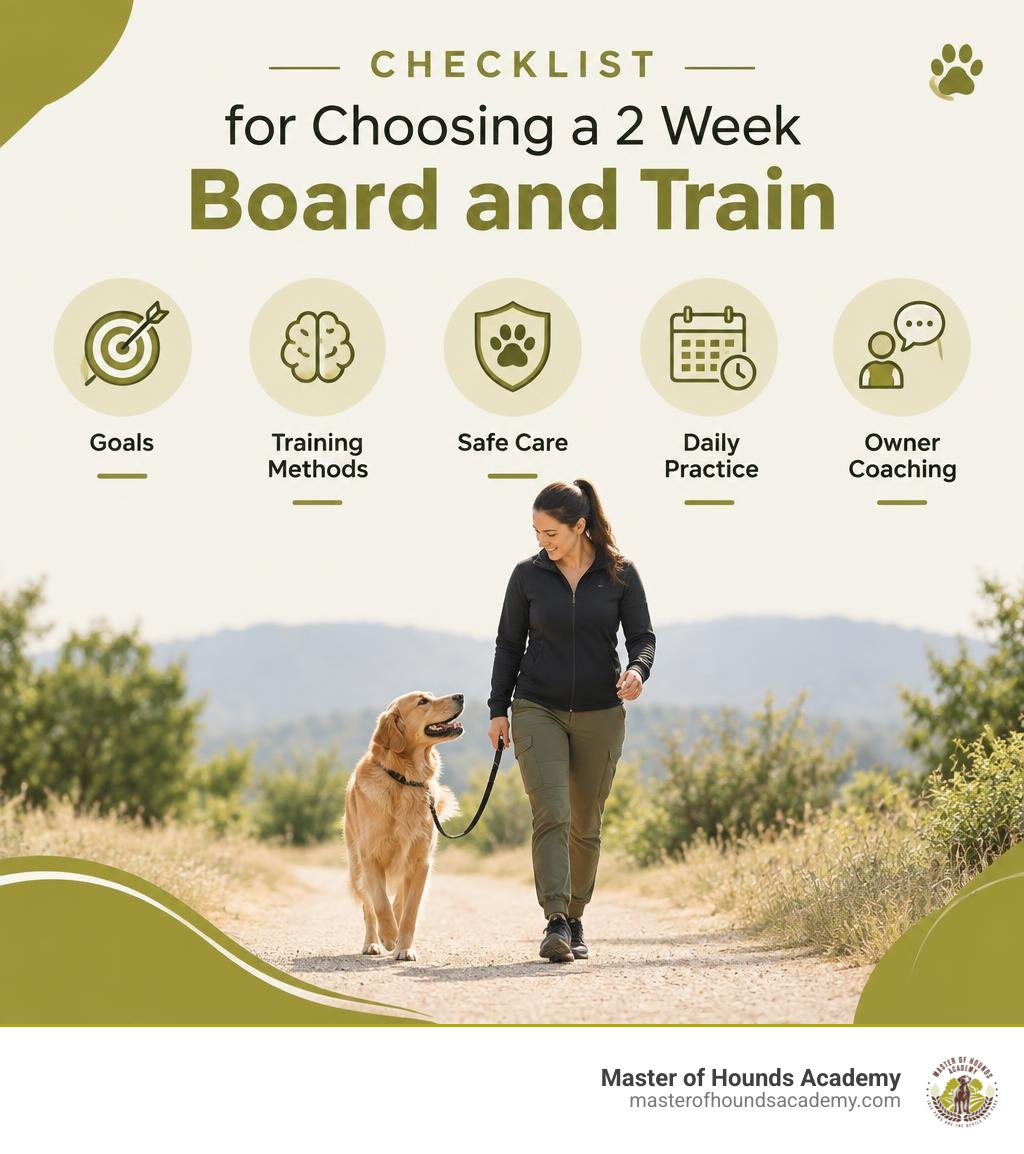
Start with your dog’s goals, not the closest facility. Look for a program that explains its training methods, shows you where your dog will stay, and offers daily practice for the behaviors you want to change. Ask how trainers will teach you to keep those skills going at home. Two weeks can build a strong foundation, but your dog’s needs and your follow through matter.
I’m Francis Metcalf, founder of Master of Hounds Academy in Walnut Creek, where we work with dogs and families across the Bay Area. After more than 20 years in dog training, I know that a search for “2 week board and train near me” is really a search for someone you can trust with a member of your family.
2 week board and train near me helpful reading:
What Is a 2 Week Board and Train and How Does It Work?
A two week immersion program is an intensive canine education format where your dog stays on site with professional trainers around the clock. Instead of trying to squeeze twenty minutes of scattered practice between your work meetings and family dinners, your pup lives in a fully structured learning environment. Every moment of the day, from morning routines to evening settling, becomes a chance to build clear communication and reliable habits.
At Master of Hounds Academy, we apply our signature Metcalf Method. We view every canine student as an individual with distinct genetic drives, emotional baselines, and learning preferences. We use balanced training rooted in all four scientific quadrants of operant learning. This gives dogs absolute clarity on which behaviors earn rewards and which choices are undesirable. You can review our demystified board and train terminology guide to understand how these core principles translate into real world obedience.
Daily Life and Structure in an Immersion Program
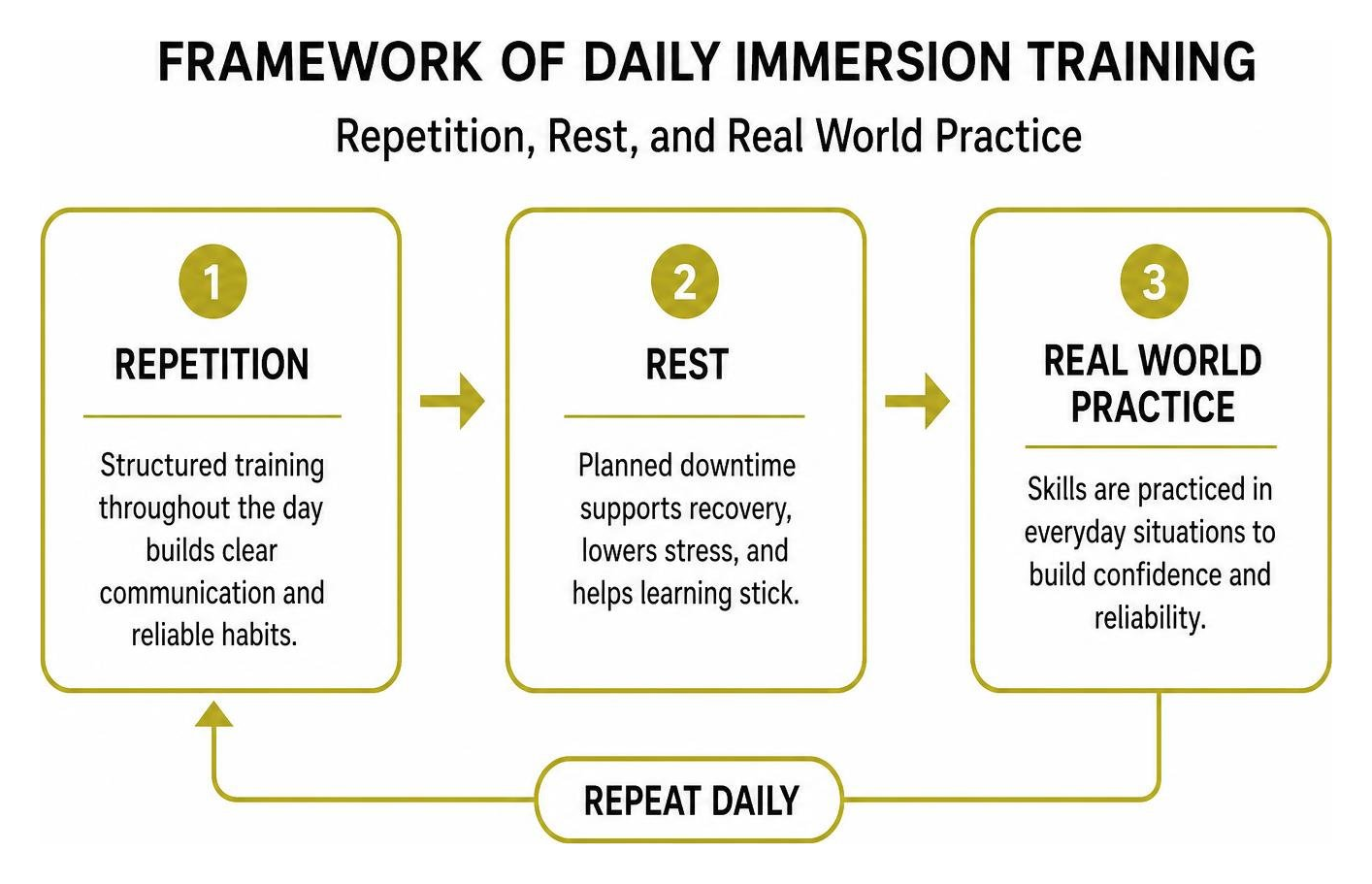
Immersion programs work because they replace confusion with clear rhythm. A dog does not simply train for an hour and then sit idle. Their entire day follows an intentional cadence of active learning, physical conditioning, and mental decompression.
- Morning Focus Sessions: Early potty routines flow straight into structured obedience drills where your dog practices core cues before breakfast.
- Impulse Control and Boundary Work: Dogs practice waiting at open thresholds, holding calm down stays on place beds, and maintaining composure around distractions.
- Environmental Exposure: Field trips into real world settings teach dogs how to navigate outdoor foot traffic, city noises, and passing wildlife without losing focus.
- Structured Rest Cycles: Safe crate resting periods allow the canine brain to process new neurological pathways and prevent overtired reactivity.
- Evening Handling and Decompression: Handlers reinforce quiet kennel manners, polite greeting habits, and calm evening routines.
Behaviors Corrected in a Two Week Window
A two week stay creates profound shifts in foundational manners. When a professional handler manages every repetition, bad habits lose their rehearsal time while correct choices become muscle memory.
- Leash Reactivity and Pulling: Transforming stressful neighborhood walks into calm heel work without dragging you down the sidewalk.
- Jumping on Guests: Teaching an incompatible behavior, such as a rock solid sit or place command, whenever people approach.
- Doorway Bolting: Establishing automatic pauses at front doors, patio gates, and car doors until given a release cue.
- Basic Recall: Building a fast, eager response to come when called across moderate distraction levels.
- Crate and House Manners: Eliminating crate protests and teaching dogs how to settle calmly inside the home.
2 Week Board and Train vs. Traditional Dog Training Classes

Many Bay Area pet parents wonder whether they should enroll in a weekend group class or choose an immersion stay. While group classes teach handlers basic mechanics, progress is often slow because owners must shoulder all initial repetitions amid busy family schedules. Immersion training handles the heavy lifting of habit creation before transferring the reins to you.
| Feature | 2 Week Board and Train | Weekly Group Classes | Private Lessons |
|---|---|---|---|
| Primary Handler | Professional trainer | Dog owner | Dog owner with coach |
| Pace of Progress | Fast habit formation | Gradual over months | Moderate |
| Distraction Management | Controlled and progressive | Often chaotic for novices | Tailored to environment |
| Time Investment for Owner | Low during stay, active turnover | High weekly commitment | High weekly commitment |
| Best For | Puppies and core manners | Socialization basics | Specific handling skills |
Group settings can overwhelm a dog that lacks impulse control. A board stay allows our team to establish clean communication lines first. Once your dog understands the rules, you step into a polished system. Explore our comprehensive dog training services to see how each pathway fits your household lifestyle.
Evaluating 2 Week Board and Train Near Me for Puppies vs. Adult Dogs
Timing matters when selecting program length. For young puppies between three and six months old, two weeks is the sweet spot. Young puppies soak up early socialization, crate conditioning, and leash foundations quickly without needing protracted stays away from their families.
Adult dogs exhibiting entrenched habits, anxiety, or reactivity require more time. At Master of Hounds Academy, our puppy board and train programs run for two weeks, while our adult dog immersion programs run between four and six weeks. Adult canines need extra weeks to deconstruct years of rehearsed behaviors before installing dependable alternatives. Read our guide on comparing board and train options to match your dog’s age and temperament with the right timeline.
How to Find the Best 2 Week Board and Train Near Me
Selecting a training facility in Northern California requires looking beyond flashy marketing. You need a safe, secure, and transparent environment staffed by experienced professionals who treat your dog like family.
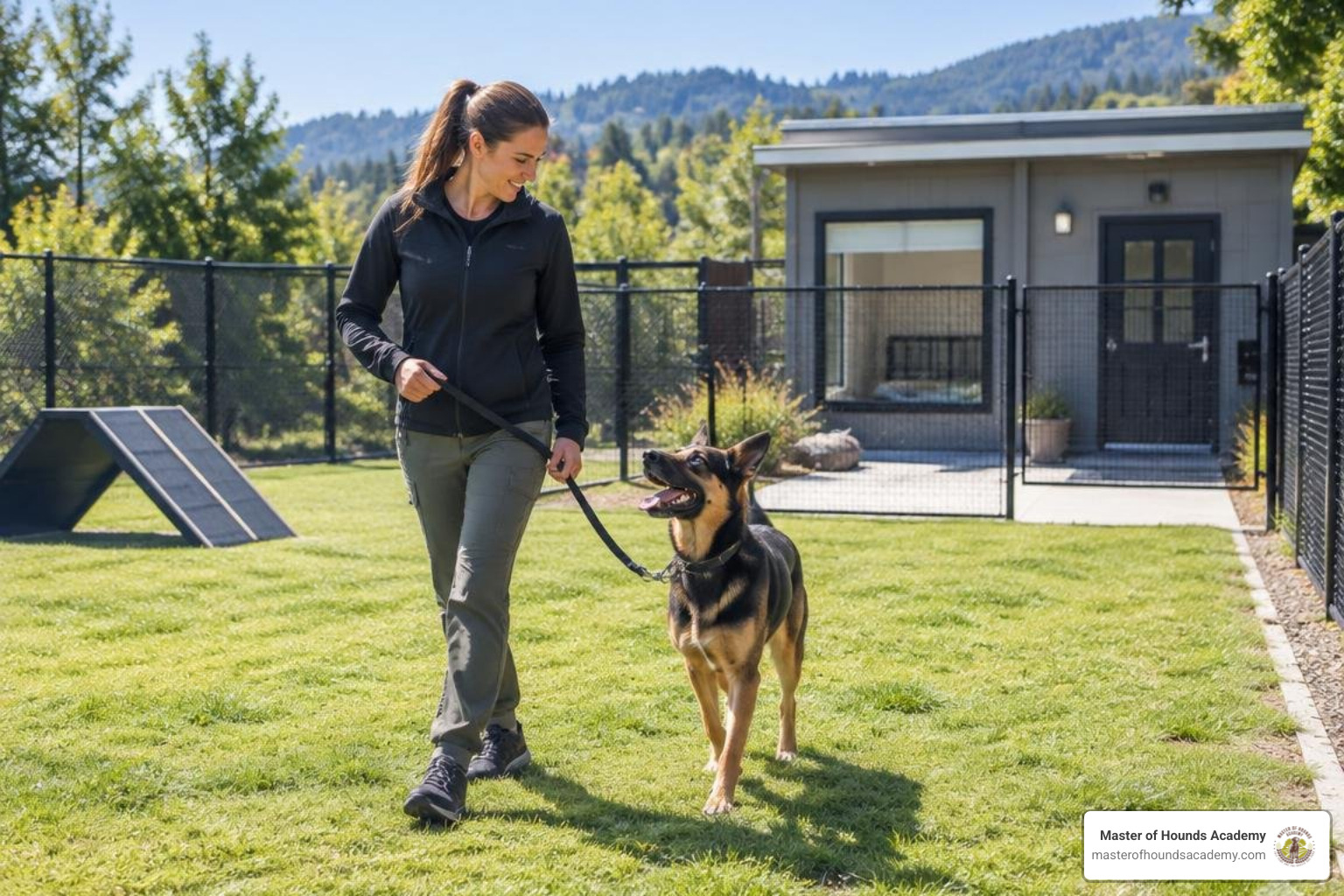
- Safety and Kennel Sanitation: Look for climate controlled rest suites, high quality perimeter fencing, and established veterinary emergency protocols.
- Balanced Training Experience: Ensure the trainers understand how to utilize all four quadrants of operant learning with fairness, precision, and compassion.
- Open Communication: Quality trainers supply regular video updates and explain the underlying behavioral science guiding their drills.
- Local Community Trust: Choose established professionals who actively serve your immediate region, from Walnut Creek and Lafayette to Berkeley, Oakland, and Marin.
For a broader perspective on regional training standards, check out our Bay Area board and train guide to learn what questions ensure your pup is in caring hands.
Key Questions to Ask a 2 Week Board and Train Near Me Facility
Before you book a reservation, interview the training director to confirm their philosophies align with your goals:
- Where will my dog sleep and spend their rest cycles throughout the day?
- How do you apply all four quadrants of operant learning to teach new concepts and correct unwanted behaviors?
- What safety measures prevent fence escapes, injuries, or health issues during training?
- How often will I receive updates, videos, and progress reports during the two weeks?
- What does the owner turnover process look like when my dog comes home?
Understanding Program Costs and Real Value
A comprehensive two week board and train in California typically ranges from $1,500 to $3,500. This investment reflects continuous professional oversight, lodging, custom curriculum design, real world field trips, and hands on owner coaching.
While standard group classes cost less upfront, they often take months or years of trial and error to yield dependable manners. A dedicated immersion program delivers rapid behavioral breakthroughs by giving your dog hundreds of clean repetitions under expert supervision.
What Happens After the Program: Owner Turnover and Long Term Success
The true test of any board and train program happens when your dog walks back through your front door. A dog is not a smartphone running new software; they are dynamic living creatures who respond to environmental context.
When our two week puppy program concludes, we conduct a thorough turnover session. We teach you handler mechanics, leash handling skills, verbal marker systems, and proper management routines. Maintaining boundaries at home ensures the fantastic habits built during the stay become permanent fixtures in your household. For additional local context on post program maintenance, explore our East Bay board and train insights.
Frequently Asked Questions About 2 Week Board and Train Programs
Will my dog forget me during a 2 week board and train?
No, your dog will not forget you. Canines possess extraordinary associative memory tied to scent, vocal tones, and emotional bonds. Two weeks away is simply an enriching educational adventure. When you reunite at the turnover session, your dog will be thrilled to see you and eager to show off their new manners.
Is a 2 week board and train suitable for severe aggression?
A two week window is ideal for puppy foundations, basic obedience, and everyday manners. Severe human aggression, intense dog fighting, or profound separation distress cannot be resolved in fourteen days. Those complex issues require our comprehensive four to six week adult programs to safely modify underlying emotional triggers.
What should I look for in follow up support after the stay?
Select a team that provides extensive owner coaching at pickup along with accessible post stay guidance. A reputable trainer will never hand you a leash and wave goodbye. They will walk you through real world handling drills and remain available to answer questions as your dog settles back into family routines.
Finding the Right Training Partner for Your Dog
Achieving an enjoyable life with your canine companion starts with choosing experienced professionals who put your dog’s welfare first. Francis Metcalf, Kylie Ghim, and our dedicated team bring more than thirty years of hands on experience to families throughout Walnut Creek, Orinda, Danville, San Francisco, and across the greater Bay Area.
Whether you have an energetic puppy ready for early manners or an adult dog needing advanced behavioral guidance, we are here to support your journey. Schedule a consultation for our board and train program today and discover how our personalized approach can help your dog thrive.