
The Science of Dog Training for Adult Dogs vs. Puppies
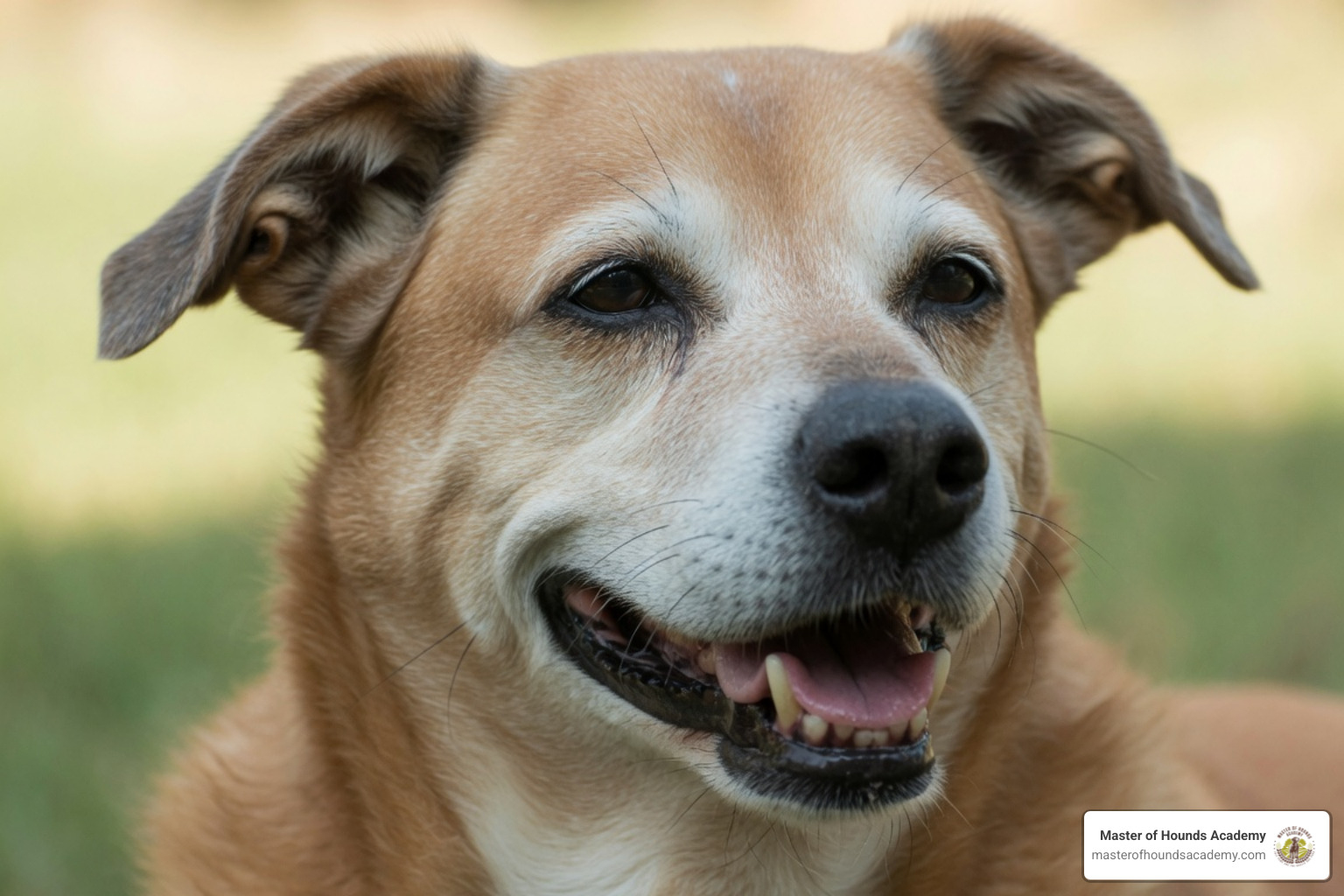
The idea that you cannot teach an old dog new tricks is a persistent myth that misses how canine brains mature. Adult dogs have distinct cognitive advantages over puppies. A puppy operates with an easily distracted mind, whereas an adult dog brings higher impulse control, established motor skills, and longer attention spans to the learning process. These cognitive benefits make dog training for adult dogs extraordinarily efficient once you tap into their motivation.
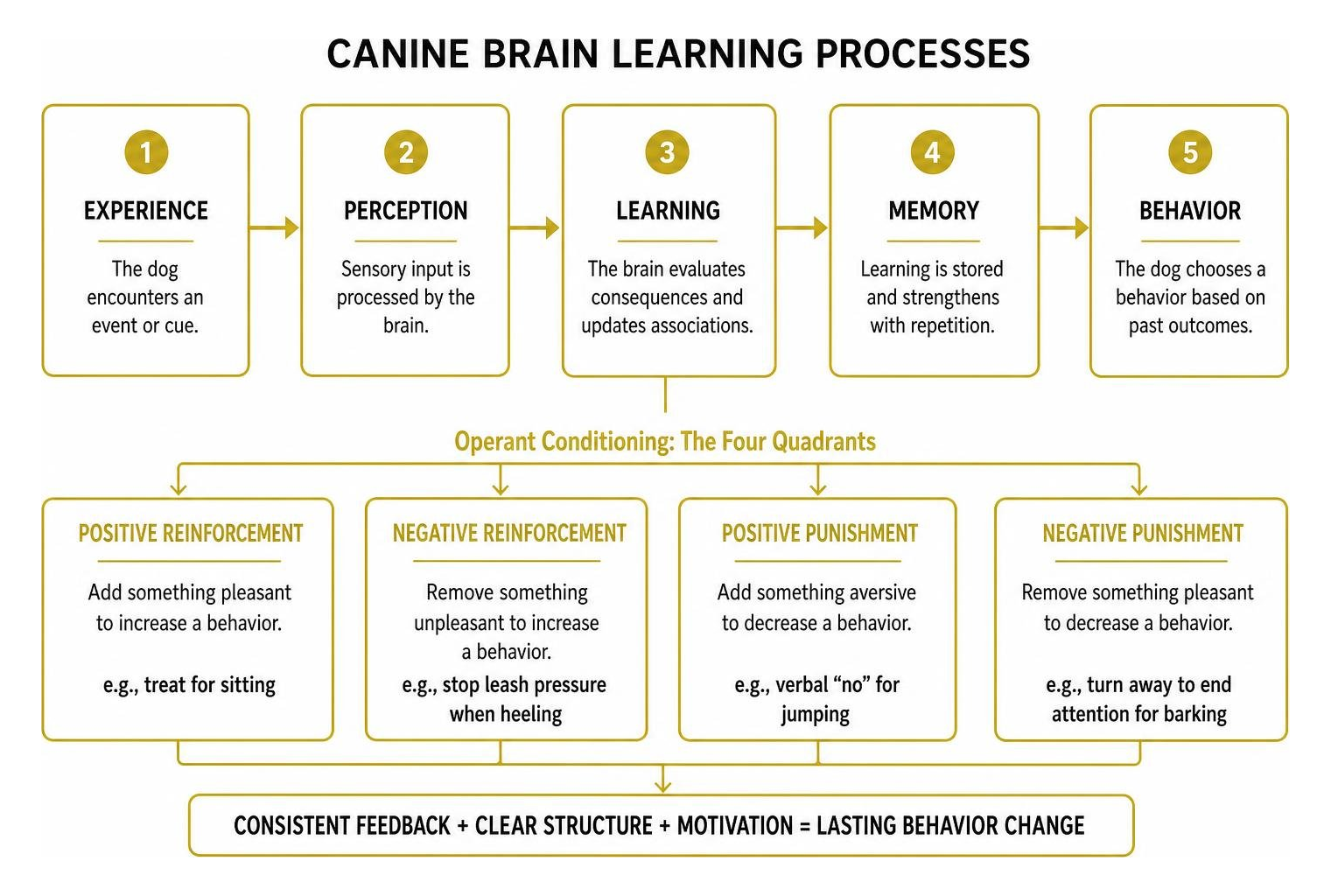
When working with older dogs, learning involves replacing old behaviors rather than writing on a fresh canvas. An adult dog may have rehearsed a habit like pulling on the leash or jumping on guests hundreds of times. Unlearning those established routines takes clear feedback and consistent structure. We address this using all four scientific quadrants of operant conditioning, balancing clear rewards with proper boundaries to clarify expectations without causing stress.
Older dogs may also present physical factors such as joint stiffness, sensory changes, or breed specific working traits. A herding breed like a Border Collie needs a different physical outlet before a lesson than a Sight Hound or a brachycephalic breed like a French Bulldog. By honoring physical limits and utilizing all four quadrants of learning, mature dogs progress rapidly through multi step behaviors.
Key Principles of Dog Training for Adult Dogs
Every dog comes with a unique temperament, as explained in our detailed guide A Guide to Dog Personalities. Understanding whether your dog is naturally bold, sensitive, drive driven, or methodical shapes how you present lessons. Tailoring your approach to their temperament ensures your training sessions build confidence and clarify expectations.
- Maintain short focus windows by capping structured practice at 5 to 10 minutes, 2 to 3 times per day.
- Emphasize clear timing so your dog understands precisely which action earned reward or feedback.
- Account for prior habit rehearsal by remaining patient while overwriting years of established behavior.
- Keep household criteria identical across every family member to avoid confusing your dog.
Adapting Methods for Mature Canine Cognitive Needs
Managing the training environment is vital when teaching an adult dog. If a dog has spent years barking at the front window or raiding the trash, preventing access to those self rewarding activities is necessary while teaching new choices. We establish a baseline assessment of what the dog knows, where their frustration points lie, and how well they manage impulse control around competing motivators.
Adapting to a mature dog means adjusting physical requirements to suit their body. If an older dog struggles with hip discomfort, asking for repetitive sit to down transitions on hard flooring can create unnecessary discomfort. Modifying the position or using non slip mats keeps physical stress low so the dog can maintain focus on learning.
7 Steps to Effective Dog Training for Adult Dogs
A structured framework brings clarity to mature dogs. Following a step by step approach transforms confusing real world environments into manageable lessons.
Step 1: Conduct a Health Check and Foundation Assessment for Dog Training for Adult Dogs
Before initiating any retraining plan, schedule an evaluation with your veterinarian. Sudden behavioral changes, newly acquired stubbornness, or reluctance to obey movement cues often stem from underlying medical issues rather than willful defiance. Arthritis, hip dysplasia, loss of vision, or dental pain can significantly alter an adult dog’s willingness to perform daily physical tasks.
Once health factors are evaluated, document a realistic baseline assessment. Take note of what your dog does when the doorbell rings, how they react to other dogs on leashes, and how long they can maintain eye contact in low distraction areas. Knowing their starting point prevents overestimating their immediate capabilities and keeps goals achievable.
Step 2: Establish Clear Communication with Marker Systems
Clear communication relies on precision timing. A marker system utilizes a distinct sound, like a clicker, or a precise word like “yes” to mark the exact moment your dog performs the desired behavior. This sound bridges the time gap between the correct choice and the delivery of a reward, removing confusion for the dog.
To establish the marker word or clicker, mark and reward 15 to 20 times in quick succession in a quiet room without asking for any cue. The dog quickly realizes that the marker predicts a reward or outcome. When you balance this clear event marker with appropriate consequences for unwanted behavior, the dog gains an explicit understanding of house rules and working expectations.
Step 3: Decompress and Build Trust Using the 3 3 3 Rule
For adult rescue dogs with unknown histories or trauma, order of operations matters. Pushing formal obedience drills before a dog feels secure in their environment causes unnecessary stress and stalls progress. The 3 3 3 rule offers a reliable timeline for rescue dog integration.
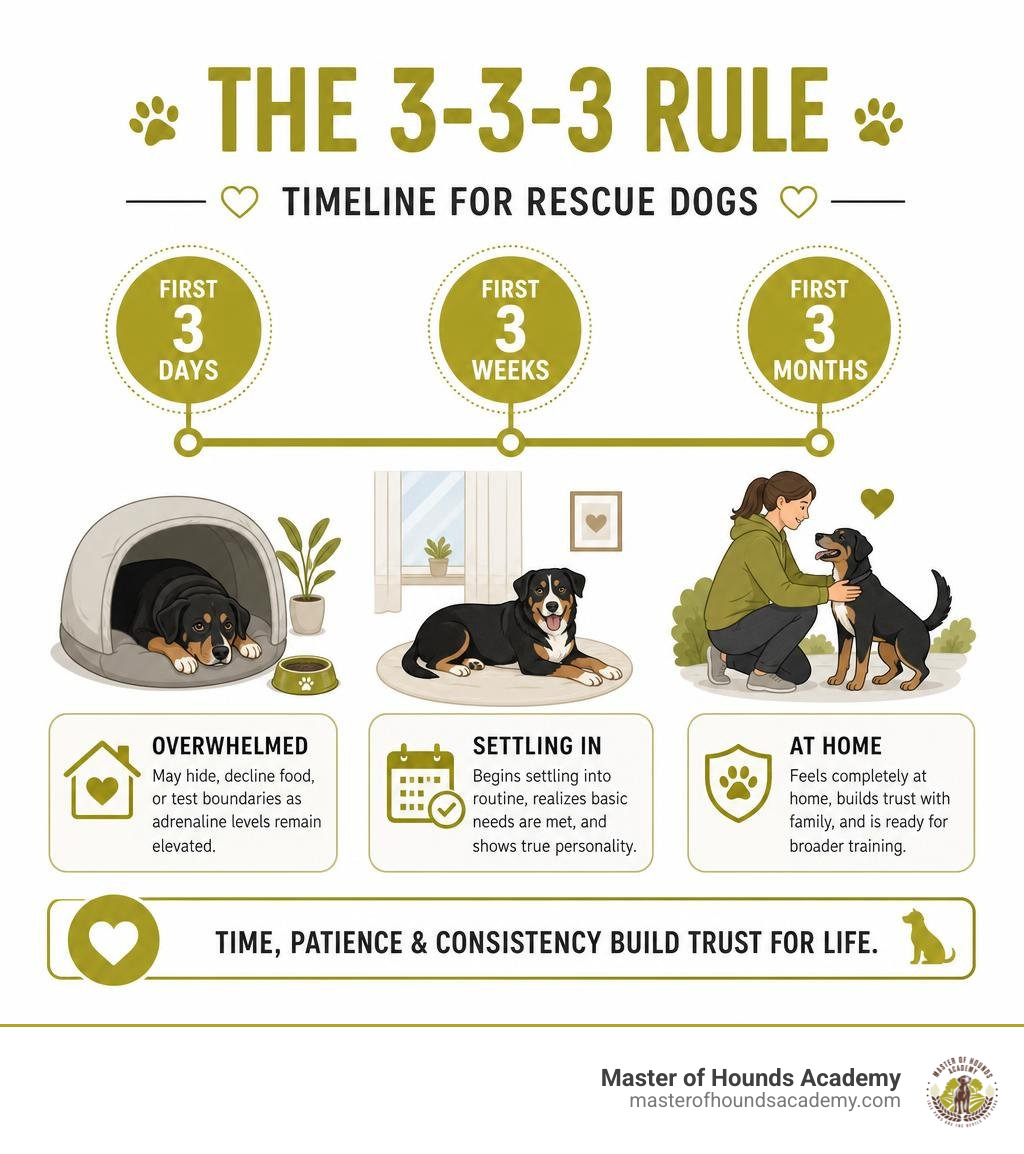
- First 3 Days: The dog feels overwhelmed and may hide, decline food, or test boundaries as adrenaline levels remain elevated.
- First 3 Weeks: The dog begins settling into the household routine, realizing their basic needs are reliably met, and showing their true personality.
- First 3 Months: The dog feels completely at home, builds genuine trust with family members, and is ready for broader real world training.
Providing a predictable daily schedule with quiet decompression spaces allows the dog’s nervous system to settle, laying a strong foundation for future training.
Step 4: Teach Essential Commands in Low Distraction Spaces
Begin teaching foundational skills indoors where distractions are minimal. Master these essential behaviors before moving into outdoor settings:
- Sit: Arc a treat or hand signal back over the dog’s head, guiding their hips downward, and mark the moment their rear touches the ground.
- Down: From a sit, draw the hand straight down between the front paws and outward in an L shape, marking when their elbows settle flat.
- Touch (Targeting): Present your flat palm an inch from the dog’s nose. Mark and reward the moment their nose contacts your skin.
- Stay: Ask for a sit or down, present an open palm, wait two seconds, mark, and reward. Release with a clear word like “free.”
- Come (Recall): Move backward in a low distraction hallway, call your dog’s name in a welcoming tone, and mark lavishly when they reach you.
- Leave It: Cover a mid value reward in your hand. When the dog stops sniffing or nuzzling your hand and looks away, mark and reward with a high value treat from your other hand.
- Heel: Position the dog at your left side and take three balanced steps forward. Mark and reward as long as their shoulder remains aligned with your hip.
Step 5: Add Duration, Distance, and Distraction Systematically
A common mistake is asking for too much, too soon. Criteria must strictly be added in sequence: Duration first, Distance second, and Distraction third. Never increase all three variables simultaneously, as doing so leads to confusion and broken commands.
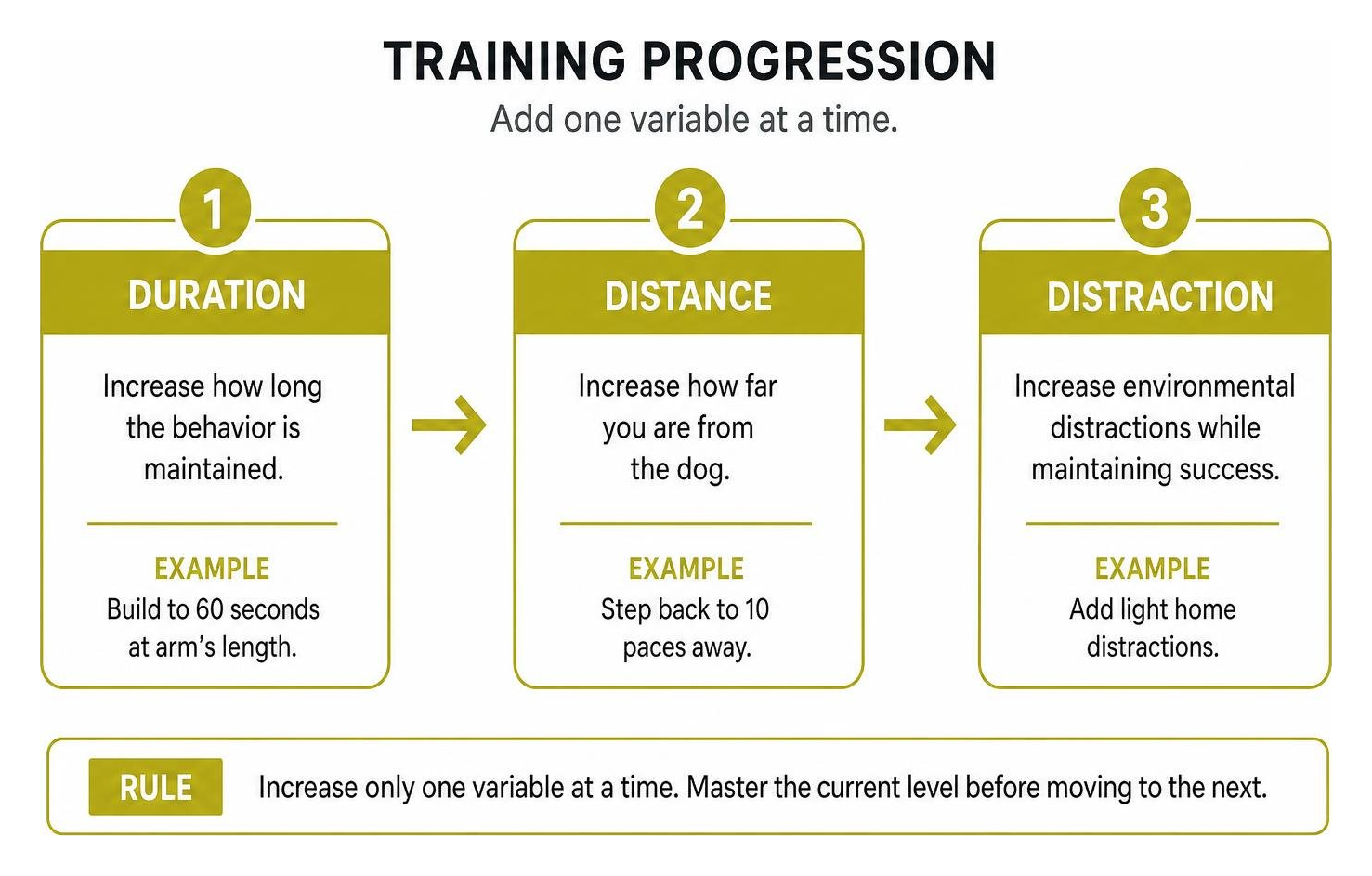
When teaching a stay command, build up to a 60 second duration at arm’s length before stepping 10 paces away. Once distance is established, introduce light home distractions like a bouncing tennis ball or a walking family member. Utilizing place boards or low pedestals gives the dog a visible spatial boundary, making stationary commands far easier to master before generalizing to novel settings. Valuable resources on structural guidance can be explored through authority guidelines from the American Kennel Club.
Step 6: Address Unwanted Behaviors Like Leash Pulling and Digging
Addressing unwanted habits requires replacing bad choices with clear alternatives while interrupting rehearsal. Unwanted habits like pulling on the leash, yard digging, door jumping, or excessive barking are self rewarding if left unmanaged.
- Leash Pulling: Use a structured collar or balanced harness setup. Turn 180 degrees the moment tension hits the leash, marking and rewarding when the dog yields to pressure and returns to your side.
- Digging: Manage yard access and provide a designated digging box filled with sand and buried toys if the instinct is drive based, directing the energy appropriately.
- Door Jumping: Require a strict sit stay at a place board set back from the entryway before any guest opens the front door or offers greeting attention.
- Excessive Barking: Identify the trigger, interrupt the state of arousal early with a firm directional cue, and reward a fast quiet alternative choice like settling on a rug.
Step 7: Generalize Behaviors to Real World Settings
Dogs learn contextually. A sit stay executed in your quiet kitchen does not automatically translate to a busy sidewalk or an outdoor cafe. Generalization requires practicing known skills across diverse settings, incrementally raising environmental complexity.
Begin practicing in your driveway, progress to quiet neighborhood streets, and move toward crowded locations like local parks or farmer markets.
When to Seek Professional Guidance for Adult Dog Training
While many daily habits resolve through consistent home practice, certain behavioral patterns require professional intervention. Working with an experienced professional ensures safety and prevents long term escalation.
Seek professional support immediately if your dog displays aggression toward humans or other animals, severe separation anxiety, intense fear responses, or persistent resource guarding. Additionally, if your home training reaches a plateau despite weeks of steady practice, an expert evaluation pinpoints communication gaps quickly.
At Master of Hounds Academy, our Metcalf Method looks at each dog’s personality and temperament to create balanced, practical training plans. Whether through private coaching, group sessions, or immersive board and train options, professional guidance turns frustrating challenges into reliable real world manners.
Frequently Asked Questions About Adult Dog Training
Can you house train an adult dog that was never properly trained?
Yes, housebreaking an adult dog follows the exact same logical steps used for puppies, and adults often learn faster due to full bladder control. Establish a strict daily feeding and bathroom schedule. Take the dog out immediately upon waking, after meals, and after active play sessions.
Utilize a crate or supervised confinement area when you cannot offer direct eyes on supervision to prevent unmonitored indoor accidents. Treat outdoor successes with high praise and immediate reward. If an accident occurs indoors, clean the area thoroughly with an enzymatic cleaner to destroy biological scent markers completely.
How long does it typically take to retrain an adult dog?
Retraining an adult dog typically spans 4 to 12 weeks depending on your consistency, clear criteria, and the severity of existing habits. Simple cues like sit, touch, or down solidify within 2 to 4 weeks of consistent daily practice.
Undoing deeply ingrained habits like long standing leash reactivity or boundary frustration requires 8 to 12 weeks or longer. Short daily practice sessions lasting 5 to 10 minutes conducted 2 to 3 times a day produce far better retention than single long sessions.
What equipment is recommended for training adult dogs?
Using the right equipment creates clear safety and physical support during work.

- Waist Treat Pouches: Holds small soft rewards at hand height for precise timing during marker delivery.
- Long Lines (15 to 30 Feet): Allows safe recall practice with realistic distance in open outdoor parks.
- Flat Collars and Structured Training Collars: Provides clear mechanical communication without harming sensitive neck tissues.
- Place Boards: Creates distinct physical boundaries that clarify stationing commands like stay and settle.
Transform Your Dog’s Behavior with Confidence
Training an older dog is one of the most rewarding journeys you can share with your canine companion. Mature dogs bring focus, devotion, and cognitive depth to every lesson, proving that learning continues throughout life.
By building clear marker communication, honoring physical boundaries, using balanced scientific quadrants, and following a consistent step by step framework, you can resolve frustrating behaviors and enjoy a calmer home.
Families throughout San Francisco, Oakland, Berkeley, Marin, and across the East Bay rely on clear, personalized training solutions to help their dogs thrive. To learn more about our balanced training options, explore our customized programs at Master of Hounds Academy Services.