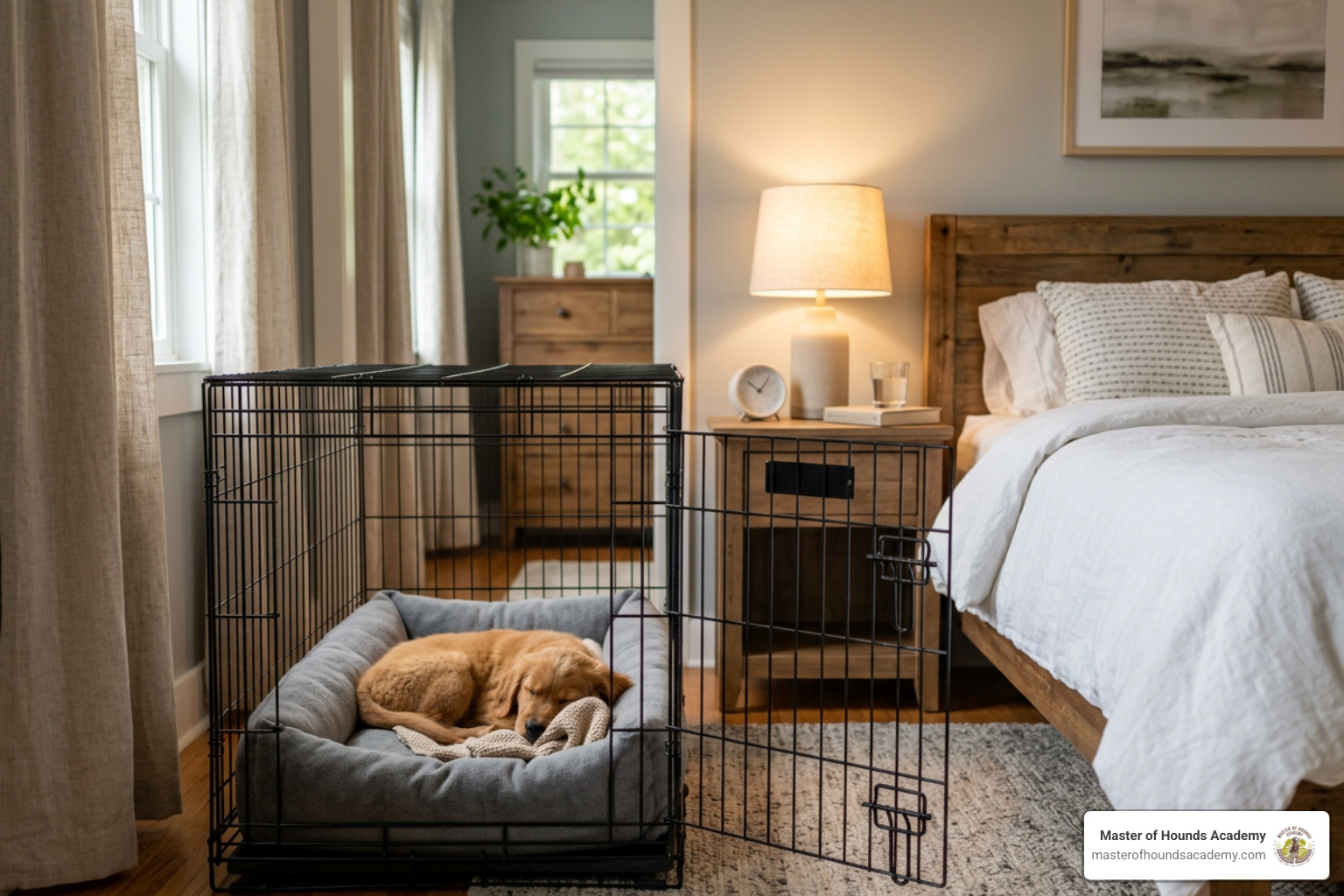

Understanding Canine Sleep Biology and Development
Getting puppy to sleep peacefully through the night comes down to three core steps: establishing a calm sixty minute wind down routine before bed, creating a secure crate micro climate next to your bed, and taking scheduled pre emptive potty trips so your pup never feels stranded. With an early evening meal, soothing chew toys, sound masking, and a predictable schedule, most puppies learn to settle smoothly and rest soundly within just a few days.
Canine rest is fundamentally different from adult human rest. While people generally operate on a monophasic sleep schedule of seven to eight continuous hours, young dogs are polyphasic sleepers. They move through multiple short cycles throughout the day and night. A single puppy sleep cycle often lasts only sixteen to twenty minutes, passing rapidly through rapid eye movement sleep into light rest. Because they transition between sleep stages so frequently, puppies naturally wake up often to inspect their surroundings.
Circadian rhythms and melatonin production are still developing in very young pups. Between eight and sixteen weeks of age, puppies need eighteen to twenty hours of sleep every single day to support physical growth and cognitive development. Even adolescent dogs between six and twelve months require fourteen to sixteen hours of daily rest.
When puppies do not get enough rest, their bodies produce extra cortisol, leading to overtired behavior like frantic zoomies, frantic biting, and relentless whining. Meeting their biological need for calm recovery is essential.
| Puppy Age | Total Daily Sleep Needed | Longest Contiguous Night Block | Expected Nighttime Potty Breaks |
|---|---|---|---|
| 8 to 10 Weeks | 18 to 20 hours | 3 to 4 hours | 2 to 3 breaks |
| 11 to 14 Weeks | 18 to 20 hours | 4 to 5 hours | 1 to 2 breaks |
| 3 to 4 Months | 16 to 18 hours | 5 to 6 hours | 0 to 1 break |
| 4 to 6 Months | 15 to 17 hours | 6 to 8 hours | 0 breaks |
| 6 to 12 Months | 14 to 16 hours | 8 to 9 hours | 0 breaks |
Sleep Needs by Age: From 8 Weeks to Adolescence
During the critical window from eight to sixteen weeks, puppies process vast amounts of sensory information. Growth surges and neural mapping happen primarily while your puppy snoozes. Missing out on crucial rest leaves a young dog emotionally fragile and unable to focus during daily learning sessions.
As dogs transition into adolescence between six and twelve months, their sleep requirements adjust slightly downward to fourteen to sixteen hours. Hormonal shifts during this time can temporarily disrupt rest patterns.
Pairing a structured rest schedule with our step by step guide to basic puppy training for your family creates clear behavioral boundaries that keep young dogs balanced, confident, and eager to learn.
Why Puppies Struggle to Settle at Night
When an eight week old puppy arrives in your living room, they have just left the constant physical warmth and steady heartbeat of their mother and littermates. Sleeping entirely alone in a quiet room is an unnatural experience for an infant canine.
In addition to loneliness, physical limits play a massive role in night awakenings:
- Bladder Volume: Tiny bladders can only store a small amount of urine before nerve endings signal an urgent need to eliminate.
- Arousal Carryover: Late evening roughhousing spikes adrenaline and cortisol, preventing the nervous system from relaxing into sleep.
- Sensory Sensitivity: Unfamiliar floorboard creaks, street lamps, or neighborhood sounds trigger alert reflexes in an insecure puppy.
Recognizing that your puppy is dealing with real physiological limits helps you replace frustration with practical, supportive structure.
Designing the Ideal Sleep and Crate Environment
A well planned resting area taps directly into a dog’s natural denning instincts. The crate should never feel like an isolation chamber. Instead, it should serve as a secure, private sanctuary where external stimulation drops to zero and true physical relaxation can happen.
Selecting the right enclosure size is essential. The crate should only be large enough for your puppy to stand up, turn around easily, and lie down with legs extended. If the enclosure is too large, the puppy will sleep on one side and use the opposite corner as a bathroom.
Local resources on Crate Training a Dog emphasize setting up a secure enclosure early to prevent destructive habits and fast track house manners across our Bay Area neighborhoods.
Creating a Restful Micro Climate
A comfortable sleep zone depends heavily on temperature and tactile security:
- Thermoneutral Zone: Most puppies sleep most soundly between 65°F and 72°F (18°C to 22°C). Measure the temperature at floor level near the crate, as hardwood or tile can be much chillier than ambient room air.
- Bedding Safety: For pups eight to fourteen weeks old, use a flat, chew resistant mat or a simple fleece blanket. Avoid plush, fiber filled beds that invite chewing and swallowing hazards.
- Breathable Crate Covers: A dark, breathable fabric cover over the top and three sides blocks visual distractions and creates a den atmosphere. Keep the front panel exposed or lightly draped to ensure constant airflow.
Managing Noise and Lighting
Canine eyes and ears are exquisitely sensitive to subtle household changes. Sudden street noises in places like San Francisco or Berkeley can easily wake a light sleeping puppy during a shallow sleep cycle.
Continuous, fan based white noise creates an acoustic blanket that smooths out household distractions. Keep the volume equivalent to a running bathroom fan.
Pair this sound masking with near total darkness by using blackout curtains. Total darkness signals the pineal gland to release melatonin. If you need a nightlight to navigate potty trips, choose an amber or red light bulb, which will not suppress melatonin production.
Proven Strategies for Getting Puppy to Sleep Through the Night

A successful night is built on lowering physiological arousal before the crate door ever closes. Many owners mistakenly try to exhaust a puppy right before bed with vigorous games of tug or fetch. High energy play elevates core body temperature, spikes heart rate, and floods the bloodstream with stimulating hormones, making immediate rest impossible.
Instead, focus on low arousal, predictable routines. The gastrocolic reflex causes a puppy to eliminate shortly after digestion, so schedule the final solid meal about three to four hours before bedtime. This timing allows the digestive system to finish processing food, leading to a complete bowel movement well before the lights go out.
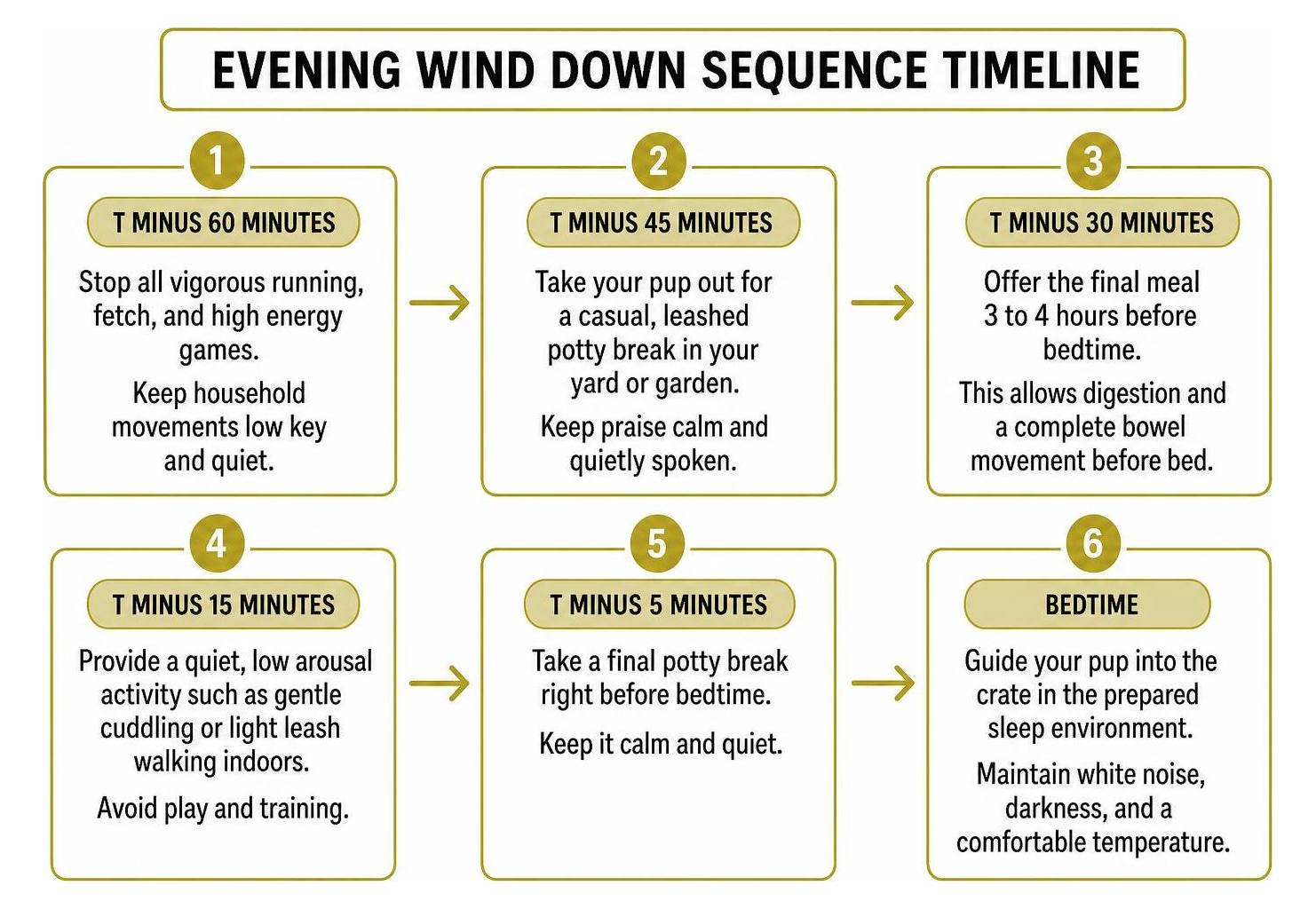
The 60 Minute Wind Down Routine for Getting Puppy to Sleep
Begin shifting the environment sixty minutes before your target bedtime:
- T Minus 60 Minutes: Stop all vigorous running, fetch, and high energy games. Keep household movements low key and quiet.
- T Minus 45 Minutes: Take your pup out for a casual, leashed potty break in your yard or garden. Keep praise calm and quietly spoken.
- T Minus 35 Minutes: Lower ambient room lighting and turn off loud televisions. Offer an appropriate rubber chew toy or a smooth lick mat with a light smear of wet food. Repetitive licking releases calming endorphins in the canine brain, actively lowering heart rate.
- T Minus 5 Minutes: Take one final, unhurried, boring potty trip outside on leash.
- T Minus 0 Minutes: Place your puppy gently inside the crate with a consistent cue such as “kennel up” or “bedtime,” spoken in a relaxed tone. Close the door, turn on the white noise machine, and turn off the main lights.
Nighttime Crying vs Potty Needs: Troubleshooting Getting Puppy to Sleep
Distinguishing between genuine bathroom urgency and simple protest whining is vital for every new owner. Bladder endurance during sleep follows the reliable month plus one rule: a puppy can generally hold their bladder at night for their age in months plus one hour.
An eight week old puppy (two months old) can hold it for roughly three hours while resting. A twelve week old puppy (three months old) can reach four hours.
To avoid rewarding protest cries with attention, take control of the clock with pre emptive alarms. If your ten week old puppy regularly wakes up crying at 2:30 AM, set a silent phone alarm for 2:15 AM. Wake the puppy up yourself while they are still quiet, carry them straight outside on a leash, let them eliminate, and return them immediately to the crate without talking or playing.
Pre emptive trips teach your dog that elimination happens on a clean schedule rather than in response to frantic barking. For a structured, comprehensive approach to balanced communication, explore our step by step guide to balanced dog behavior training.
Building Long Term Nighttime Independence and Routine
The fastest way to build nighttime confidence is through gradual proximity fading. Placing a crate in an isolated laundry room or dark basement on night one often triggers genuine panic in an eight week old pup.
Start with the crate directly beside your bed. Being able to hear your breathing and smell your presence provides immediate security. You can follow vet reviewed insights on puppy settling from Dogster to keep early nights calm and manageable.
Fading Bedside Presence Step by Step
Once your puppy sleeps quietly next to you for several consecutive nights, begin moving the crate toward its permanent spot using this fourteen day timeline:
- Days 1 to 3: Crate sits right next to the bed at mattress height or on the floor right beside you.
- Days 4 to 6: Crate remains beside the bed, but you avoid placing your hand on the door or speaking to the pup if they shift around.
- Days 7 to 9: Move the crate two to three feet away from your bedside toward the bedroom door.
- Days 10 to 12: Place the crate just inside the bedroom doorway with the door open.
- Days 13 to 14: Move the crate to its permanent spot in a nearby quiet room, keeping the white noise machine running nearby.
If your puppy shows real distress at any stage, hold the previous position for two extra nights before advancing again.
Handling Early Morning Wake Ups and Regressions
Many puppies settle well at night only to wake up ready for action at 5:00 AM. Early morning waking is usually triggered by early dawn sunlight, neighborhood wildlife, or a full bladder.
If your pup wakes up before your household alarm:
- Keep the bedroom completely dark and carry the puppy outside on leash.
- Keep the outing strictly business: give three minutes for bathroom needs with zero play, zero eye contact, and zero cheerful conversation.
- Return the puppy directly to the crate until your standard wake up hour.
- If anxiety or nervous restlessness persists during these transitions, our guide to behavioral training for anxious dogs provides helpful, practical tools to build inner resilience.
Frequently Asked Questions about Getting Puppy to Sleep
When will my puppy sleep through the night without a potty break?
Most puppies naturally sleep six to eight continuous hours without a bathroom trip between sixteen and twenty weeks of age. Larger breeds with bigger bladders often hit this milestone earlier than toy breeds. By five months of age, nighttime potty breaks are rarely necessary if evening feeding and water intake are managed on a steady schedule.
Should I let my puppy cry in the crate at night?
Brief protest whining that lasts two to five minutes as a puppy settles down is completely normal. However, you should not leave a young dog to scream in distress for long stretches. Extended panic elevates stress hormones and creates negative associations with the resting space. Address physical needs calmly, keep the crate nearby during the initial weeks, and reward calm, relaxed behavior.
What is the biggest mistake to avoid at bedtime?
The single biggest error is holding a high intensity play session right before bed in hopes of wearing the puppy out. This raises body temperature and floods the nervous system with excitement, making immediate sleep nearly impossible. The second most common mistake is allowing free access to large bowls of water right up until bedtime. Remove the main water bowl about ninety minutes to two hours before sleep, offering only small, controlled sips if needed after evening exercise.
Sweet Dreams for You and Your Pup
Creating restful, predictable nights takes patience, practical structure, and a solid understanding of canine development. By setting up a calm wind down routine, creating a cozy crate space, and meeting your pup’s biological needs, your household will soon enjoy quiet evenings and unbroken sleep.
If you would like tailored, professional support for your family’s newest addition, explore our personalized private lessons. At Master of Hounds Academy, we provide customized, personality driven training to help families throughout Oakland, Lafayette, San Francisco, and across the Bay Area raise well mannered, joyful companions.