
Understanding Canine Aggression: Types, Triggers, and Warning Signs
When we look at canine aggression, we are seeing a form of active communication. Dogs use behavioral displays to establish boundaries, protect resources, or resolve perceived threats. To address these issues effectively, we look at functional classifications, which focus on what purpose the behavior serves for the dog in its day to day environment.
Territorial guarding happens when a dog perceives a threat to their home or immediate space. Fear aggression develops when a dog feels cornered or unsafe and uses physical warnings to push the threat away. Possessive behavior, often called resource guarding, occurs when a dog protects high value items like toys, bones, resting spots, or even human family members. Knowing your dog’s temperament type helps explain why they respond this way. You can explore how different temperaments react in our guide to A Guide to Dog Personalities.
Triggers rarely happen in complete isolation. We often see trigger stacking, where multiple minor stressors accumulate throughout the day. A dog might tolerate a loud noise, a missed nap, and a passing lawnmower individually. However, when those events stack together, a minor event like a person walking past the food bowl can push the dog past their emotional threshold. Understanding this dynamic helps owners recognize that an unexpected outburst is usually the result of a buildup of stress throughout the entire day rather than a single isolated event.
Identifying Subtle Behavioral Warning Signs Before an Outburst
Most dogs provide clear warning signals before resorting to severe measures. Recognizing these subtle physical shifts allows owners to step in safely before an outburst happens. Dogs signal discomfort long before they escalate to lunging or biting.
Early indicators include:
- Lip licking and rapid yawning unrelated to tiredness or hunger
- Turning the head or entire body away from a person or animal to request space
- Rigid posture, sudden muscular freezing, and tail holding in a stiff position
- Direct eye contact accompanied by hard staring and unblinking focus
- Muzzle punches, where the dog strikes a person or object with their snout as an early warning
- Low growling, lip lifting, or displaying teeth as a defensive boundary display
Understanding these early signs is crucial for safe handling and preventing escalation. You can learn more about recognizing physical communication signals through Signs of Aggression in Dogs & What To Do | Dogs Trust.
Handling Specific Aggression Triggers: Resource Guarding and Leash Reactivity
Resource guarding and leash reactivity are two of the most common challenges we treat in our dog training for dog aggression programs. Resource guarding occurs when a dog fears losing access to something valuable. This can include food bowls, chew toys, sleeping locations, or even specific human family members. Managing this behavior involves setting clear spatial awareness protocols so the dog feels secure and does not feel forced to defend their possessions.
Leash reactivity often stems from leash restraint frustration and barrier frustration. Outdoors, the physical tension of a leash prevents a dog from using natural distance seeking options. When a dog feels restricted near potential triggers, their frustration can turn into lunging, barking, or redirected behavior toward the handler. Establishing structured walking patterns and clear spatial boundaries helps maintain calm control in busy Bay Area environments.
Immediate Management and Effective Dog Training for Dog Aggression
When addressing aggressive behavior, management comes first. Before starting behavioral modification, you must establish immediate safety protocols to keep everyone safe and prevent the dog from repeating the unwanted behavior. Repetition builds habit, so controlling the environment is essential from day one.
Why a Veterinary Medical Evaluation Is Your First Step
Before starting any behavior modification plan, schedule a full medical assessment with your veterinarian. Underlying health issues, chronic pain, thyroid dysfunction, orthopedic issues, and sensory decline can directly influence irritability, lower stress tolerance, and trigger sudden behavior shifts. A health check ensures you are not treating a physical or medical issue purely with behavioral modification. Identifying undiagnosed pain or hormonal imbalances can dramatically improve the success rate of subsequent training efforts.
Environmental Control and Immediate Incident Protocols
Managing the physical environment is essential for keeping everyone safe while training progresses. Setting up clear physical boundaries prevents unexpected confrontations and lowers daily stress levels for both the dog and the human family.

Immediate safety management measures include:
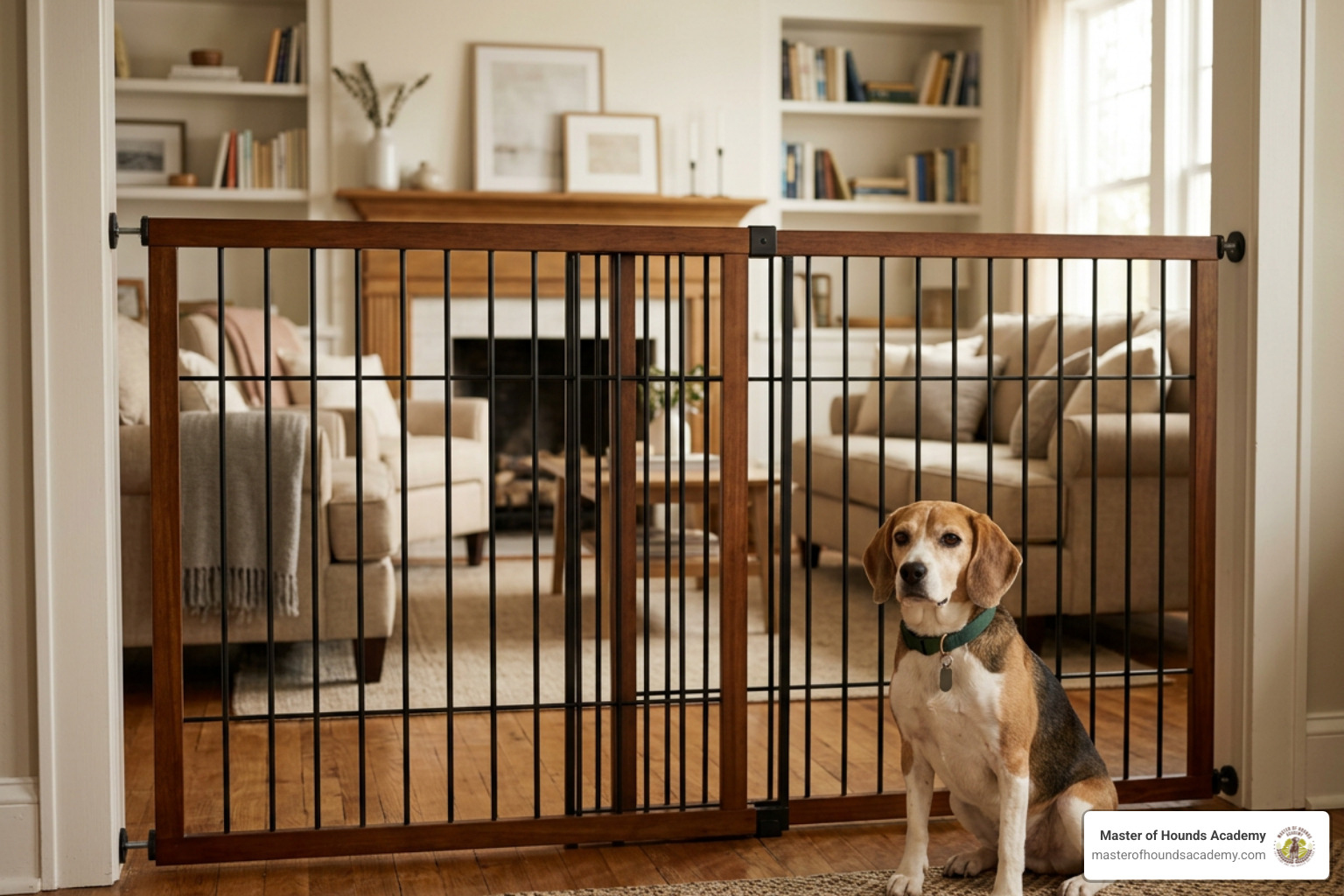
- Installing solid baby gates or double door barriers to control space in the house and prevent surprise encounters
- Conditioning your dog to comfortably wear a well fitted basket muzzle during public outings or stressful situations
- Feeding pets in completely separate, quiet rooms away from household traffic and other animals
- Removing access to guarded items like high value chews or toys when multiple pets are loose together
- Avoiding known outdoor triggers by walking during off peak hours or utilizing private spaces for exercise and relief
Core Principles of Balanced Dog Behavior Modification

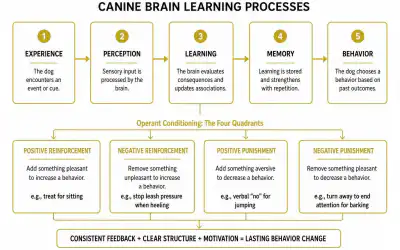
At Master of Hounds Academy, we use a balanced approach rooted in all four scientific quadrants of operant learning. Using operant learning allows us to communicate with clarity, ensuring the dog understands what behaviors are safe, desirable, and expected. This personality driven structure builds clear communication pathways and fosters lasting mutual respect.
Implementing Four Quadrants in Dog Training for Dog Aggression
Effective behavior modification requires clear feedback. By utilizing all four quadrants of operant learning, we balance motivation, build confidence, and provide clear boundaries for long term stability.
- Positive Reinforcement: Rewarding calm choices and proper focus around triggers with high value rewards or praise.
- Negative Reinforcement: Removing a mild pressure or moving away from a stressor when the dog demonstrates a calm behavior or disengages appropriately.
- Positive Punishment: Providing clear, fair, and timely feedback to stop unsafe behaviors like lunging, snapping, or aggressive displays.
- Negative Punishment: Withholding a desired reward or attention when the dog chooses inappropriate arousal or pushy behavior.
This balanced approach creates a reliable framework where your dog learns what to do, what to avoid, and how to make calm choices in challenging situations across varied environments.
Professional Dog Training for Dog Aggression: Choosing the Right Expert
Working with severe behavioral issues requires specialized professional guidance. Look for professional trainers or certified behavior experts who have extensive hands on experience handling complex aggression cases.
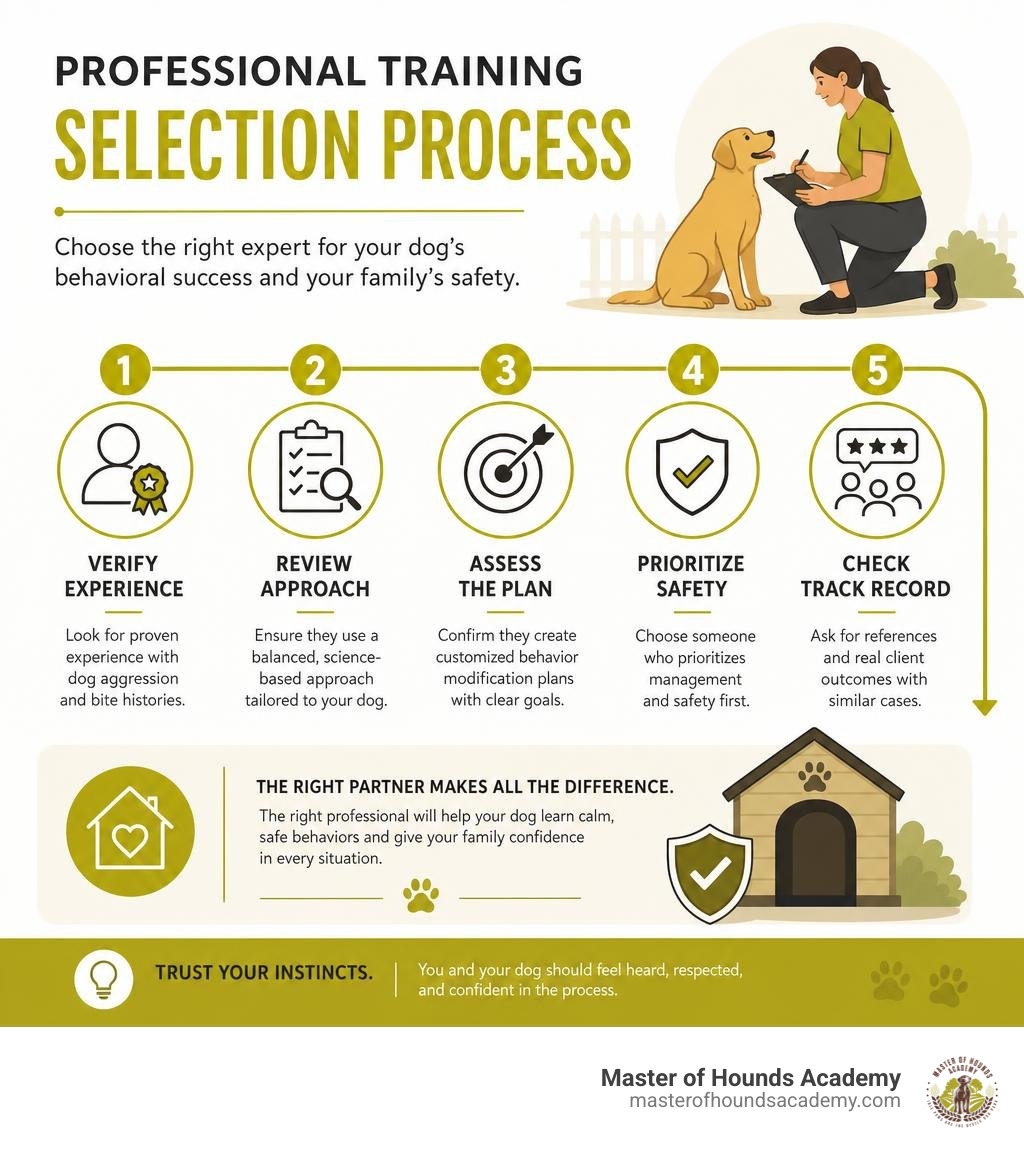
When selecting a professional, evaluate their experience with bite histories, their ability to create customized behavioral plans, and their track record with client safety. Helpful guidance on seeking professional help can be reviewed through Dogs and Canines behaviour | RSPCA. Working with an experienced professional ensures that both human handlers and dogs remain safe throughout the rehabilitation process.
Is Aggression Cured or Managed? Long Term Safety Guidelines
A common question pet parents ask is whether aggression can be completely cured. While dogs can show incredible improvement through structured training, managing risk factors is an ongoing commitment. Real world safety depends on continuous awareness, clear home structure, and careful trigger management.
| Risk Factor | Low Risk Assessment | High Risk Assessment |
|---|---|---|
| Bite History | No contact made, warning growls only | Multiple bite incidents with severe pressure |
| Trigger Predictability | Specific, easily avoidable triggers | Unpredictable reactions across varied settings |
| Dog Size and Strength | Small breed, easily managed physically | Large breed, difficult to restrain physically |
| Household Environment | Quiet adult home with controlled routines | Busy home with active young children and frequent visitors |
Assessing your household stability and risk profile helps establish safe management protocols for your dog’s lifetime. Consistency in rules, structured daily routines, and ongoing environmental management are key elements in preventing regression over the long term.
Frequently Asked Questions About Dog Aggression
What are the first immediate steps to take if my dog displays sudden aggression?
Pause the situation immediately, create physical space using barriers or doors, and ensure everyone remains completely safe. Avoid physical confrontation, secure your dog safely in a quiet area, and contact a veterinarian to rule out pain or illness before beginning behavioral training.
Can canine aggression be completely cured over time?
While behavior modification can significantly improve a dog’s choices and calm their reactions, owners should view aggression as something to manage long term. Maintaining consistent routines, clear boundaries, and proactive environmental management prevents future setbacks and maintains safe boundaries.
Will spaying or neutering eliminate aggressive behaviors in adult dogs?
Spaying or neutering may reduce hormone driven behaviors, but it is rarely a standalone fix for established aggressive behaviors. Behavior modification, structured daily training, and clear guidance are still essential to modify established behavioral patterns.
Restoring peace, safety, and confidence in your household is entirely possible with the right professional guidance. Our specialized team works directly with Bay Area families to deliver structured behavior modification tailored to your lifestyle. Explore our Private Dog Training Lessons to take the next step toward a safe and harmonious home.