
Why Group Dog Classes Build Better Everyday Companions
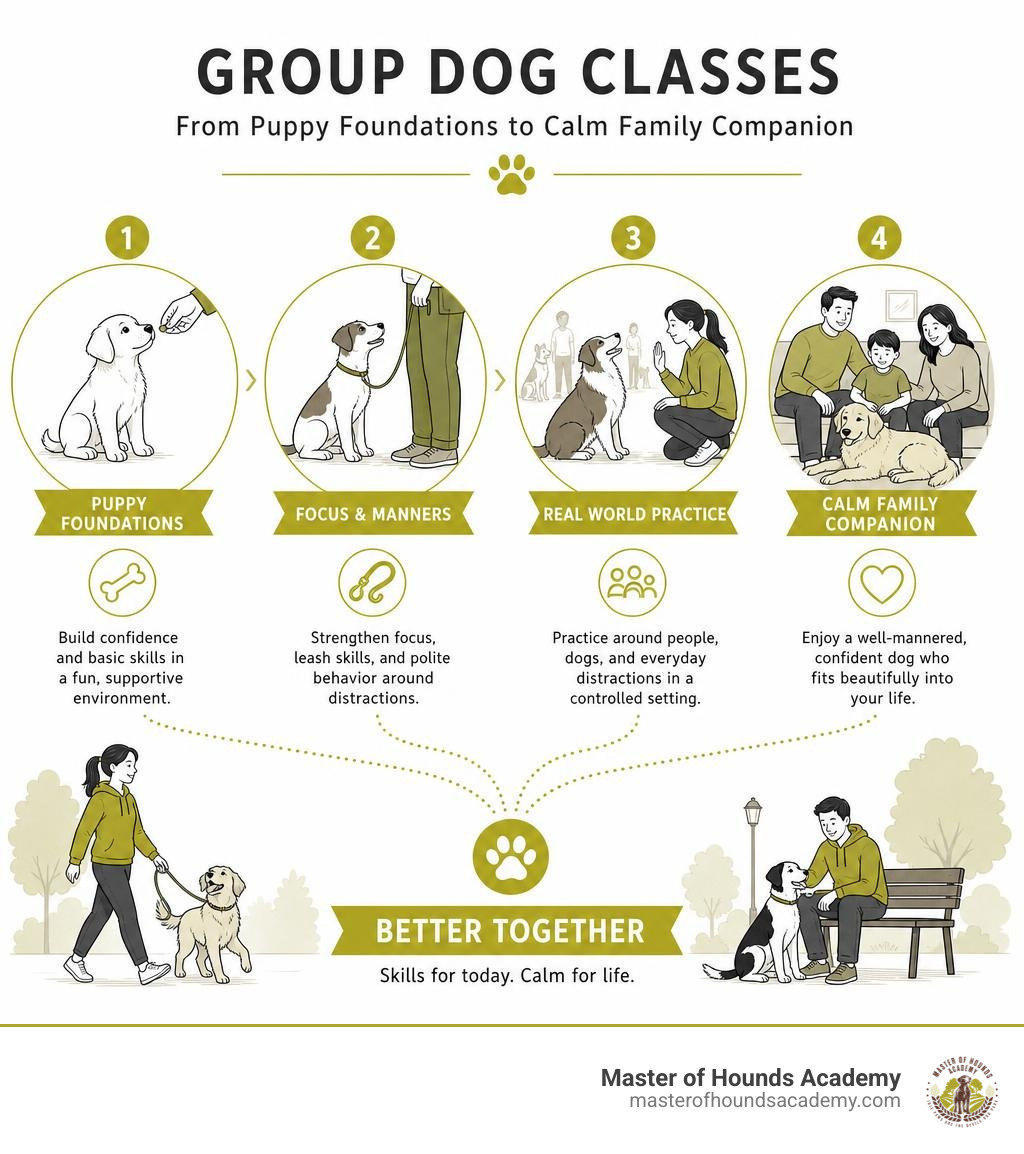
Group dog classes are guided training sessions where dogs and their people practice skills around real life distractions, including other dogs, people, sounds, and movement. They can help puppies build healthy social habits and help adult dogs improve focus, leash manners, and household behavior in a structured setting.
| What group classes offer | Why it matters |
|---|---|
| Guided practice with distractions | Dogs learn to listen when life gets busy |
| Controlled exposure to dogs and people | Builds calm, appropriate social behavior |
| A clear class routine | Gives owners simple skills to practice at home |
| Shared tuition costs | Often costs less than a comparable series of private lessons |
A good class is not a dog park with homework. It is a carefully managed learning space where each dog works at a pace suited to its needs, whether the goal is a confident puppy, polished family manners, or better control around the neighborhood.
I am Francis Metcalf, founder and co owner of Master of Hounds Academy, and I have spent more than two decades helping owners use group dog classes, private lessons, and behavior based training to build steadier, happier family companions. In this guide, I will help you understand what to look for before choosing a local class.
Key Benefits of Group Dog Classes
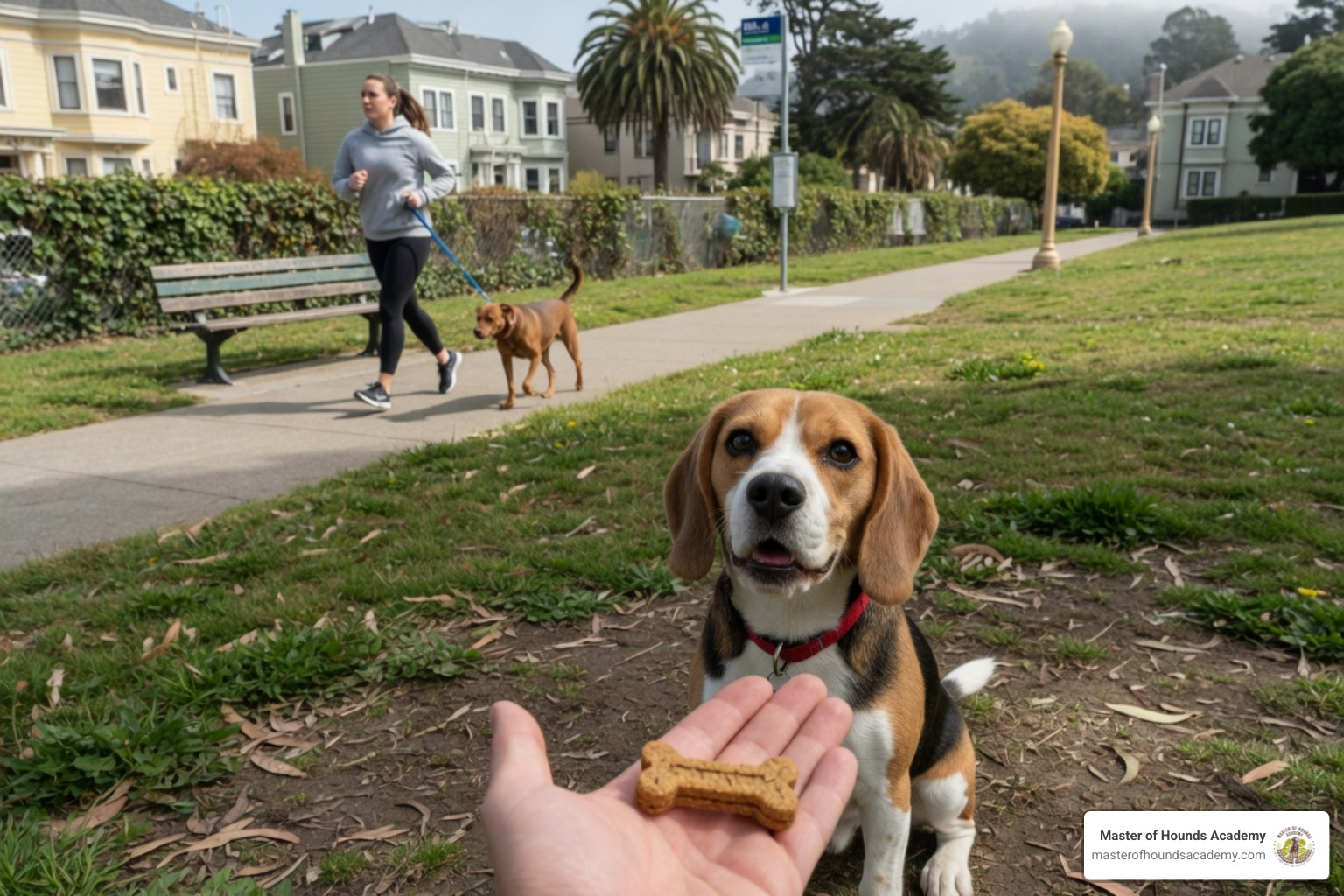
Joining group dog classes brings a unique set of advantages that individual home practice simply cannot recreate. While teaching sit or down in a quiet living room in Berkeley or San Francisco is a wonderful start, real life rarely happens in a vacuum. The true test of your canine companion’s focus is whether they can sit politely when a toddler rides past on a scooter or another dog trots down the sidewalk in Oakland or Walnut Creek.
According to research from the American Kennel Club, participating in group dog classes can improve a dog’s overall obedience by up to 80% compared to training completely on your own. This dramatic jump in responsiveness happens because group settings teach dogs to filter out background activity and pay attention to their human handlers. Furthermore, data from the ASPCA reveals that over 70% of dogs completing a structured group course are significantly less likely to be surrendered to shelters, demonstrating how essential foundational education is for long term household harmony.
For busy Bay Area families, retirees, and professional couples alike, group environments offer a communal, supportive atmosphere where everyone works toward common goals together. You quickly realize that your spirited young retriever is not the only one who gets overly excited when greeting friends, which brings both peace of mind and shared encouragement.
Cost Comparison: Group vs. Private Lessons
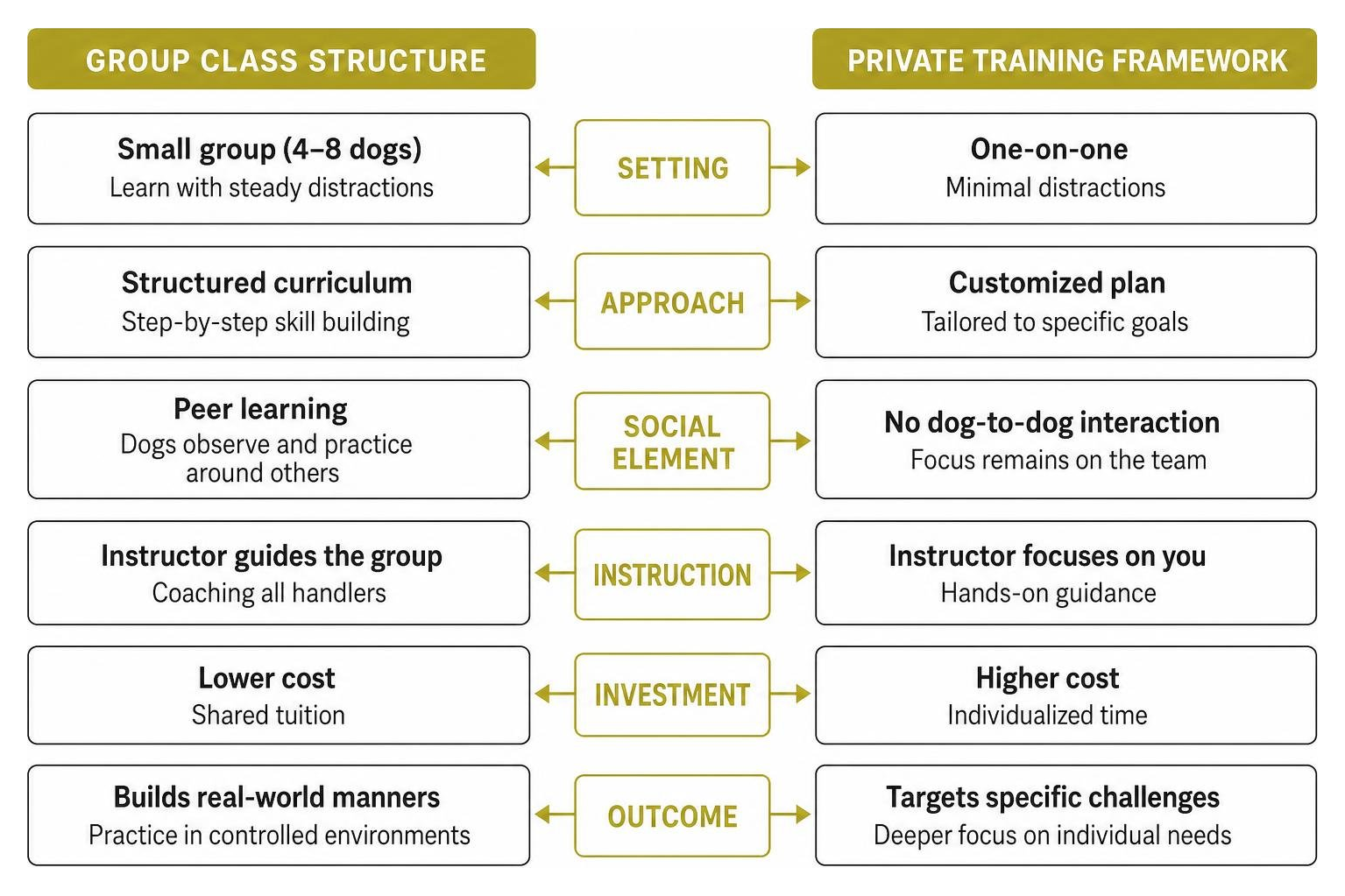
When evaluating professional training options, budget and value are naturally top of mind. The national average cost for a standard 6 week group dog class course is approximately $150. This makes group instruction roughly 40% cheaper than private, one on one sessions covering the same timeframe.
While private coaching is invaluable for complex behavioral rehabilitation, group environments deliver exceptional value for foundational skills, impulse control, and social etiquette. By sharing the instructor’s time with a small cohort of local owners, you benefit from expert instruction at a fraction of the cost, making ongoing canine education accessible and sustainable for your family.
Controlled Socialization and Real World Manners
True socialization is not about allowing dogs to rush up and play with every canine they meet on a leash. Rather, healthy socialization means teaching your dog to remain calm, neutral, and relaxed in the presence of novel sights, sounds, and other animals.
A survey conducted by the Association of Professional Dog Trainers found that group classes achieve a 90% success rate in socializing dogs effectively with other canines. Additionally, approximately 65% of dog owners attending group courses report a significant reduction in unwanted behavioral issues within the very first month.
Through structured, controlled exposure, your dog learns that the presence of other dogs in places like Marin, Alameda, or Lafayette is completely normal and does not require frantic barking, leash pulling, or overwhelming excitement.
Types of Group Classes for Every Stage of Development

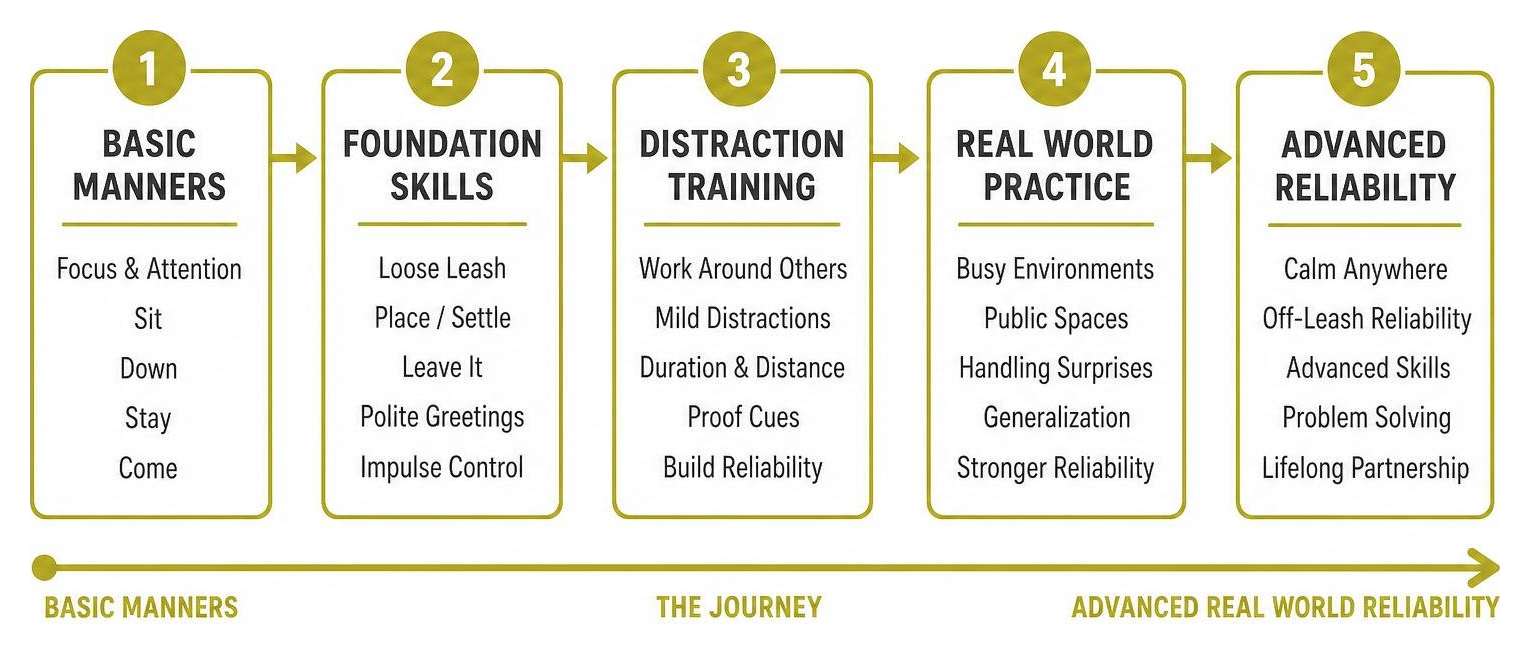
Canine learning is a journey that evolves as your companion matures. Reputable training centers structure their offerings to meet dogs at their exact developmental phase, ensuring that exercises remain engaging, age appropriate, and stress free.
Puppy Socialization and Foundation Manners
The early months of a puppy’s life represent a critical developmental window. Puppy group classes focus heavily on foundational manners, gentle environmental exposure, and owner handling mechanics.
- Early engagement games that build strong eye contact and focus
- Gentle handling exercises to prepare young dogs for vet visits and grooming
- Sound desensitization to urban noises like streetcars, traffic, and park activities
- Basic posture cues including sit, down, place, and loose leash walking foundations
- Impulse control exercises like waiting politely at open doors and gateways
Starting early, once your veterinarian approves your puppy’s vaccination progression, sets a clear framework for proper etiquette before undesirable habits can take root.
Intermediate and Advanced Skill Building
Once your dog masters basic mechanics in a quiet setting, intermediate and advanced group classes elevate those skills to handle real world challenges. These higher level courses push handlers and dogs to achieve prompt responses despite heavy environmental distractions.
In advanced modules, handlers practice off leash recall, long distance stays, precise heel work, and calm navigation through crowded public venues in towns like San Rafael, Mill Valley, or Danville. The objective is to cultivate total reliability, transforming your dog into a polite partner capable of accompanying your family to outdoor cafes, winery patios, and bustling farmers markets across the region.
How to Choose a Qualified Instructor and Facility
Selecting the right professional guide for your dog is one of the most important decisions you will make as a pet owner. A master trainer brings deep observational skill, clear communication, and decades of practical insight to every lesson.
Evaluating Training Philosophy and Methods
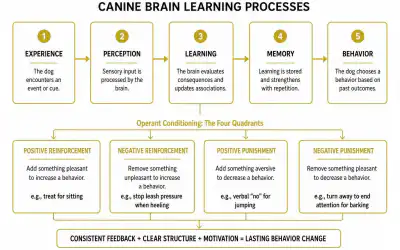
At Master of Hounds Academy, we rely on the comprehensive, behavior based Metcalf Method, drawing on over 30 years of professional experience. We utilize all four scientific quadrants of operant learning to create a clear, balanced, and predictable communication system for your dog.
When evaluating a prospective facility, look for instructors who clearly articulate how they reward desired choices, set structured boundaries, and provide fair, understandable corrections when necessary. Clear communication builds confidence in dogs because they always understand exactly what is expected of them. A well rounded, balanced methodology respects the individual personality and temperament of each dog, ensuring that instruction is tailored rather than one size fits all.
Red Flags and Facility Safety Standards
Before committing to a multi week course in locations such as Concord, Moraga, or El Cerrito, inspect the facility and ask key operational questions. Prioritize facilities that maintain strict health and safety protocols:
- Vaccination Verification: The facility must require proof of age appropriate vaccinations including rabies, DHPP, and bordetella from all participants.
- Class Size Boundaries: High quality instruction requires small group sizes, ideally six to eight dogs per instructor, ensuring individualized feedback.
- Cleanliness and Sanitation: Training surfaces must be sanitized regularly with dog safe disinfectants to prevent disease transmission.
- Trainer Credentials and Experience: Inquire about the lead trainer’s practical background, hands on experience, and ability to read subtle canine body language.
- Red Flags: Avoid classes that allow chaotic, unsupervised group play, or instructors who fail to maintain safe spatial distance between unfamiliar dogs.
Preparing Your Dog for Success in Class
Preparation plays a massive role in how much you and your dog extract from each weekly lesson. Arriving with the right mindset and equipment sets a calm, productive tone.
- Take your dog on a short, casual walk before class to allow them to relieve themselves and burn off initial excess energy.
- Avoid feeding a full meal right before class so your dog remains motivated by high value working rewards.
- Pack a dedicated training pouch filled with pea sized, highly palatable treats that your dog rarely receives at home.
- Fit your dog with proper, secure gear as recommended by your instructor, such as a well fitted flat collar, martingale, or training leash.
- Maintain a calm, upbeat attitude yourself, as dogs quickly pick up on handler stress and tension.
What to Expect During Group Dog Classes
A typical group session lasts between 45 and 60 minutes. Classes generally open with a brief check in and review of home practice exercises. The instructor then demonstrates a new exercise step by step with a demo dog, explaining the handler mechanics, timing, and reward placement.
Next, the class breaks into individual handler practice while the instructor circulates through the room, offering real time coaching, posture adjustments, and tailored tips. Sessions usually conclude with a quiet settle exercise and a structured Q and A period to address specific home application questions.
Managing Distraction and Reactivity in Group Dog Classes
It is entirely normal for dogs to feel excited or slightly overwhelmed during their first few group sessions. Managing reactivity or leash tension comes down to distance and threshold management.
If your dog struggles to focus, bark politely at neighbors, or pulls on the leash, your trainer will help you create additional distance from the rest of the group. Working behind a visual barrier or standing ten feet further back allows your dog’s brain to drop below threshold, enabling them to process information calmly and learn effectively.
Frequently Asked Questions About Dog Training
At what age should my dog start attending group classes?
Puppies can usually begin specialized puppy group classes as early as 8 to 12 weeks of age, provided they have received their initial round of vaccinations and have clearance from your veterinarian. Early exposure during this critical developmental phase builds lifelong resilience. For adult or adopted rescue dogs of any age, group classes can begin as soon as they have settled into your home and demonstrated basic health stability.
Are group classes suitable for dogs with behavioral issues?
Group classes are ideal for dogs with mild behavioral quirks, leash excitement, or lack of focus around everyday distractions. However, if a dog displays severe fear, intense territorial aggression, or extreme reactivity toward people or other animals, a series of private lessons or a dedicated board and train program is often the safer, more effective starting point. Once foundational control is established privately, the dog can smoothly transition into group classes for distraction proofing.
How much do group dog classes usually cost?
In the United States, a standard 6 week group dog class series typically ranges from $120 to $220, averaging around $150. Considering the extensive instruction, structured environment, and professional guidance provided, group classes represent an exceptionally cost effective investment in your dog’s lifelong social etiquette and household behavior.
Building Lasting Harmony with Master of Hounds Academy
Transforming a enthusiastic canine into a serene, well mannered family companion is one of the most rewarding journeys an owner can undertake. Whether you are navigating the busy neighborhood streets of San Francisco and Oakland, strolling through the quiet parks of Orinda and Albany, or relaxing at a cafe in Greenbrae or Mill Valley, having a companion who listens reliably brings unmatched freedom and joy.
At Master of Hounds Academy, our unique Metcalf Method combines over 30 years of hands on experience with a deep understanding of canine psychology across all four scientific quadrants of operant learning. We take pride in guiding Bay Area families, professional couples, and active retirees toward seamless household harmony through clear communication, structured boundaries, and real world training methods.
If you are ready to experience the incredible transformation that clear, professional instruction brings, we invite you to explore our dedicated Master of Hounds Academy Group Classes and join our warm community of local dog lovers today.