
Dog Training for Fear Aggression Starts With Safety and Understanding
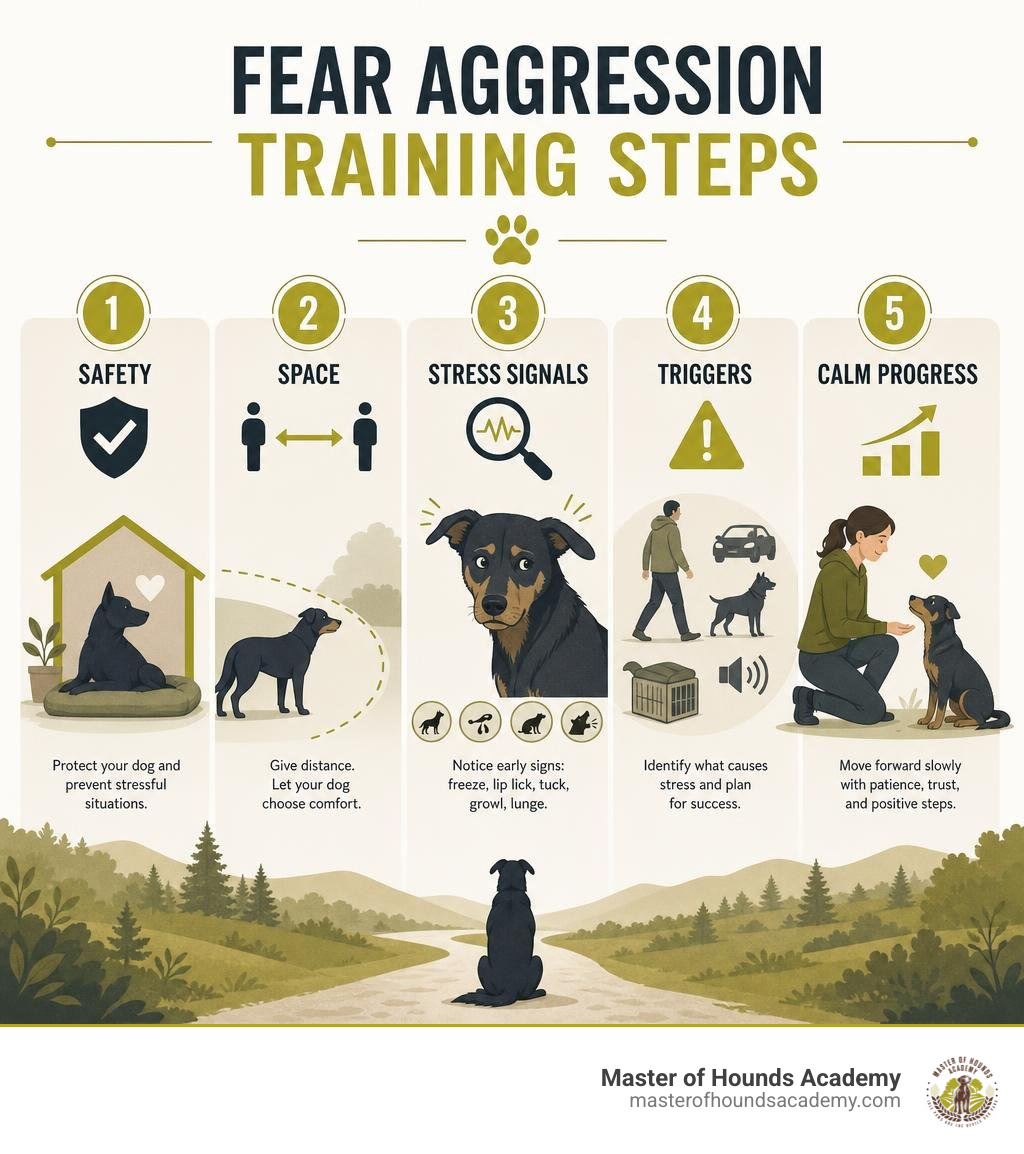
Dog training for fear aggression begins by recognizing that a fearful dog is trying to create distance from something it sees as unsafe. The first priorities are simple:
- Prevent bites and avoid pushing the dog into stressful situations.
- Notice early signs such as freezing, lip licking, tucked posture, growling, or lunging.
- Identify triggers, including strangers, dogs, handling, noises, confined spaces, or pain.
- Build a calm, structured plan that helps the dog feel safer over time.
A dog who growls at a visitor, snaps during nail care, or barks at dogs on walks is not necessarily a “bad dog.” Fear aggression is usually a defensive response that appears when a dog feels trapped, overwhelmed, or unheard.
I am Francis Metcalf, co owner of Master of Hounds Academy, and I have spent more than three decades helping families work through dog training for fear aggression and other behavior challenges. In the sections ahead, we will cover how to read your dog’s signals, protect everyone in the home, and build a practical path toward greater confidence.
Understanding Fear Aggression and Its Root Causes
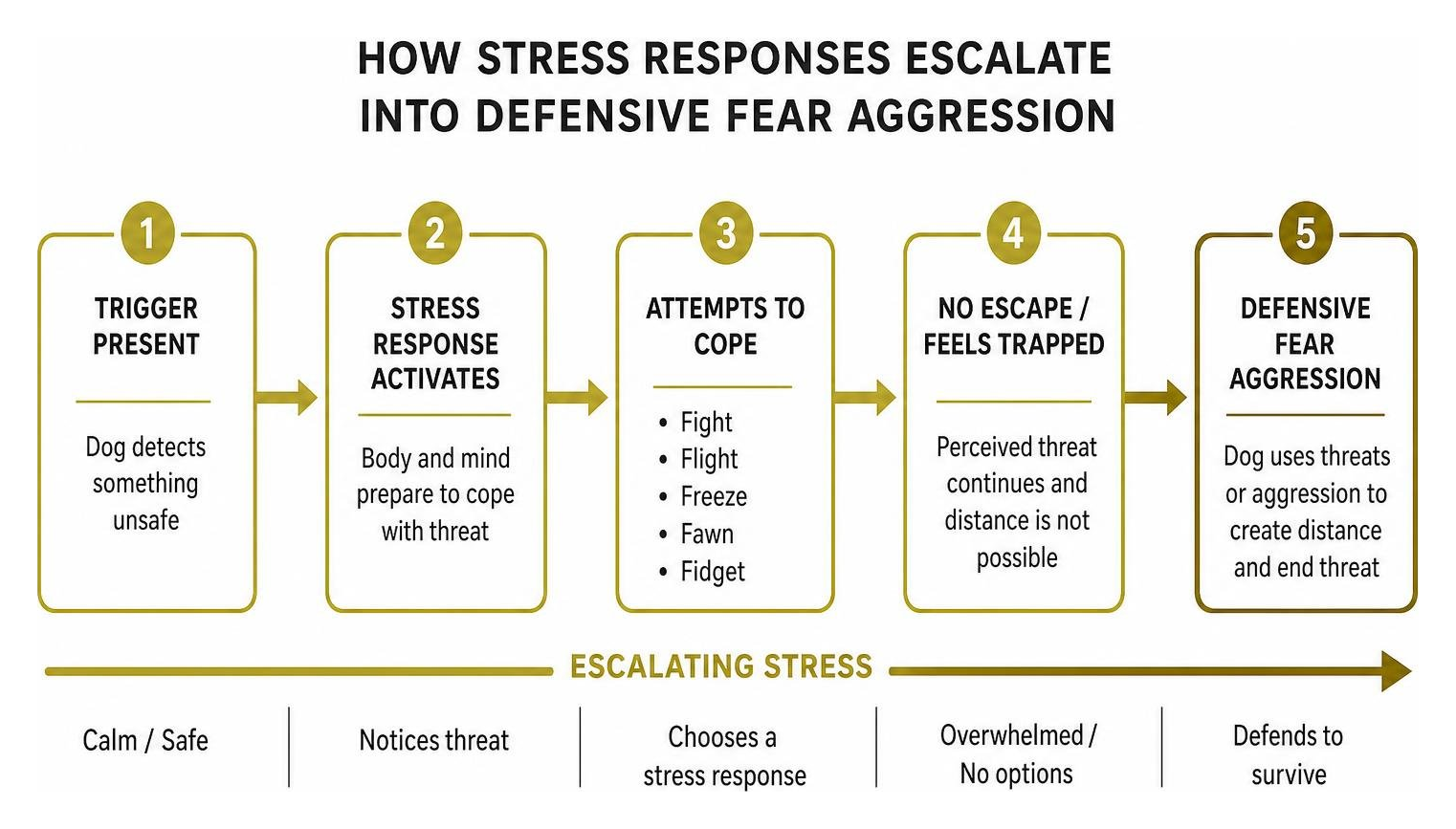
To address dog training for fear aggression effectively, we must first look at what drives this behavior deep inside a dog’s psyche. Aggression caused by fear is fundamentally a distance seeking mechanism. When a dog encounters a stimulus it perceives as terrifying, its central nervous system triggers a survival reflex. If escape is not immediately obvious, the canine instincts pivot toward defensive posturing to force the threat away.
Every dog carries a distinct personality profile that influences how it processes environmental stress. You can explore how innate traits shape behavior in our detailed guide on A Guide to Dog Personalities. When a dog feels overwhelmed, it typically cycles through what behaviorists call the five stress responses: fight, flight, freeze, fawn, or fidget. Fight behaviors manifest as fear aggression when flight or spatial retreat feels impossible to the dog.
Root causes often stem from several intertwined factors:
- The Early Socialization Window: The critical development window between three and fourteen weeks of age lays the foundation for life. Puppies deprived of gentle exposure to diverse sights, sounds, surfaces, and people during this time often view novel encounters in adulthood with suspicion.
- Genetic Predisposition: Inherited nervous system reactivity plays a significant role. Some dogs are born naturally anxious due to ancestral temperaments or unselective breeding practices.
- Past Trauma and Negative Experiences: A single traumatic event, such as being rushed by an off leash dog while walking through Marin trailheads or experiencing sudden physical pain during veterinary handling, can anchor a lasting fear association.
- Underlying Pain and Medical Issues: Physical discomfort dramatically lowers a dog’s threshold for tolerance. Conditions like hip dysplasia, chronic ear infections, gastrointestinal distress, or dental pain can transform a normally gentle dog into an defensive defender of its body.
Before starting any behavior modification program in the Bay Area, whether you reside in Berkeley or Walnut Creek, a comprehensive veterinary evaluation is essential. Bloodwork, neurological screens, and orthopedic reviews ensure that we are not attempting to train away physical suffering.
Recognizing Subtle Stress Cues vs. Defensive Snapping
A common misconception among owners is that fear aggression strikes out of nowhere. In reality, dogs communicate their rising distress through a rich language of subtle visual signals long before a bite occurs. Learning to read these early indicators allows us to intervene long before the dog reaches its emotional boiling point.
When a dog enters a state of elevated stress, observe these progressive signals:
- Subtle Displacement Signals: Yawning when not tired, exaggerated lip licking, sudden sniffing of the ground, or turning the head away from a person.
- Postural Adjustments: Weight shifted backward, tail tucked tightly against the abdomen, ears pinned back flat against the skull, and piloerection (bristling hair along the spine).
- Facial Tension: Facial muscles tighten, showing the white portion of the eye known as whale eyes, accompanied by rapid panting or sudden lip retraction.
- Overt Defensive Signals: Hard staring, body freezing, low rhythmic growling, air snapping, or lunging forward to force space.
Interestingly, fearfully aggressive dogs frequently exhibit a habit of biting from behind. As a visitor turns to walk away, a fearful dog may dart forward to nip the back of the legs or clothing. This occurs because the moving target appears to be retreating, prompting the dog to deliver a final warning kick to ensure the threat continues leaving its personal bubble.
Defensive vs. Offensive Fear Aggression
Understanding the distinction between defensive and offensive fear aggression helps us gauge risk and structure effective management boundaries.
Defensive fear aggression is characterized by distance seeking posture. The dog wishes exclusively to retreat. If trapped in an entryway, cornered near furniture, or constrained on a short leash, the dog uses growling or snapping as an emergency barrier to preserve its personal space.
Offensive fear aggression develops when a dog learns through repeated exposure that defensive display works exceptionally well. If growling previously caused strangers to back away, the dog may shift strategies. Rather than waiting for the scary trigger to approach, the dog proactively moves toward the trigger to drive it off before it gets close.
| Behavior Trait | Defensive Fear Aggression | Offensive Fear Aggression |
|---|---|---|
| Primary Motivation | Create distance and escape threat | Drive threat away through forward pressure |
| Body Language | Weight back, head low, tail tucked, whale eye | Weight forward, erect tail, hard direct stare |
| Movement Pattern | Retreats until cornered or trapped | Advances toward the trigger preemptively |
| Spatial Threshold | Trigger must enter immediate spatial boundary | Reacts from larger visual distance |
Recognizing where your dog falls along this spectrum allows us to set clear boundaries and keep everyone safe while working through a structured rehabilitation plan.
Core Principles of Dog Training for Fear Aggression
Effective dog training for fear aggression relies on clarity, consistency, and a deep understanding of learning theory. At Master of Hounds Academy, we employ balanced techniques rooted in all four scientific quadrants of operant learning. By providing structured boundaries alongside meaningful rewards, we offer dogs absolute clarity about what choices lead to safety and success.
When modifying deep seated fear, we focus heavily on changing both the dog’s internal emotional response and its outward behavioral choices. For additional reading on systematic behavior modification principles, you can review this practical Guide to Stopping Fear Based Aggression.
Managing threshold limits is the single most vital skill for handlers. A dog’s threshold is the distance at which it can perceive a trigger while remaining calm enough to process information, take food rewards, and respond to known handler cues. Once a dog crosses its threshold into full panic, logical learning ceases and adrenaline takes over.
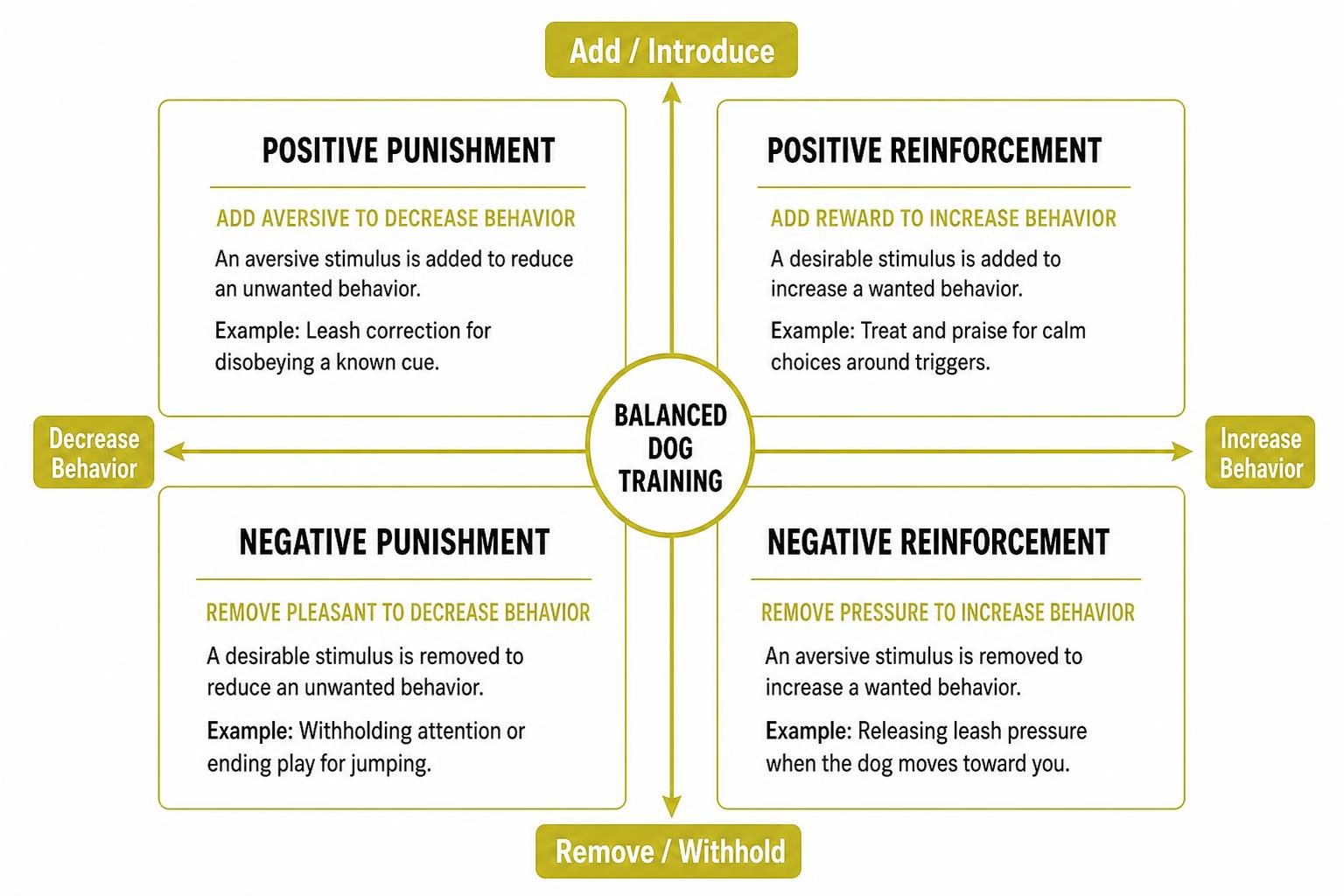
Structuring Safety and Spatial Boundaries
Safety is the absolute cornerstone of rehabilitating fear aggressive dogs. Without robust physical and environmental management, accidental outbursts will continue to reinforce the neural pathways that fuel fear.
Every comprehensive fear management protocol includes essential safety tools and environmental controls:
- Basket Muzzles: A properly fitted basket muzzle allows the dog to pant, drink water, and accept treats comfortably while completely eliminating bite risks during walks or vet visits. Muzzles should always be conditioned gradually using positive associations so the dog views the gear as a cue for fun outings.
- Head Collars and Tactical Harnesses: These tools give handlers optimal mechanical leverage and spatial control over a large or powerful dog, preventing lunging without applying undue physical strain.
- Dedicated Safe Rooms: Establishing a quiet sanctuary room in your home equipped with a cozy crate, white noise machine, and visual barriers keeps your dog completely relaxed when contractors, painters, or social guests visit your household.
- Visitor Management Protocols: Establish clear house rules for visitors in your Alameda or Orinda residence. Guests must be instructed never to stare directly at, speak to, or reach out toward a fearful dog.
- Collar Bells and Visual Identifiers: Placing a small bell on your dog’s collar indoors ensures you always know where they are moving, preventing accidental surprises around tight hallways or kitchen corners.
Applying Balanced Techniques in Dog Training for Fear Aggression
Balanced dog training leverages clear communication to guide a dog out of an anxious mind state and into confident decision making. By pairing clear spatial boundaries with well timed rewards, we give the dog a predictable roadmap for navigating complex environments.
When utilizing all four quadrants of operant learning, our focus remains on providing feedback that makes sense to the canine brain:
- Timely Rewards: Reinforcing calm emotional states, eye contact, and voluntary retreat choices with high value rewards builds strong alternative habits.
- Spatial Pressure and Relief: Using subtle physical movement to guide a dog away from a scary situation teaches the dog that yielding to handler direction creates immediate distance and comfort.
- Clear Communication: Consistent markers signal precisely when a dog has made a desirable choice, reducing confusion and lowering baseline anxiety.
For a deeper look into clinical protocol frameworks, consider examining the classic Protocol for Understanding Fear Aggression. Clear rules eliminate ambiguity, allowing fearful dogs to relax knowing their human handler is managing environmental threats.
Step by Step Rehabilitation Plan for Fearful Dogs
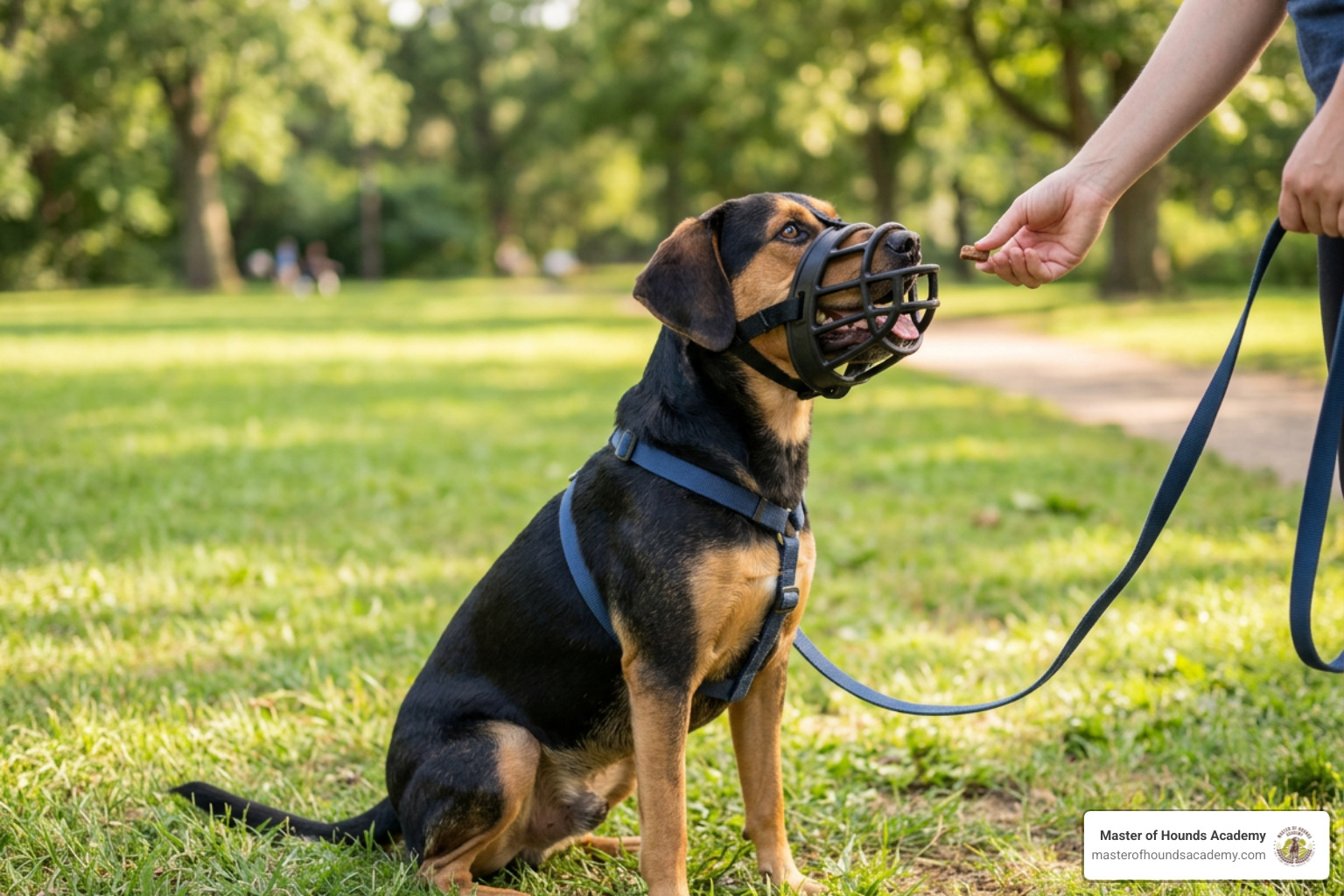
Rehabilitating a dog struggling with fear aggression requires a methodical, step by step approach. Progress is measured over weeks and months rather than days. By breaking down the process into structured phases, we ensure the dog remains comfortable and capable of learning throughout its journey.
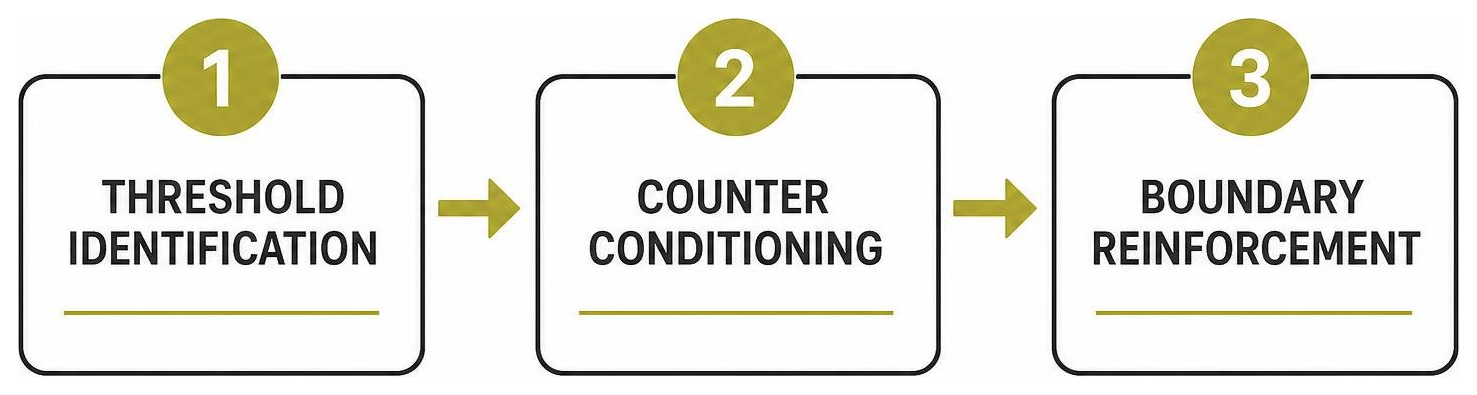
Follow this core rehabilitation sequence:
- Conduct a Thorough Trigger Assessment: Catalog every stimulus that causes a reaction, noting exact distances, environmental conditions, and specific stress signals exhibited by your dog.
- Establish Baseline Environmental Management: Put temporary management controls in place to avoid exposing your dog to triggers at close range while initial foundation training takes place.
- Build Core Obedience Engagement: Teach solid foundation behaviors such as a rapid target touch, look at me cue, emergency u turn, and settled mat stay in low distraction environments like your living room or back yard.
- Condition Safety Equipment: Introduce basket muzzles, head collars, and training leashes smoothly so your dog enjoys putting them on before attempting outdoor exposures.
- Begin Systematic Desensitization: Expose your dog to triggers at distances well beyond their reaction threshold, ensuring they remain completely calm and composed.
- Integrate Counter Conditioning: Pair the far off appearance of a trigger with high value rewards or engaging handler games to re associate scary stimuli with positive outcomes.
- Expand Real World Generalization: Practice controlled exposures across diverse Bay Area settings, such as quiet parks in Lafayette, wide open spaces in El Cerrito, or suburban paths in Concord.
Implementing Counter Conditioning Exercises
Counter conditioning changes how a dog feels about a specific trigger by pairing the trigger’s presence with high value items, such as fresh roast chicken, real cheese, or a favorite toy.
Here is how to execute a counter conditioning session effectively:
- Step 1: Position yourself and your dog at a distance where the trigger (such as an approaching dog or unfamiliar human) is visible but far enough away that your dog remains completely under threshold.
- Step 2: The precise second your dog notices the trigger, begin delivering a continuous stream of high value food rewards directly to their mouth.
- Step 3: As soon as the trigger steps out of sight or moves away, immediately stop feeding the rewards.
- Step 4: Repeat this sequence across numerous short sessions. Over time, your dog learns a new emotional sequence: trigger appears, wonderful rewards happen; trigger leaves, fun stops.
If your dog refuses food during a session, this is a clear signal that you are too close to the trigger and the dog has crossed its emotional threshold. Immediately increase distance until your dog can accept treats comfortably once again.
Preventing Escalation in Dog Training for Fear Aggression
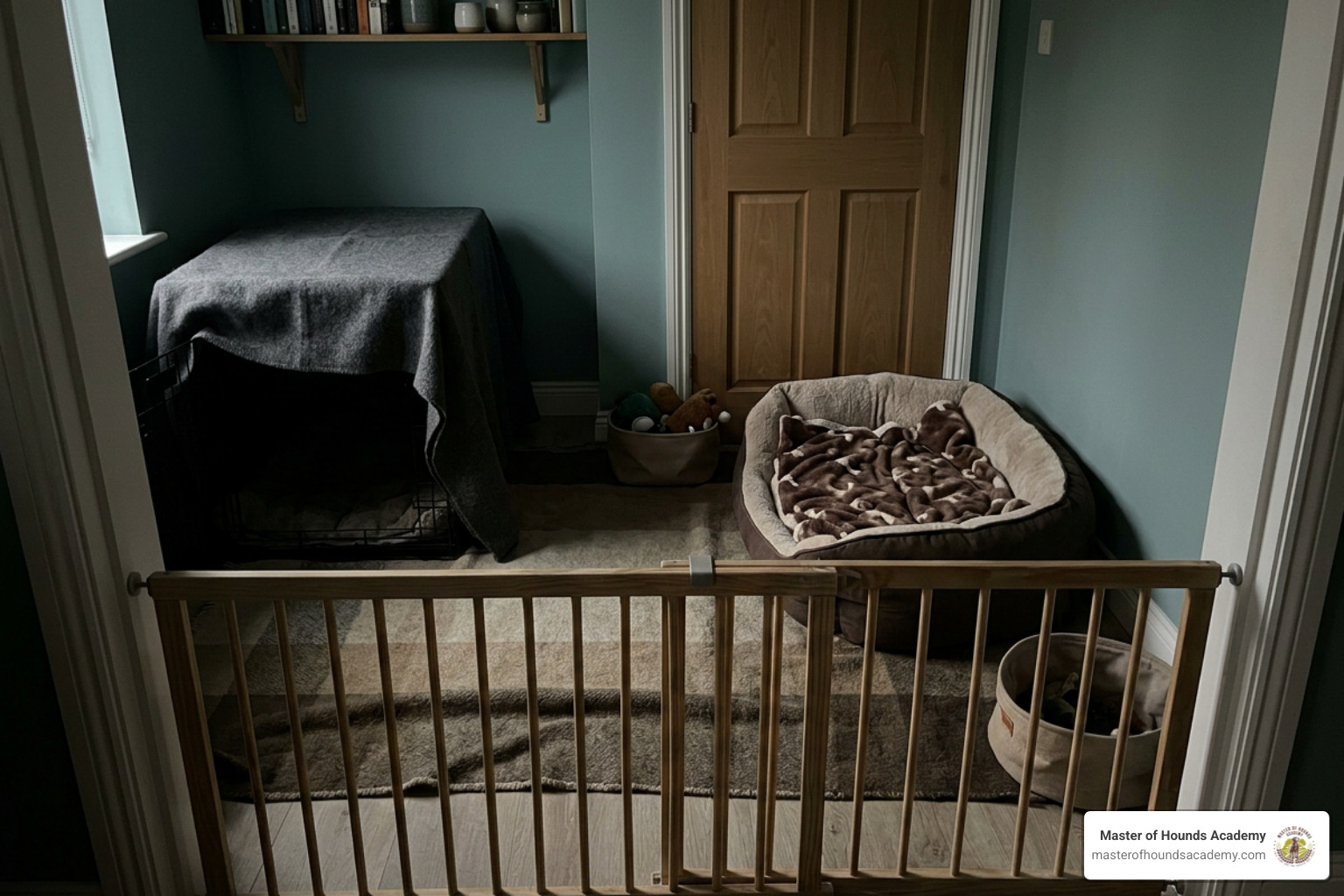
Preventing behavioral regression requires constant vigilance and clear family boundaries, especially in households with active children or frequent visitors.
Key rules for household safety include:
- Strict Child Supervision: Children under five years old should never be left unsupervised with any dog, particularly one experiencing fear aggression. Teach young children never to approach a dog while it is sleeping, eating, resting in its crate, or holding a high value item.
- Structured Guest Entry: When visitors arrive at your San Francisco or Oakland home, place your dog in its secure sanctuary room or crate before opening the front door. Once guests are seated comfortably in the living room, you can bring the dog out on a leash with a fitted basket muzzle if training goals call for it.
- Routine Daily Exercise: Providing consistent physical exercise and mental enrichment helps lower baseline adrenaline and cortisol levels, keeping your dog in a far more stable state of mind for training.
Frequently Asked Questions About Fear Aggressive Dogs
What is the primary cause of fear aggression in dogs?
Fear aggression rarely stems from a single isolated cause. It is typically the product of a complex mix involving genetic predisposition, incomplete early socialization during the critical window between three and fourteen weeks of age, previous traumatic events, or underlying medical pain. Neurochemical imbalances can also play a major role, causing some dogs to perceive neutral daily events as significant threats.
How can owners safely manage a fear aggressive dog around guests?
Safety around guests begins with environmental control. Create a secure sanctuary room away from main entryway activity where your dog can stay during arrivals. Utilize basket muzzles and head collars when introducing a dog to guests at a controlled distance. Always instruct guests to ignore the dog completely by avoiding eye contact, keeping hands to themselves, and remaining seated calmly. Never force a fearful dog to accept handling from visitors.
Can a fear aggressive dog be completely rehabilitated?
While total resolution depends heavily on individual genetics, history, and severity, vast improvements are entirely achievable with dedicated training. Success generally looks like expanding the dog’s threshold distance, building reliable handler responsiveness, and establishing safe daily management protocols. Through consistent work, fear aggressive dogs can lead rich, joyful, and fulfilling lives alongside their human families across the Bay Area.
Navigating the Path Forward With Confidence
Living with a fear aggressive dog can feel daunting, but you do not have to walk this path alone. Understanding your dog’s subtle language, respecting their spatial boundaries, and implementing structured training principles builds a strong foundation for real behavioral change.
At Master of Hounds Academy, our signature Metcalf Method brings over thirty years of experience to dog owners throughout San Francisco, Marin, Mill Valley, Greenbrae, Berkeley, Oakland, and the entire East Bay. By blending clear communication across all four scientific quadrants of operant learning with customized, personality driven guidance, we help families transform chaotic daily routines into peaceful partnerships.
Whether your dog needs work on leash reactivity, boundary clarity, or complex behavior rehabilitation, taking the next step is simple. Explore our personalized private lessons today and discover how our balanced, family oriented approach can empower you and your canine companion to navigate the world together with calm confidence.