
Comparing Dog Boarding and Training Options to Alternative Programs
Dog boarding and training programs combine overnight lodging with immersive, professionally supervised education. During a residential stay, your dog lives at a dedicated facility while experienced trainers build reliable obedience, address problem behaviors, and establish calm daily routines through consistent repetition. Owners receive a polished companion and clear transition coaching at pickup.
Choosing how to educate your canine companion is a major life decision for your household. Families across the Bay Area often juggle busy careers, school runs, and weekend adventures, leaving little room for daily training missteps. When deciding how to proceed, owners usually weigh immersive residential stays against private coaching and traditional group classes.
Understanding learning theory helps demystify how these setups work. Balanced training relies on operant conditioning, which engages all four scientific quadrants of learning: positive reinforcement, negative reinforcement, positive punishment, and negative punishment. By clearly communicating boundaries alongside meaningful rewards, a dog develops reliable habits and emotional clarity. When evaluating formats, reviewing a comprehensive guide on comparing immersive dog training programs helps clarify which environment best supports these learning mechanics.
| Training Format | Best Suited For | Time Commitment for Owners | Pace of Habit Formation |
|---|---|---|---|
| Board and Train Residency | Intensive behavior modification, complex manners, fast foundational skill building | Minimal during the stay; focused commitment during transition lessons | Rapid and deeply ingrained through 24/7 repetition |
| Private One on One Coaching | Owners who want to master mechanical handling and work through targeted issues at home | Moderate to high daily practice between sessions | Steady, depending entirely on owner consistency |
| Weekly Group Classes | Basic socialization, entry level manners in mildly distracting group settings | High daily practice and regular weekly attendance | Gradual over several weeks or months |
Private Lessons vs. Board and Training
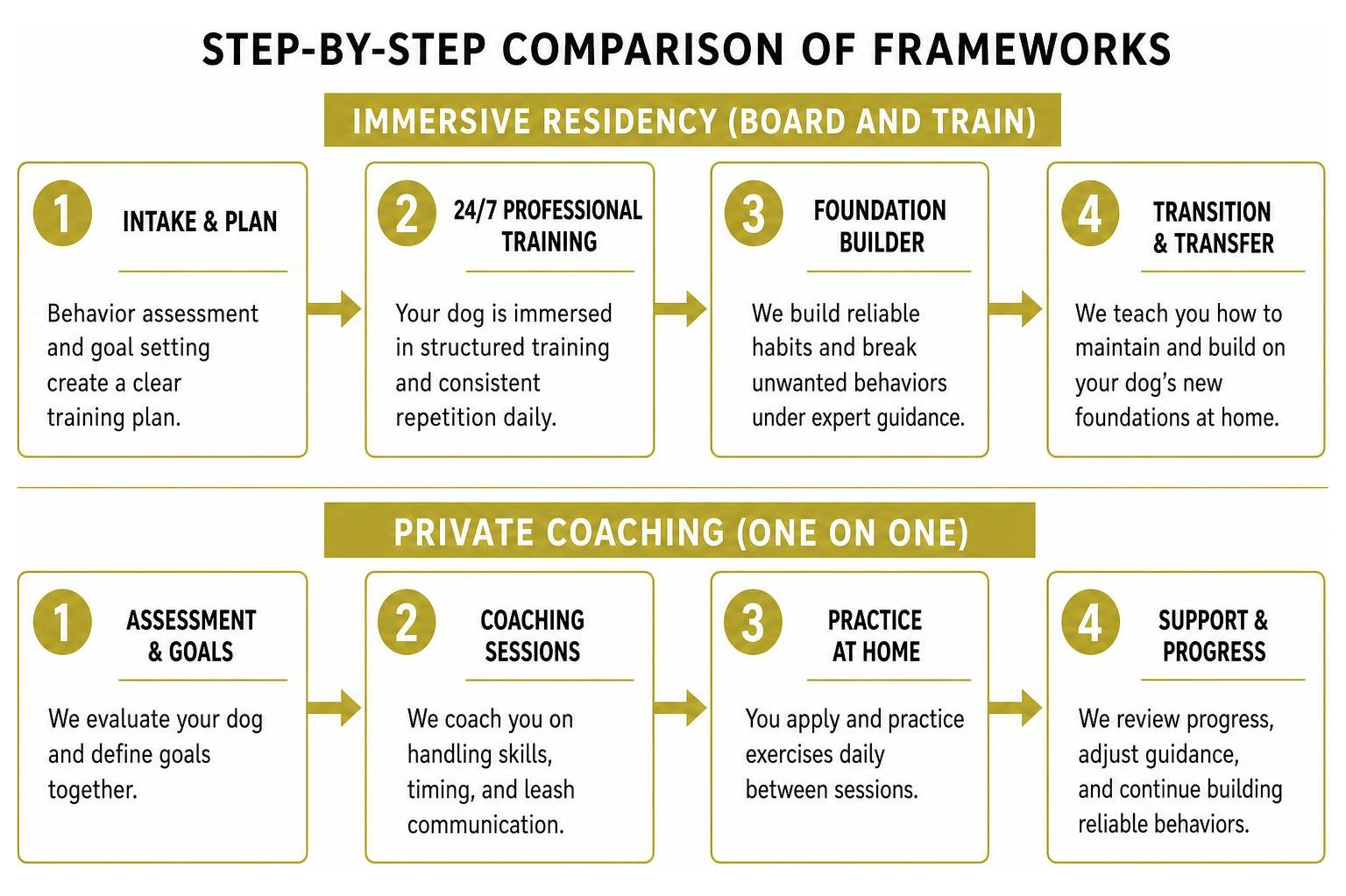
When deciding between private lessons and board and train/resident training, consider who holds the leash during the initial learning phase. In our one on one private lessons, the spotlight is on coaching you. You learn handling mechanics, timing, spatial awareness, and leash communication directly from our team. This approach is wonderful for dedicated owners who possess the daily schedule and enthusiasm to practice fundamental drills every single morning and evening.
In contrast, our comprehensive board and train completely immerses your dog in a structured learning environment under direct professional supervision. Rather than stumbling through the messy trial and error stages of new command mechanics at home, our professional handlers establish the foundational muscle memory and neural pathways for you. Once the heavy lifting of breaking bad habits and building rock solid responses is complete, we transfer those reliable behaviors over to you in detail.
Is Dog Boarding and Training Right for Your Dog?
Residential learning is transformative, but determining if it fits your lifestyle and your dog’s temperament is essential. An immersive stay shines brightest for:
- Busy Bay Area households that need reliable obedience without adding hours of homework to an already packed weekly schedule.
- Young puppies developing early household manners, crate acclimation, and basic obedience during critical developmental windows.
- Adult dogs struggling with severe leash reactivity, jumping, counter surfing, or intense environmental overarousal.
- Dogs needing a complete environmental reset to break long standing behavioral loops.
For owners looking deeper into program structures, reading our breakdown on demystifying board and train terms clarifies the terminology used across the industry. If you have tried basic classes or DIY methods without success, discovering practical strategies for succeeding at dog boot camp can help you realize that past struggles do not define your dog’s future potential.
Key Standards for Lodging, Health, and Safety
Leaving your dog in someone else’s care requires deep trust. A premier facility must maintain rigorous physical standards, proactive sanitation protocols, and attentive supervision to ensure your companion remains healthy, relaxed, and secure throughout their stay.
Facility Sanitation, Air Quality, and Safety Features
The physical environment directly impacts canine wellness and learning capacity. Modern canine lodging incorporates specialized veterinary grade systems to safeguard every guest:
- Advanced Air Handling: Continuous air exchange systems with HEPA filtration clean the air every fifteen minutes, removing airborne pathogens and dander.
- Biosecure Surfaces: Nonporous, antimicrobial wall finishes and flooring prevent bacteria, moisture, and odors from taking root.
- Engineered Drainage: Dedicated individual drainage channels ensure cleaning runoff never flows between living quarters, stopping cross contamination.
- Perimeter and Climate Control: Secure double door airlock entries, escape proof outdoor run fences, and central climate control maintain steady temperatures regardless of coastal fog or inland heat.
Mandatory Vaccinations and Medical Protocols
To protect all canine guests, reputable lodging requires comprehensive veterinary clearance before arrival. Core protocols include:
- Mandatory Vaccines: Current documentation for Rabies, DHPP (Distemper, Hepatitis, Parvovirus, Parainfluenza), and Bordetella to prevent kennel cough.
- Parasite and Fecal Clearances: Proof of a recent negative fecal exam alongside year round flea and tick preventatives.
- Medication Administration: Detailed logging for dogs requiring prescribed medications, supplements, or specialized dietary regimens.
- On Call Veterinary Partnerships: Direct, standing protocols with local emergency clinics to address any unexpected medical needs swiftly.
Luxury Suites vs. Traditional Boarding Kennels
The design of a boarding space plays an enormous role in managing canine stress levels. Traditional kennels with chain link dividers and shared concrete runs often generate high ambient noise, echoing barks, and visual overstimulation, which elevates cortisol and inhibits learning.
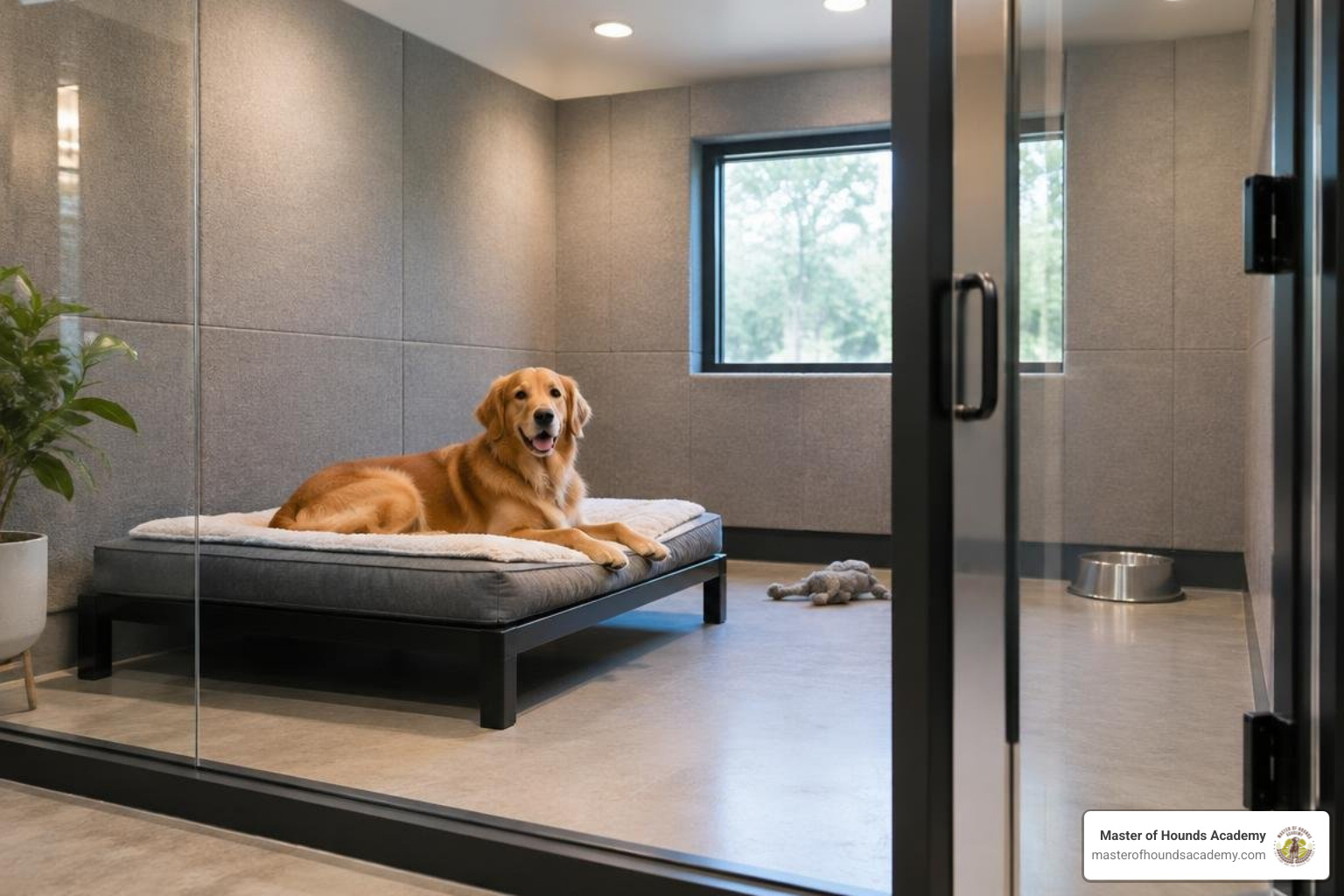
When selecting accommodations, our guide to Bay Area board and train options highlights the distinct advantages of custom built suites over standard industrial kennels.
Creature Comforts, Webcams, and Live Monitoring
Modern lodging bridges the gap between home comfort and professional boarding. Suites designed with solid acoustic dampening walls, tempered glass doors, and raised orthopedic beds create a peaceful haven for rest between training sessions.
Many facilities provide live streaming webcam access or daily direct photo updates, allowing pet parents to peek in on their dog relaxing after a productive afternoon. Visual transparency gives owners total peace of mind while keeping trainers accountable to the highest welfare standards.
Socialization, Individual Temperaments, and Play Dynamics
True socialization is not an uncontrolled free for all. High quality programs assess every dog’s individual play style, social tolerance, and environmental confidence.
While some extroverted dogs thrive in carefully curated, small playgroups run by trained handlers, others require structured solo exercise, scent enrichment, and one on one games of fetch. Professional programs tailor social exposure to build calm neutrality around other dogs rather than frantic arousal.
Investment and Preparation for Overnight Immersion
Enrolling in an immersive residency is an investment in your dog’s long term safety and your family’s daily peace of mind. Transparent planning ensures expectations align from intake through graduation.
Typical Costs of Dog Boarding and Training Programs
Rates for residential training reflect the intensive, around the clock labor involved in boarding, feeding, exercising, and rehabilitating dogs. Across Northern California, professional boarding and training programs typically range from $1,200 to $2,500+ per week depending on the complexity of the behavior modification, the level of trainer expertise, and the exclusivity of the lodging accommodations.
When reviewing our diverse personalized training services, consider that transparent pricing encompasses full room and board, customized multi session daily training plans, enrichment activities, comprehensive graduation lessons, and lifetime follow up guidance.
How to Prepare Your Dog for Their First Stay
Smooth transitions begin well before drop off day. Taking simple steps at home sets your dog up for immediate comfort:
- Pre Portion Meals: Pack your dog’s regular food in pre measured, sealed bags for every day of the stay to avoid sudden dietary changes and stomach upset.
- Familiar Comforts: Bring an unwashed blanket, favorite chew toy, or a worn t shirt carrying your scent to provide sensory reassurance in their suite.
- Crate Conditioning: Revisit calm resting routines in a crate or designated quiet zone at home so sleeping in a private suite feels natural.
- Paperwork Check: Ensure all vaccination certificates and intake behavior profiles are submitted well ahead of arrival.
Frequently Asked Questions About Dog Boarding and Training
How long does an intensive residential training program take?
Program length depends on your dog’s age, baseline habits, and specific behavioral goals. At Master of Hounds Academy, our puppy board and train runs for 2 weeks, focusing on critical early manners, house training foundations, crate confidence, and leash basics. For adult dogs tackling entrenched habits, advanced off leash control, or reactivity, our programs span 4 to 6 weeks to ensure new neural pathways and lifestyle routines are deeply solidified.
Can I watch my dog via live webcam during their stay?
Many contemporary facilities feature real time webcam access, while others provide regular high definition video diaries and photo updates. Regular visual check ins allow you to celebrate milestones, observe your dog’s evolving focus, and maintain a close emotional connection throughout their training journey.
What happens during the owner transition after the program?
The most critical moment of any residential program is transferring handler leadership back to you. Upon completion, we conduct in depth turnover lessons where Francis Metcalf and Kylie Ghim walk you through the cues, mechanical handling techniques, boundary setting, and reward schedules your dog mastered. You receive clear home management frameworks to ensure those pristine manners transfer seamlessly into your living room, neighborhood strolls, and community outings.
Finding the Right Training Partner for Lasting Success
Transforming a dog’s behavior requires experience, scientific clarity, and genuine empathy for both ends of the leash. For over 30 years, our family owned academy has guided Bay Area dog owners through every training hurdle using Francis Metcalf’s holistic Metcalf Method.
Whether you reside in Oakland, Berkeley, San Francisco, Marin, San Rafael, Mill Valley, Greenbrae, Alameda, El Cerrito, Albany, Orinda, Lafayette, Moraga, Walnut Creek, Concord, or Danville, our team is dedicated to helping you achieve a harmonious household. Take the first step toward a calm, well mannered companion by scheduling a free consultation with the dedicated team at Master of Hounds Academy today.