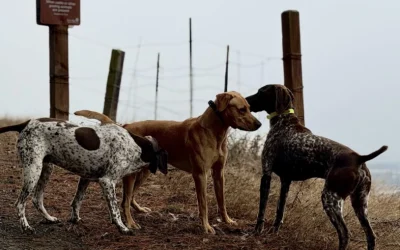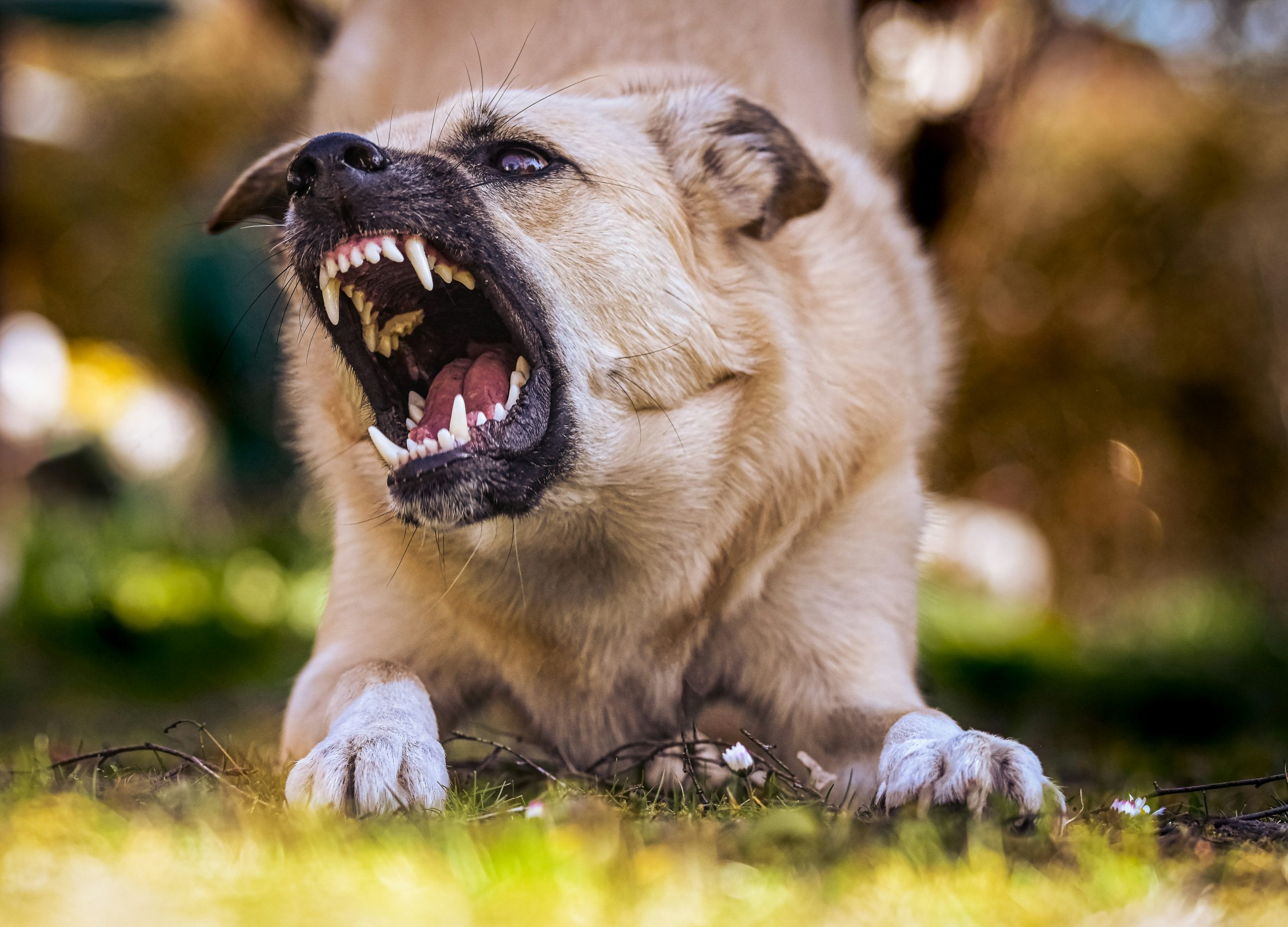

Identifying Canine Stress: Anxiety, Fear, and Subtle Warning Signals
To help an anxious dog, we must first learn to read what their body is telling us. Dogs communicate their internal state constantly through subtle postural shifts, facial expressions, and changes in energy. When an owner misinterprets these signals, they might accidentally push a dog past their ability to cope.
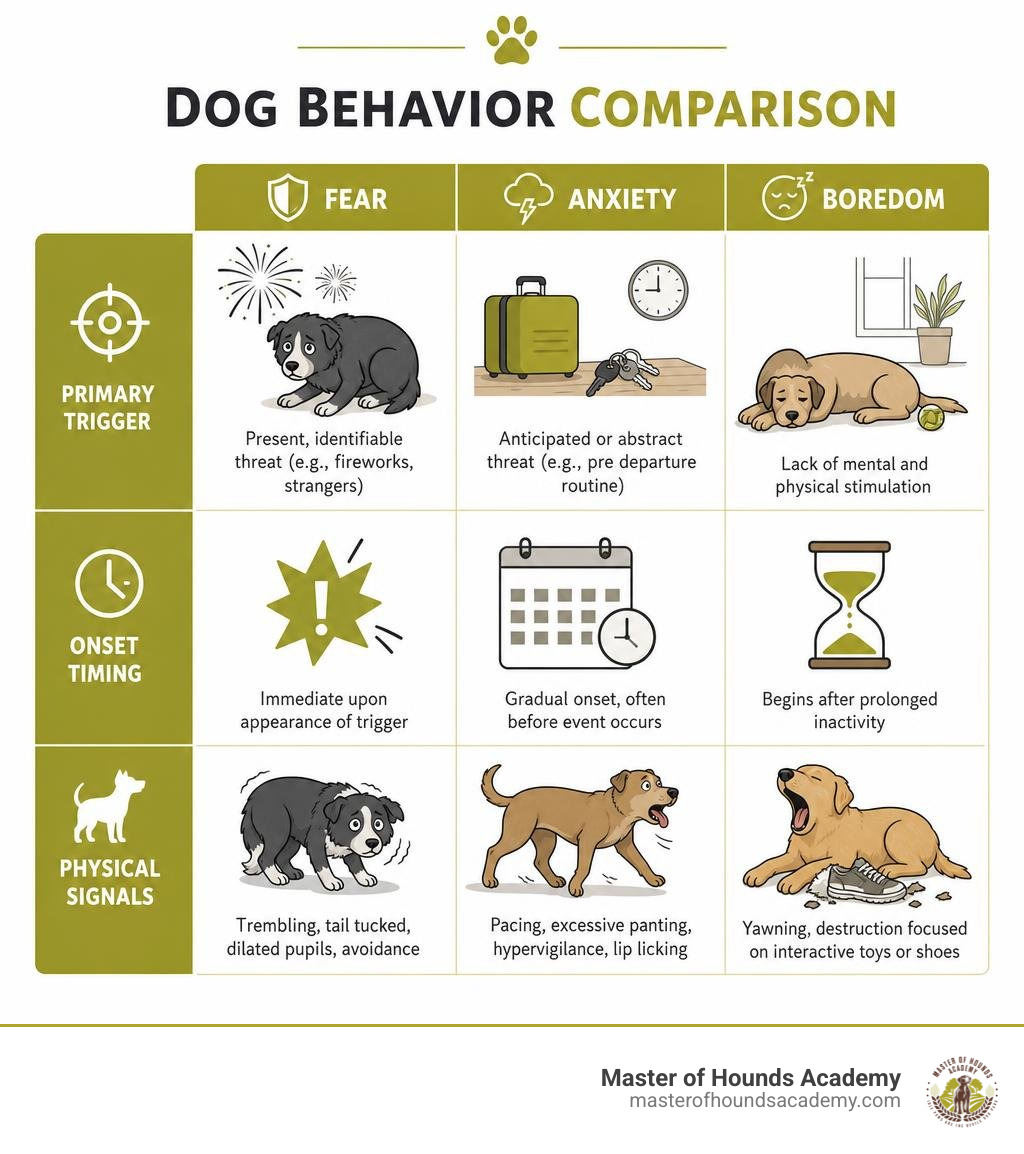
| Behavioral Trait | Fear Response | Anxiety Response | Boredom Response |
|---|---|---|---|
| Primary Trigger | Present, identifiable threat (e.g., fireworks, strangers) | Anticipated or abstract threat (e.g., pre departure routine) | Lack of mental and physical stimulation |
| Onset Timing | Immediate upon appearance of trigger | Gradual onset, often before event occurs | Begins after prolonged inactivity |
| Physical Signals | Trembling, tail tucked, dilated pupils, avoidance | Pacing, excessive panting, hypervigilance, lip licking | Yawning, destruction focused on interactive toys or shoes |
| Duration | Subsides once trigger disappears | Sustained over long periods, hard to soothe | Resolves quickly with physical exercise or play |
Pinpointing the Root Cause of Distress
Diagnostic clarity is essential when designing a behavior modification program. A fear response is tied directly to an immediate stimulus. For instance, if a dog freezes when a loud delivery truck passes your home in Berkeley, they are experiencing fear. Once the truck is gone, the body slowly returns to baseline.
Generalized anxiety is different. An anxious dog experiences a persistent state of apprehension without an active threat present. They may pace through the hallways of your Marin home, monitor every window, or react strongly to tiny environmental shifts.
Boredom, on the other hand, is an exercise and mental outlet deficit. A bored dog might chew a wooden table leg or shred paper around your Walnut Creek living room, but their physiological baseline remains low. They chew out of seeking entertainment, not panic.
Recognizing Early Micro Signals of Fear
Before a dog growls, barks, or flees, they send micro signals that demonstrate rising stress. Catching these early cues allows us to step in and manage the environment before emotional overload occurs.
- Yawning and Lip Licking: When displayed outside of waking up or eating, these are classic displacement behaviors indicating internal tension.
- Panting Patterns: Rapid, shallow panting with a tight tongue edge when the ambient temperature is cool signals autonomic arousal.
- Body Stiffness and Slow Motion: A dog entering a stressed state will often freeze, lock their muscle tone, or move in exaggerated slow motion before reacting.
- Averting Gaze and Whites of Eyes: Looking away while showing the white crescent of the eye, often called whale eye, shows a desire to create space.
When these micro signals appear, your dog is approaching their threshold. Recognizing these moments gives you the window you need to offer guidance and spatial relief.
Behavioral Training for Dogs with Anxiety: Core Principles and Techniques
Helping an anxious dog requires a comprehensive approach grounded in operant conditioning. By utilizing all four quadrants of operant learning, we provide maximum clarity. Anxious dogs thrive on predictable structure, clear boundaries, and fair feedback that leaves no room for confusion.
Through balanced behavioral training, we teach the dog what behaviors are expected while helping them build dynamic coping mechanisms. Managing thresholds is critical here. A threshold is the boundary where a dog transitions from a working, thoughtful state into emotional distress.
Step by Step Behavioral Training for Dogs with Anxiety
Systematic desensitization and counterconditioning form the bedrock of emotional reconditioning. Desensitization introduces the troubling trigger at a intensity low enough that the dog remains cool and responsive. Counterconditioning then changes the underlying emotional association with that trigger.
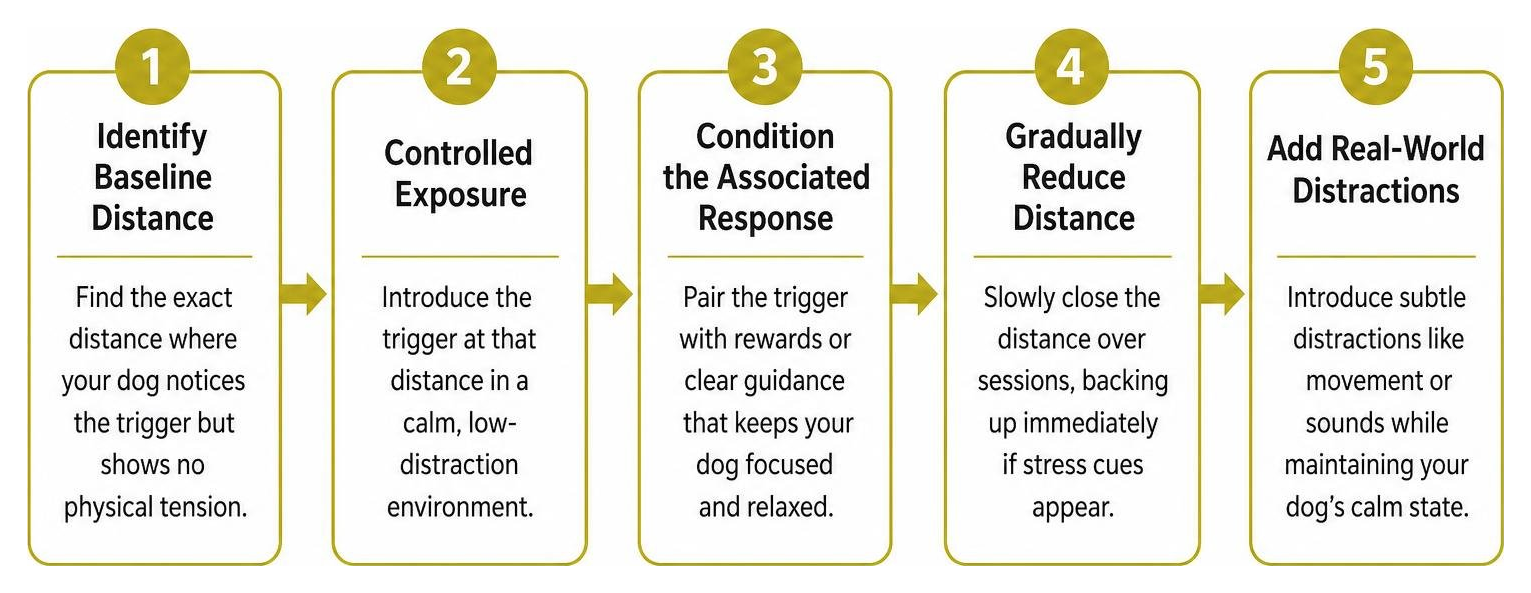
- Identify the Exact Baseline Distance: Determine the precise spatial boundary where your dog notices the trigger but displays zero physical tension.
- Controlled Exposure: Introduce the trigger at that controlled distance in a calm environment, such as a quiet park in Orinda or Lafayette.
- Condition the Associated Response: Pair the presence of the trigger with structured rewards or meaningful clear communication that keeps the dog anchored to you.
- Gradually Reduce Distance: Slowly close the distance over multiple training sessions, retreating immediately if the dog exhibits early stress cues.
- Add Real World Distractions: Introduce subtle environmental variables, such as movement or unexpected sounds, while maintaining the dog’s calm emotional state.
For detailed protocols on structuring exposure for home departure triggers, review our Evidence based desensitization protocol.
Structuring Daily Behavioral Training for Dogs with Anxiety
A predictable home environment is essential for lowering an anxious dog’s baseline stress. When daily routines, household rules, and spatial boundaries are consistent, the dog spends far less energy worrying about what comes next.
Mat work is one of the most effective behavioral anchors you can implement. Teaching a dog to go to a designated mat and adopt a settled posture gives them an active job when stressors appear. Rather than pacing or scanning windows in your San Francisco townhouse, the dog learns that lying quietly on their mat brings relief and rewards.
Building a structured routine includes:
- Consistent exercise windows that balance physical outlets with structured heel work.
- Defined place training during meal preparation or household busy hours.
- Clear spatial rules, such as waiting patiently at doorways before entering or exiting.
- Calm leadership from handlers, ensuring our own energy remains grounded and intentional.
Owners interested in advanced relaxation exercises can explore the Karen Overall Relaxation Protocol 15 Day Dog Guide Pawsd to build systematic mat stays across escalating household distractions.
Targeting Specific Triggers: Separation, Strangers, and Environmental Phobias
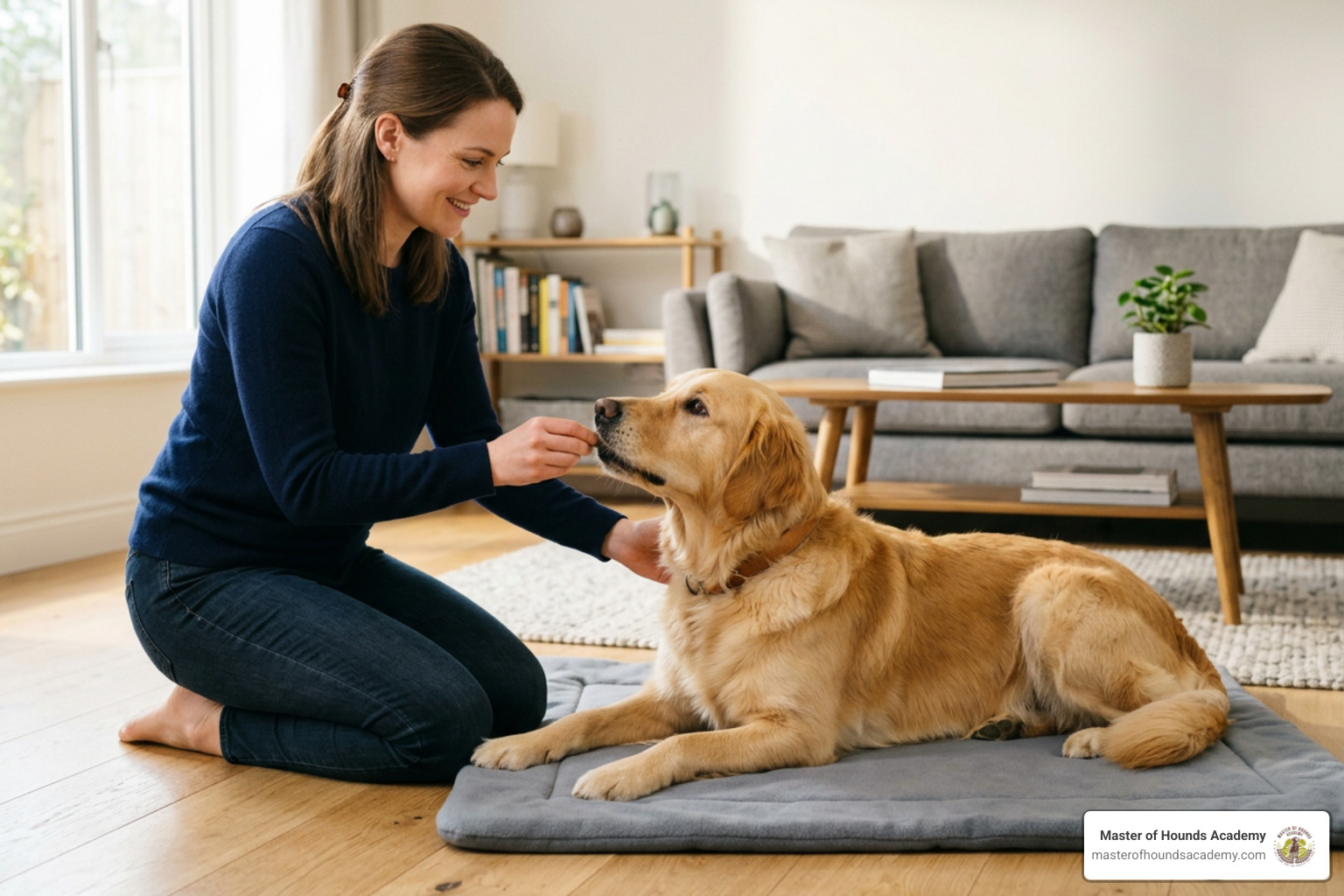
Anxiety rarely presents as a single, uniform issue. Most dogs experience heightened stress around specific categories of triggers, such as being left alone, encountering unfamiliar people, or navigating intense sensory inputs like thunder or city traffic.
Addressing Separation Distress and Panic
Estimates suggest that 14 to 20 percent of companion dogs display clinical separation distress. True separation anxiety is an attachment panic response that requires systematic modification rather than simple crate containment or chew toys.
The primary objective in separation work is preventing the dog from rehearsing panic. When a dog repeatedly experiences overwhelming distress when left alone, the neural pathways associated with panic are continually reinforced.
Key components of an effective separation program include:
- Desensitizing Pre Departure Cues: Pick up your car keys, put on your coat, or walk to the front door in your Alameda home, then simply sit back down on the couch without leaving.
- Micro Absences: Begin with absences as short as five seconds. Step outside the front door, return while the dog is entirely calm, and reward their composure without dramatic greetings.
- Incremental Escalation: Expand absences gradually, increasing duration in small increments only when the dog shows complete emotional stability during shorter trials.
Most cases of separation distress require 8 to 16 weeks of consistent practice to build reliable alone time tolerance.
Managing Fear of Strangers, Noise, and Vet Visits
Social and environmental phobias require handlers to act as clear advocates for their dogs. Forcing an anxious dog to endure uncomfortable physical touch from strangers or forcing them into tight social interactions will break trust and escalate reactive behavior.
When managing strangers in your home or on walks in Danville and Concord:
- Establish Physical Buffers: Position your body between the stranger and your dog, signaling to your dog that you are managing the interaction.
- Instruct Guests to Ignore the Dog: Ask visitors to refrain from making direct eye contact, towering over the dog, or reaching out to pet them.
- Utilize Handling Stations: Create a designated stationary pad for vet visits or grooming. Condition your dog to touch their nose to your palm or target mat, providing them a predictable focal point during exams.
For noise phobias such as fireworks or construction sound, research indicates that structured relaxation training yields high owner perceived success rates, with up to 69 percent of owners reporting significant improvements in their dog’s emotional stability during loud events.
Timeline, Medication, and Avoiding Training Pitfalls
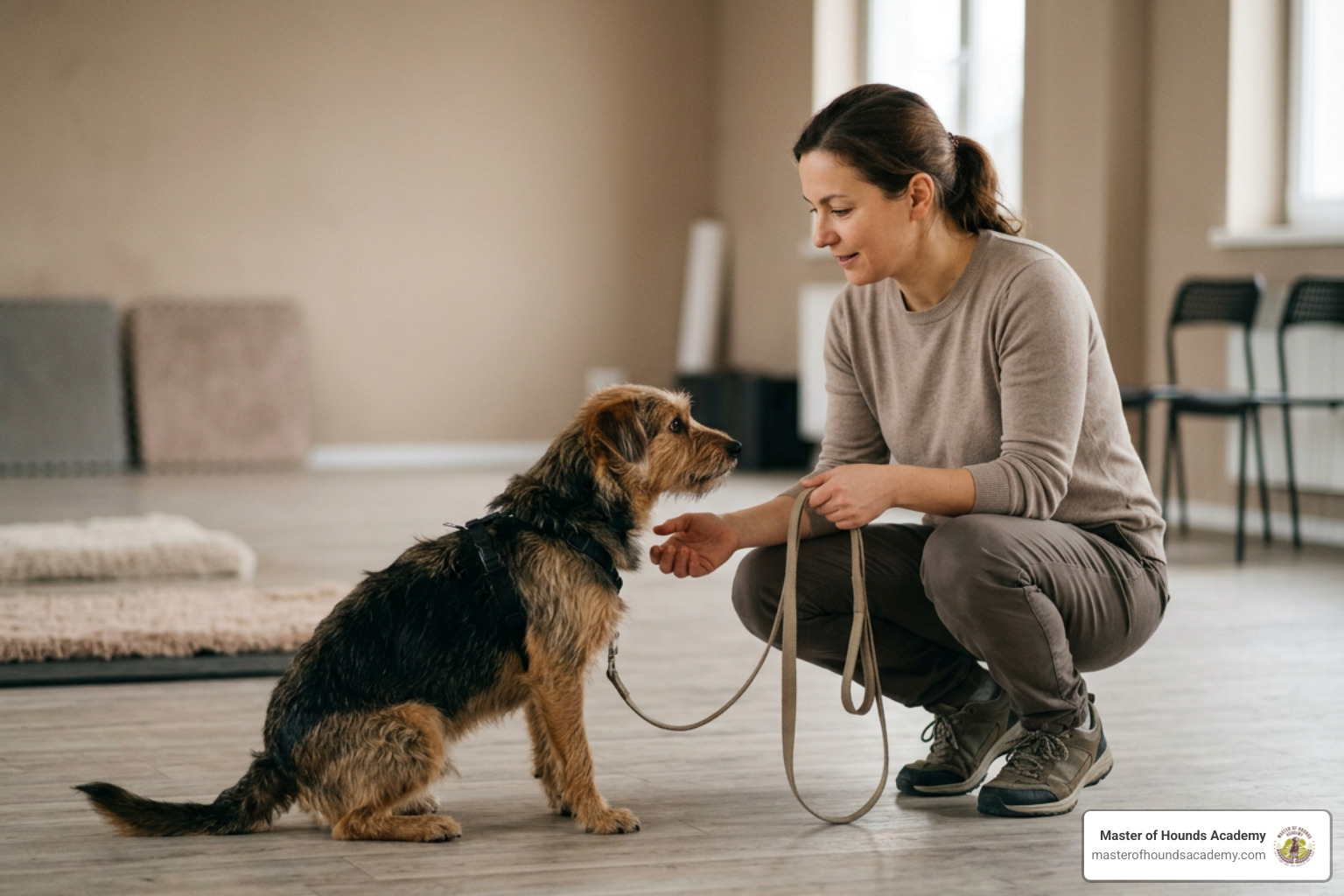
Transforming an anxious dog’s emotional state is a marathon, not a sprint. Establishing realistic timelines and avoiding critical training mistakes ensures steady, sustainable progress over months and years.
Integrating Veterinary Support and Pharmacology
When a dog exists in a state of chronic, high baseline arousal, their brain is flooded with stress hormones like cortisol. In these elevated states, learning and cognitive processing become nearly impossible.
Consulting a veterinary behaviorist or primary care veterinarian about anxiolytic medication can be a transformative step. Behavior modification and veterinary pharmacology are deeply complementary tools. Medication helps lower the physiological baseline, bringing the dog below threshold so that structured behavioral training can take hold.
Medication is not a replacement for training; rather, it creates the neurological opening required for learning to occur. As training takes effect and coping mechanisms solidify, veterinary professionals can evaluate whether long term maintenance or eventual tapering is appropriate.
Avoiding Common Training Mistakes and Escalation
Even well intentioned owners can accidentally reinforce anxiety or slow down progress through predictable training pitfalls.
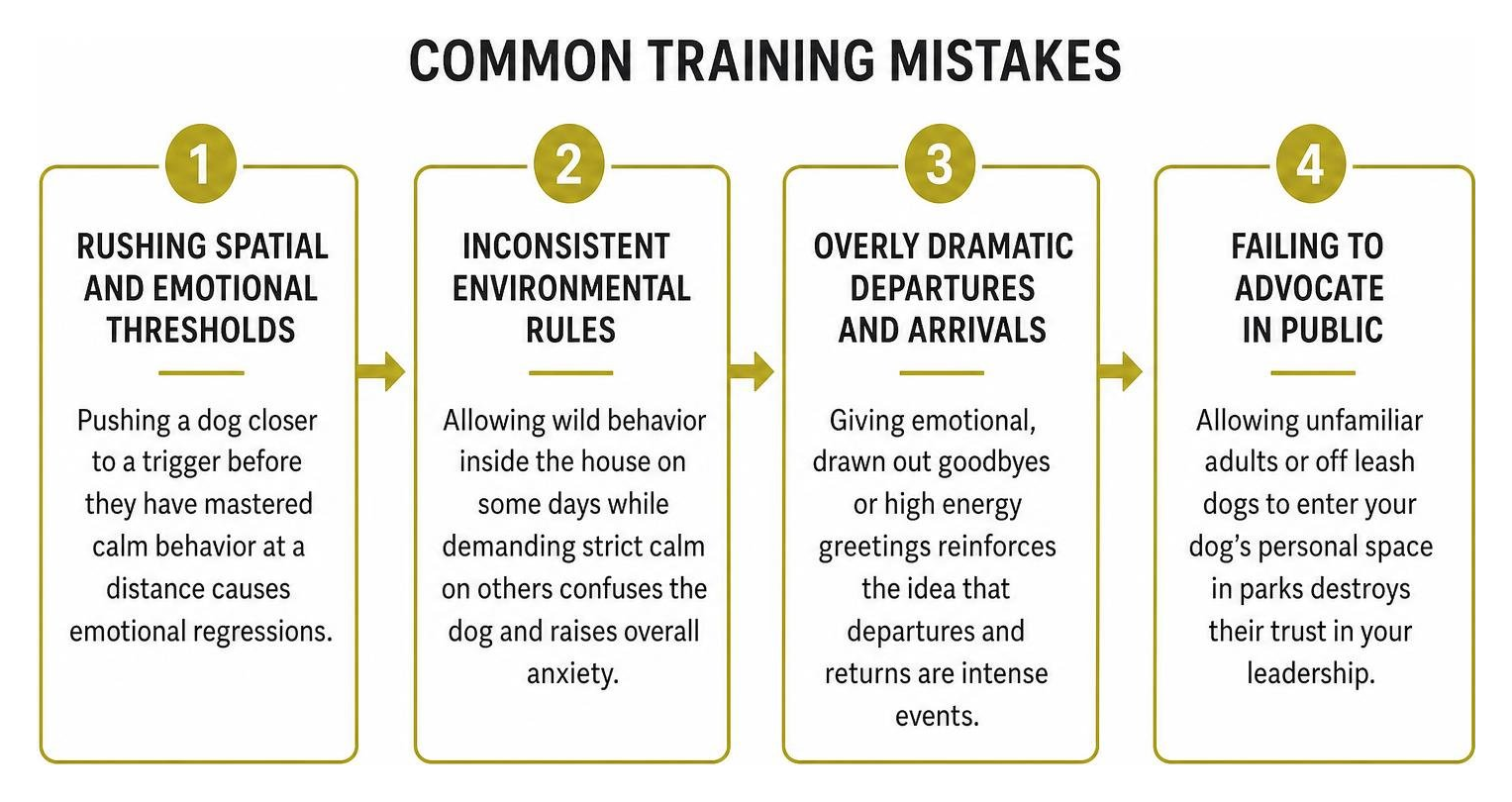
- Rushing Spatial and Emotional Thresholds: Pushing a dog closer to a trigger before they have mastered calm behavior at a distance causes emotional regressions.
- Inconsistent Environmental Rules: Allowing wild behavior inside the house on some days while demanding strict calm on others confuses the dog and raises overall anxiety.
- Overly Dramatic Departures and Arrivals: Giving emotional, drawn out goodbyes or high energy greetings reinforces the idea that departures and returns are intense events.
- Failing to Advocate in Public: Allowing unfamiliar adults or off leash dogs to enter your dog’s personal space in parks across San Rafael or Mill Valley destroys their trust in your leadership.
By remaining patient, consistent, and methodical, you protect your dog from needless stress and create a firm foundation for life long progress.
Frequently Asked Questions
How long does behavioral training for an anxious dog take?
Behavioral training is an ongoing process rather than a quick fix. Initial improvements in routine compliance and emotional regulation are often visible within 4 to 6 weeks of consistent practice. However, deeply entrenched patterns such as severe separation anxiety or long standing fear phobias typically require 8 to 16 weeks of daily structured work to achieve reliable stability.
Can severe anxiety in dogs be fully resolved?
While some dogs completely overcome mild fear responses, severe clinical anxiety is usually managed rather than completely cured. The goal of balanced behavioral training is to build dynamic coping mechanisms, increase frustration tolerance, and lower baseline stress. With proper training, structured boundaries, and appropriate environmental management, even severely anxious dogs can lead happy, confident, and harmonious lives.
When should an owner seek professional dog training help?
You should seek professional support as soon as anxiety interferes with your dog’s daily quality of life, or if stress behaviors escalate into self injury, extreme escape attempts, or aggressive reactivity toward people or other animals. Professional trainers provide custom behavioral evaluations and structured guidance tailored to your household. Explore our Master of Hounds Academy professional training services to learn how our tailored programs can support your dog.
Next Steps for Your Companion’s Calmer Future
Living with an anxious dog presents unique challenges, but it also offers an incredible opportunity to build a deep bond built on trust, clear boundaries, and mutual understanding. By learning to identify subtle stress cues, managing environmental thresholds, and executing structured balanced training, you give your companion the tools they need to navigate the world with calm confidence.
Every dog possesses a unique personality and learning capacity. At Master of Hounds Academy, we apply our proprietary Metcalf Method, honed over three decades of professional experience, to craft custom behavior plans for families throughout Oakland, Berkeley, San Francisco, Marin, and the broader Bay Area. Whether through board and train programs, group sessions, or individual private coaching, we are dedicated to helping your dog thrive.
Ready to transform your dog’s anxiety into lasting composure? Explore our full range of Master of Hounds Academy custom training services today and take the first step toward a more peaceful life together.